


你是否曾經想過,為什麼 S 開頭的英文單字在英文學習中如此重要?其實,這些單字幾乎涵蓋了日常交流、學術寫作與職場表達的各個面向,是構築英文語感與表達力的關鍵基石。當你熟悉這些詞彙的用法,就能在對話與考試中更加自然、自信。
從語言結構的角度來看,S 單字不僅數量龐大,還蘊含多層次的語意與表達力,能幫助你靈活運用語言,展現更高的思維深度與語感。若能掌握這些核心詞彙,你的英文表達將更具流暢度與準確性。
在本篇文章中,IELTSTongXue 將帶你系統化學習最實用的 S 開頭單字,搭配例句與語境解析,讓你輕鬆記憶、快速應用。立即開始探索這份完整指南,邁出提升英文實力的關鍵一步!
I. S 開頭的基礎名詞英文: 描繪生活與理解周遭世界
名詞是語言的基石,它們幫助我們指稱人物、地點、事物、概念和情感。掌握常見的 S 開頭的單字,能讓你更精確地描述日常生活、清楚表達想法,並更深入地理解周遭的世界。以下按主題分類,涵蓋100個實用名詞,這些都是構築英文表達能力的重要元素。
| S 開頭的英文單字 | 意思 | 例子 |
| 人物與身份 | ||
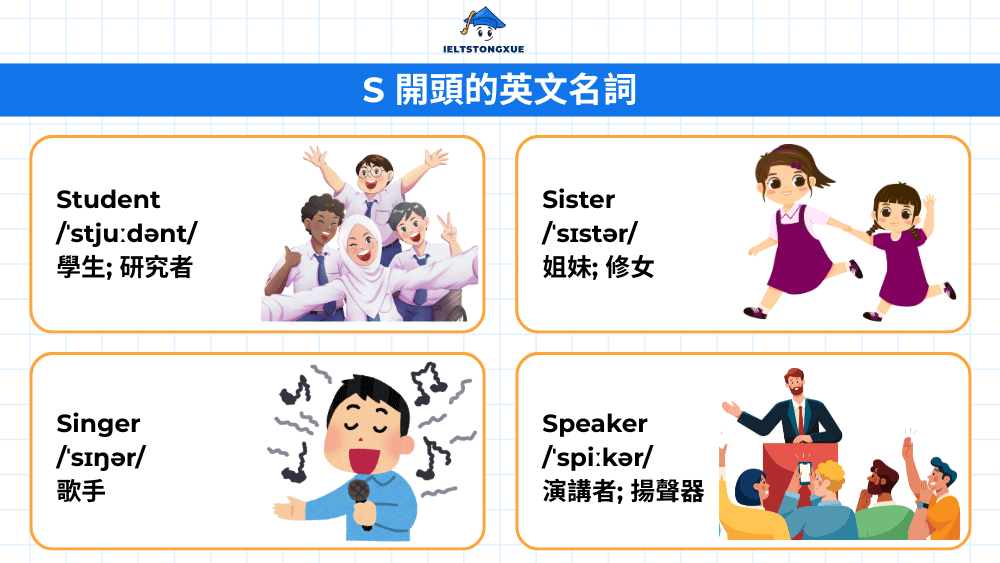
| Student
/ˈstjuːdənt/ |
學生;研究者 | The student submitted her assignment before the deadline.(這名學生在截止日期前提交了她的作業。) |
| Sister
/ˈsɪstər/ |
姐妹;修女 | My sister works as a software engineer in Taipei.(我姐姐在台北擔任軟體工程師。) |
| Son
/sʌn/ |
兒子 | Their son graduated from university last year.(他們的兒子去年從大學畢業。) |
| Scientist
/ˈsaɪəntɪst/ |
科學家 | The scientist discovered a new method to reduce carbon emissions.(這位科學家發現了減少碳排放的新方法。) |
| Singer
/ˈsɪŋər/ |
歌手 | The singer performed at the concert hall last night.(這位歌手昨晚在音樂廳演出。) |
| Soldier
/ˈsoʊldʒər/ |
士兵;軍人 | The soldiers received training for six months.(士兵們接受了六個月的訓練。) |
| Speaker
/ˈspiːkər/ |
演講者;揚聲器 | The keynote speaker shared valuable insights about innovation.(主講者分享了關於創新的寶貴見解。) |
| Specialist
/ˈspeʃəlɪst/ |
專家;專科醫生 | She consulted a specialist about her health condition.(她就健康狀況諮詢了專科醫生。) |
| Stranger
/ˈstreɪndʒər/ |
陌生人 | Never share personal information with strangers online.(絕不要與網路上的陌生人分享個人資訊。) |
| Supervisor
/ˈsuːpərvaɪzər/ |
監督者;主管 | The supervisor evaluates employee performance quarterly.(主管每季評估員工表現。) |
| Supporter
/səˈpɔːrtər/ |
支持者 | The team has thousands of loyal supporters.(這支隊伍擁有數千名忠實支持者。) |
| Surgeon
/ˈsɜːrdʒən/ |
外科醫生 | The surgeon performed a complex operation successfully.(外科醫生成功進行了複雜的手術。) |
| Servant
/ˈsɜːrvənt/ |
僕人;公務員 | Public servants should serve the community with dedication.(公務員應該全心全意為社區服務。) |
| 地點與建築 | ||
| Street
/striːt/ |
街道 | She lives on a quiet street near the city center.(她住在市中心附近的一條安靜街道上。) |
| School
/skuːl/ |
學校 | The school implements innovative teaching methods to enhance learning outcomes.(這所學校實施創新教學方法以提升學習成效。) |
| Station
/ˈsteɪʃən/ |
車站;電台;局 | We met at the train station at eight o’clock.(我們八點在火車站見面。) |
| Store
/stɔːr/ |
商店;儲存 | The store opens at nine in the morning on weekdays.(這家商店平日早上九點開門。) |
| Stadium
/ˈsteɪdiəm/ |
體育場 | The stadium can accommodate fifty thousand spectators.(這座體育場可容納五萬名觀眾。) |
| Studio
/ˈstuːdioʊ/ |
工作室;錄音室 | The artist works in a bright studio with natural lighting.(這位藝術家在採光良好的工作室工作。) |
| Shelter
/ˈʃeltər/ |
避難所;庇護所 | The organization provides shelter for homeless people.(這個組織為無家可歸者提供庇護所。) |
| Skyscraper
/ˈskaɪskreɪpər/ |
摩天大樓 | The city skyline features numerous modern skyscrapers.(這座城市的天際線有眾多現代化摩天大樓。) |
| Sidewalk
/ˈsaɪdwɔːk/ |
人行道 | Children should walk on the sidewalk for safety.(兒童應該在人行道上行走以確保安全。) |
| Space
/speɪs/ |
空間;太空 | The office provides adequate space for collaborative work.(辦公室提供充足的空間進行協作工作。) |
| Site
/saɪt/ |
地點;場所;網站 | The construction site operates from Monday to Saturday.(建築工地從星期一營運到星期六。) |
| Suburb
/ˈsʌbɜːrb/ |
郊區 | Many families prefer living in the peaceful suburbs.(許多家庭偏好住在寧靜的郊區。) |
| 食物與飲食 | ||
| Soup
/suːp/ |
湯 | She prepared a nutritious vegetable soup for dinner.(她為晚餐準備了營養豐富的蔬菜湯。) |
| Sugar
/ˈʃʊɡər/ |
糖 | Reducing sugar intake can significantly improve your health.(減少糖分攝取能顯著改善你的健康。) |
| Sandwich
/ˈsænwɪtʃ/ |
三明治 | He packed a chicken sandwich for lunch.(他為午餐準備了雞肉三明治。) |
| Salt
/sɔːlt/ |
鹽 | Add a pinch of salt to enhance the flavor.(加一撮鹽來提升風味。) |
| Salad
/ˈsæləd/ |
沙拉 | Fresh salad provides essential vitamins and minerals.(新鮮沙拉提供必需的維生素和礦物質。) |
| Sauce
/sɔːs/ |
醬汁 | The chef creates a special sauce for the pasta dish.(主廚為義大利麵料理調製特殊醬汁。) |
| Sausage
/ˈsɔːsɪdʒ/ |
香腸 | Grilled sausages are popular at summer barbecues.(烤香腸在夏季烤肉時很受歡迎。) |
| Seafood
/ˈsiːfuːd/ |
海鮮 | The restaurant specializes in fresh seafood dishes.(這家餐廳專精於新鮮海鮮料理。) |
| Snack
/snæk/ |
點心;零食 | Healthy snacks help maintain energy levels throughout the day.(健康點心有助於整天維持能量水準。) |
| Steak
/steɪk/ |
牛排 | The restaurant serves premium quality steak.(這家餐廳供應優質牛排。) |
| Strawberry
/ˈstrɔːberi/ |
草莓 | Fresh strawberries are rich in vitamin C.(新鮮草莓富含維生素C。) |
| Spice
/spaɪs/ |
香料;調味料 | Different spices add unique flavors to dishes.(不同香料為料理增添獨特風味。) |
| Syrup
/ˈsɪrəp/ |
糖漿 | Maple syrup is commonly used on pancakes.(楓糖漿通常用在鬆餅上。) |
| 自然與環境 | ||
| Sun
/sʌn/ |
太陽 | The sun rises in the east and sets in the west.(太陽從東方升起,在西方落下。) |
| Sky
/skaɪ/ |
天空 | The sky turned orange during the beautiful sunset.(天空在美麗的日落時分轉為橙色。) |
| Sea
/siː/ |
海洋 | They spent their vacation by the sea.(他們在海邊度過假期。) |
| Stone
/stoʊn/ |
石頭;寶石 | The ancient temple was built with large stones.(這座古老寺廟是用大石頭建造的。) |
| Snow
/snoʊ/ |
雪 | Heavy snow covered the mountain peaks overnight.(大雪一夜之間覆蓋了山峰。) |
| Star
/stɑːr/ |
星星;明星 | Thousands of stars illuminated the night sky.(數千顆星星照亮了夜空。) |
| Storm
/stɔːrm/ |
暴風雨 | The severe storm caused widespread damage.(嚴重的暴風雨造成廣泛破壞。) |
| Stream
/striːm/ |
溪流;串流 | A clear stream flows through the forest.(一條清澈的溪流流經森林。) |
| Sand
/sænd/ |
沙子 | Children love playing in the sand at the beach.(兒童喜歡在海灘上玩沙子。) |
| Seed
/siːd/ |
種子 | Plant the seeds in fertile soil for best results.(將種子種在肥沃的土壤中以獲得最佳結果。) |
| Season
/ˈsiːzən/ |
季節 | Each season brings different weather patterns.(每個季節帶來不同的天氣型態。) |
| Shadow
/ˈʃædoʊ/ |
陰影;影子 | The tree casts a long shadow in the afternoon.(這棵樹在下午投下長長的影子。) |
| Shore
/ʃɔːr/ |
海岸;岸邊 | Waves crashed against the rocky shore.(波浪拍打著岩石海岸。) |
| Smoke
/smoʊk/ |
煙;煙霧 | Thick smoke rose from the burning building.(濃煙從燃燒的建築物升起。) |
| 抽象概念與情感 | ||
| Success
/səkˈses/ |
成功 | Consistent effort leads to success in any endeavor.(持續的努力會帶來任何事業的成功。) |
| Solution
/səˈluːʃən/ |
解決方案;溶液 | The team proposed an innovative solution to the technical problem.(團隊針對技術問題提出了創新的解決方案。) |
| Society
/səˈsaɪəti/ |
社會 | Technology has transformed modern society in countless ways.(科技以無數方式改變了現代社會。) |
| Smile
/smaɪl/ |
微笑 | Her genuine smile brightened everyone’s day.(她真誠的微笑讓每個人的一天都變得明亮。) |
| Strength
/streŋθ/ |
力量;優勢 | Mental strength helps overcome difficult challenges.(心理力量有助於克服艱難挑戰。) |
| Skill
/skɪl/ |
技能;技巧 | Developing new skills enhances career opportunities.(發展新技能能提升職涯機會。) |
| Stress
/stres/ |
壓力;強調 | Regular exercise helps reduce stress levels.(定期運動有助於降低壓力水準。) |
| Strategy
/ˈstrætədʒi/ |
策略;戰略 | The company developed a comprehensive marketing strategy.(公司制定了全面的行銷策略。) |
| Security
/sɪˈkjʊrəti/ |
安全;保障 | Cybersecurity is crucial in the digital age.(網路安全在數位時代至關重要。) |
| Satisfaction
/ˌsætɪsˈfækʃən/ |
滿意;滿足 | Customer satisfaction remains our top priority.(顧客滿意度仍是我們的首要任務。) |
| Sympathy
/ˈsɪmpəθi/ |
同情;慰問 | She expressed sympathy for the victims of the disaster.(她對災難受害者表達同情。) |
| Surprise
/sərˈpraɪz/ |
驚訝;驚喜 | The unexpected announcement came as a surprise to everyone.(出乎意料的宣布讓每個人都感到驚訝。) |
| Sorrow
/ˈsɑːroʊ/ |
悲傷;悲痛 | The family experienced deep sorrow after the loss.(家人在失去親人後經歷深刻的悲痛。) |
| Silence
/ˈsaɪləns/ |
沉默;寂靜 | A moment of silence was observed to honor the heroes.(大家默哀片刻以紀念英雄。) |
| 物品與工具 | ||
| Shoe
/ʃuː/ |
鞋子 | Comfortable shoes are essential for long walks.(舒適的鞋子對長距離步行至關重要。) |
| Smartphone
/ˈsmɑːrtfoʊn/ |
智慧型手機 | The smartphone has become an indispensable tool in daily life.(智慧型手機已成為日常生活中不可或缺的工具。) |
| Screen
/skriːn/ |
螢幕;屏障 | Reducing screen time before bed improves sleep quality.(睡前減少螢幕時間能改善睡眠品質。) |
| Scissors
/ˈsɪzərz/ |
剪刀 | She used scissors to cut the wrapping paper.(她用剪刀剪包裝紙。) |
| Sword
/sɔːrd/ |
劍 | Ancient warriors trained extensively with the sword.(古代戰士接受廣泛的劍術訓練。) |
| Scale
/skeɪl/ |
秤;規模;比例 | The bathroom scale shows accurate weight measurements.(浴室磅秤顯示準確的體重測量。) |
| Sofa
/ˈsoʊfə/ |
沙發 | The comfortable sofa is perfect for relaxing.(這張舒適的沙發非常適合放鬆。) |
| Socket
/ˈsɑːkɪt/ |
插座;窩 | Plug the charger into the electrical socket.(將充電器插入電源插座。) |
| Suitcase
/ˈsuːtkeɪs/ |
行李箱 | Pack your suitcase the night before departure.(出發前一晚打包你的行李箱。) |
| Stove
/stoʊv/ |
爐子 | The chef prepared the meal on a gas stove.(主廚在瓦斯爐上準備餐點。) |
| Spoon
/spuːn/ |
湯匙 | Use a spoon to stir the mixture thoroughly.(用湯匙徹底攪拌混合物。) |
| Stamp
/stæmp/ |
郵票;印章 | Collect the stamp from the post office for mailing.(從郵局購買郵票以便寄信。) |
| Stick
/stɪk/ |
棍子;枝條 | The dog fetched the stick from the park.(狗從公園裡叼回了木棍。) |
| 時間與事件 | ||
| Summer
/ˈsʌmər/ |
夏天 | They plan to travel abroad during summer vacation.(他們計劃在暑假期間出國旅行。) |
| Saturday
/ˈsætərdeɪ/ |
星期六 | The workshop is scheduled for Saturday morning.(工作坊安排在星期六早上。) |
| Sunset
/ˈsʌnset/ |
日落 | We watched the spectacular sunset from the mountain peak.(我們從山頂觀賞壯觀的日落。) |
| Sunday
/ˈsʌndeɪ/ |
星期日 | Many families attend church services on Sunday.(許多家庭在星期日參加教會禮拜。) |
| Sunrise
/ˈsʌnraɪz/ |
日出 | Early morning runners enjoy watching the beautiful sunrise.(清晨慢跑者喜歡觀賞美麗的日出。) |
| Second
/ˈsekənd/ |
秒;第二 | The athlete finished the race in thirty seconds.(這位運動員在三十秒內完成比賽。) |
| Semester
/sɪˈmestər/ |
學期 | The new semester begins in September.(新學期在九月開始。) |
| Schedule
/ˈskedʒuːl/ |
時間表;行程 | Please check the meeting schedule for next week.(請查看下週的會議時間表。) |
| Scene
/siːn/ |
場景;景色 | The movie features several dramatic scenes.(這部電影有幾個戲劇化的場景。) |
| 學習與知識 | ||
| Story
/ˈstɔːri/ |
故事;樓層 | The author published a captivating story about family relationships.(作者出版了一個關於家庭關係的引人入勝的故事。) |
| Speech
/spiːtʃ/ |
演說;言語 | The president delivered an inspiring speech at the conference.(總統在會議上發表了鼓舞人心的演說。) |
| Subject
/ˈsʌbdʒɪkt/ |
科目;主題;主詞 | Mathematics is her favorite subject at school.(數學是她在學校最喜歡的科目。) |
| Sentence
/ˈsentəns/ |
句子;判決 | Write complete sentences with proper grammar.(用正確的文法寫出完整的句子。) |
| Symbol
/ˈsɪmbəl/ |
符號;象徵 | The dove is a universal symbol of peace.(鴿子是和平的普遍象徵。) |
| System
/ˈsɪstəm/ |
系統;制度 | The education system requires continuous improvement.(教育系統需要持續改進。) |
| Source
/sɔːrs/ |
來源;源頭 | Always cite your sources in academic writing.(學術寫作中務必引用你的資料來源。) |
| Survey
/ˈsɜːrveɪ/ |
調查;測量 | The company conducted a customer satisfaction survey.(公司進行了顧客滿意度調查。) |
| Study
/ˈstʌdi/ |
研究;學習;書房 | Recent studies show the benefits of regular exercise.(近期研究顯示定期運動的好處。) |
| Statement
/ˈsteɪtmənt/ |
聲明;陳述 | The official statement clarified the company’s position.(官方聲明澄清了公司的立場。) |
| 健康與身體 | ||
| Skin
/skɪn/ |
皮膚 | Protect your skin from harmful UV rays.(保護你的皮膚免受有害紫外線傷害。) |
| Shoulder
/ˈʃoʊldər/ |
肩膀 | She carried the bag on her shoulder.(她把袋子背在肩膀上。) |
| Stomach
/ˈstʌmək/ |
胃;腹部 | Eating too quickly can upset your stomach.(吃太快會讓你的胃不舒服。) |
| Sickness
/ˈsɪknəs/ |
疾病;噁心 | Motion sickness affects many passengers on long journeys.(暈車症狀影響許多長途旅行的乘客。) |
| Surgery
/ˈsɜːrdʒəri/ |
手術;外科 | The patient recovered well after the surgery.(病患在手術後恢復良好。) |
| Symptom
/ˈsɪmptəm/ |
症狀 | Fever is a common symptom of viral infections.(發燒是病毒感染的常見症狀。) |
| 社會與組織 | ||
| Service
/ˈsɜːrvɪs/ |
服務;維修 | The hotel provides excellent customer service.(這家飯店提供優質的顧客服務。) |
| Staff
/stæf/ |
員工;職員 | The staff received comprehensive training.(員工接受了全面的培訓。) |
| Structure
/ˈstrʌktʃər/ |
結構;建築物 | The organization has a clear management structure.(這個組織有清晰的管理結構。) |
| Sector
/ˈsektər/ |
部門;領域;扇形 | The technology sector continues to grow rapidly.(科技領域持續快速成長。) |
| Standard
/ˈstændərd/ |
標準;規範 | The company maintains high quality standards.(公司維持高品質標準。) |
| Situation
/ˌsɪtʃuˈeɪʃən/ |
情況;處境 | Handle difficult situations with calm professionalism.(以冷靜專業的態度處理困難情況。) |
| Society
/səˈsaɪəti/ |
社會;協會 | Civil society plays an important role in democracy.(公民社會在民主中扮演重要角色。) |
II. S 開頭的實用動詞英文: 表達行為、動作與狀態
動詞賦予句子生命力,它們描述行為、動作、狀態和變化。熟悉並運用常見的 S 開頭英文單字,特別是動詞,能讓你的英文表達更加生動、準確且富有層次感。以下按主題分類,涵蓋100個實用動詞,這些動詞將幫助你構建完整而有力的句子。
| S 開頭的英文單字 | 意思 | 例子 |
| 學習與思考 | ||
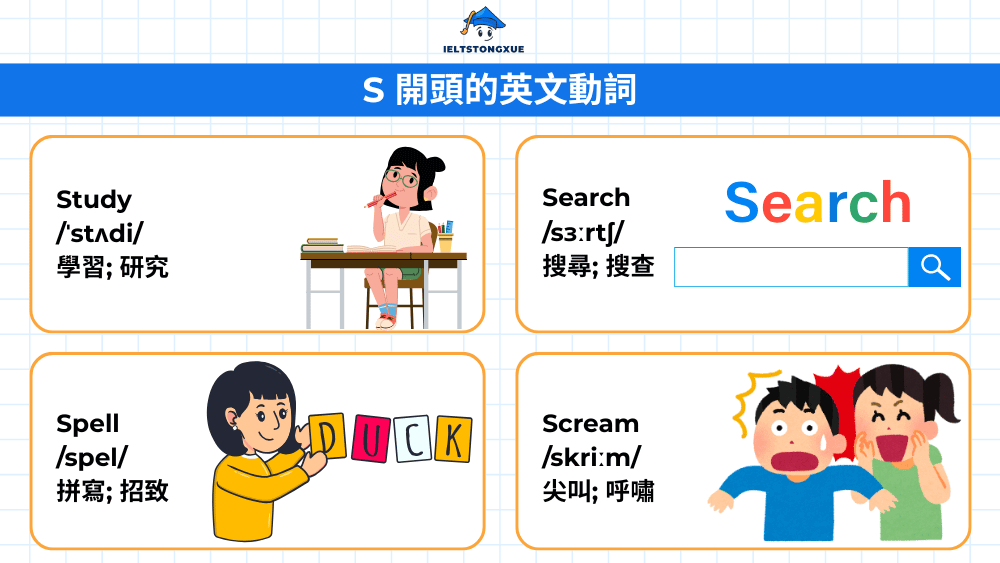
| Study
/ˈstʌdi/ |
學習;研究 | She studies English for two hours every evening.(她每天晚上學習英文兩小時。) |
| Search
/sɜːrtʃ/ |
搜尋;搜查 | She searched online for information about the scholarship.(她在網路上搜尋獎學金的資訊。) |
| Solve
/sɑːlv/ |
解決;解答 | The team worked together to solve the complex problem.(團隊合作解決了複雜的問題。) |
| Suggest
/səˈdʒest/ |
建議;暗示 | I suggest reviewing the material before the test.(我建議在考試前複習教材。) |
| Suppose
/səˈpoʊz/ |
假設;認為 | I suppose we should leave early to avoid traffic.(我認為我們應該早點出發以避開交通。) |
| Summarize
/ˈsʌməraɪz/ |
總結;概括 | Please summarize the main points of the article.(請總結文章的要點。) |
| Speculate
/ˈspekjəleɪt/ |
推測;投機 | Scientists speculate about the origins of the universe.(科學家推測宇宙的起源。) |
| Select
/sɪˈlekt/ |
選擇;挑選 | Carefully select the most relevant information for your essay.(仔細選擇與你的論文最相關的資訊。) |
| Scan
/skæn/ |
掃描;瀏覽 | Scan the document quickly to find key information.(快速瀏覽文件以找到關鍵資訊。) |
| 溝通與表達 | ||
| Speak
/spiːk/ |
說話;演講 | He speaks three languages fluently.(他流利地說三種語言。) |
| Say
/seɪ/ |
說;表達 | What did she say about the proposal?(她對這個提案說了什麼?) |
| Show
/ʃoʊ/ |
展示;顯示 | The data shows a clear upward trend.(數據顯示明確的上升趨勢。) |
| Share
/ʃer/ |
分享;共用 | Students share their learning experiences during group discussions.(學生在小組討論時分享他們的學習經驗。) |
| Shout
/ʃaʊt/ |
大喊;喊叫 | Never shout at others in public places.(不要在公共場所對他人大喊。) |
| Scream
/skriːm/ |
尖叫;呼嘯 | The children screamed with excitement on the roller coaster.(孩子們在雲霄飛車上興奮地尖叫。) |
| Signal
/ˈsɪɡnəl/ |
發信號;示意 | The referee signaled the start of the match.(裁判示意比賽開始。) |
| State
/steɪt/ |
陳述;聲明 | Please state your opinion clearly.(請清楚陳述你的意見。) |
| Stress
/stres/ |
強調;使緊張 | The teacher stressed the importance of regular practice.(老師強調定期練習的重要性。) |
| Spell
/spel/ |
拼寫;招致 | Can you spell your name for the record?(你能為記錄拼寫你的名字嗎?) |
| 日常行動 | ||
| Start
/stɑːrt/ |
開始;啟動 | The conference will start at nine o’clock sharp.(會議將在九點整準時開始。) |
| Stop
/stɑːp/ |
停止;阻止 | Please stop talking during the examination.(考試期間請停止交談。) |
| Sit
/sɪt/ |
坐 | Please sit down and make yourself comfortable.(請坐下並讓自己舒適。) |
| Stand
/stænd/ |
站立;忍受 | Everyone stood when the national anthem played.(國歌響起時每個人都站了起來。) |
| Sleep
/sliːp/ |
睡覺 | Adults should sleep seven to eight hours each night.(成人每晚應睡七到八小時。) |
| Stay
/steɪ/ |
停留;保持 | Please stay focused during the presentation.(演講期間請保持專注。) |
| Step
/step/ |
踏步;邁步 | Step carefully on the wet floor.(在濕地板上小心踏步。) |
| Swim
/swɪm/ |
游泳 | She swims in the pool every morning for exercise.(她每天早上在泳池游泳鍛煉。) |
| Skip
/skɪp/ |
跳過;跳躍 | Never skip breakfast as it provides essential energy.(絕不要跳過早餐,因為它提供必需的能量。) |
| Swing
/swɪŋ/ |
搖擺;揮動 | Children love to swing in the playground.(兒童喜歡在遊樂場盪鞦韆。) |
| Slide
/slaɪd/ |
滑動;滑落 | The drawer slides open smoothly.(抽屜順暢地滑開。) |
| Stretch
/stretʃ/ |
伸展;延伸 | Stretch your muscles before exercising.(運動前伸展你的肌肉。) |
| Stir
/stɜːr/ |
攪拌;激起 | Stir the mixture continuously until it thickens.(持續攪拌混合物直到變濃稠。) |
| 感知與觀察 | ||
| See
/siː/ |
看見;理解 | I can see significant improvement in your performance.(我能看出你的表現有顯著進步。) |
| Smell
/smel/ |
聞;嗅 | The flowers smell wonderful in spring.(花朵在春天聞起來很美妙。) |
| Sense
/sens/ |
感覺;察覺 | She sensed something was wrong immediately.(她立刻察覺到有些不對勁。) |
| Spot
/spɑːt/ |
發現;認出 | The observer spotted a rare bird in the forest.(觀察者在森林中發現了一隻稀有鳥類。) |
| Stare
/ster/ |
凝視;盯著看 | It is impolite to stare at strangers.(盯著陌生人看是不禮貌的。) |
| Sight
/saɪt/ |
看見;瞄準 | The sailor sighted land after weeks at sea.(水手在海上數週後看見陸地。) |
| 情緒與感受 | ||
| Smile
/smaɪl/ |
微笑 | She smiled warmly when greeting the guests.(她熱情地微笑著迎接客人。) |
| Suffer
/ˈsʌfər/ |
遭受;受苦 | Many people suffer from chronic stress.(許多人遭受慢性壓力之苦。) |
| Surprise
/sərˈpraɪz/ |
使驚訝 | The unexpected results surprised the researchers.(出乎意料的結果讓研究人員感到驚訝。) |
| Satisfy
/ˈsætɪsfaɪ/ |
滿足;使滿意 | The restaurant aims to satisfy all customer needs.(餐廳旨在滿足所有顧客需求。) |
| Scare
/sker/ |
驚嚇;使害怕 | Loud noises scare small children.(巨大聲響會驚嚇小孩。) |
| Soothe
/suːð/ |
安撫;緩和 | Soft music soothes the mind after a stressful day.(柔和的音樂在壓力大的一天後安撫心靈。) |
| Shock
/ʃɑːk/ |
使震驚;使震動 | The news shocked the entire community.(這個消息震驚了整個社區。) |
| 工作與行動 | ||
| Send
/send/ |
發送;派遣 | Please send the report to my email address.(請將報告發送到我的電子郵件地址。) |
| Save
/seɪv/ |
拯救;儲存;節省 | Remember to save your document regularly.(記得定期儲存你的文件。) |
| Sell
/sel/ |
賣;銷售 | The company sells high-quality products at reasonable prices.(這家公司以合理價格銷售高品質產品。) |
| Serve
/sɜːrv/ |
服務;供應 | The restaurant serves authentic Italian cuisine.(這家餐廳供應道地的義大利料理。) |
| Support
/səˈpɔːrt/ |
支持;支撐 | The community supports local businesses.(社區支持當地企業。) |
| Succeed
/səkˈsiːd/ |
成功;繼承 | With determination and effort, you will succeed in achieving your goals.(憑藉決心和努力,你將成功達成目標。) |
| Spend
/spend/ |
花費(時間或金錢) | She spends most of her weekends reading.(她大部分的週末時間都在閱讀。) |
| Simplify
/ˈsɪmplɪfaɪ/ |
簡化 | The new system simplifies the registration process.(新系統簡化了註冊流程。) |
| Strengthen
/ˈstreŋθən/ |
加強;鞏固 | Regular practice strengthens your language skills.(定期練習能加強你的語言技能。) |
| Schedule
/ˈskedʒuːl/ |
安排;排定 | Please schedule a meeting for next Tuesday.(請安排下週二的會議。) |
| Sign
/saɪn/ |
簽名;示意 | Please sign the document at the bottom.(請在文件底部簽名。) |
| Sort
/sɔːrt/ |
分類;整理 | Sort the files by date for easy reference.(按日期分類文件以便參考。) |
| Submit
/səbˈmɪt/ |
提交;屈服 | Students must submit assignments by Friday.(學生必須在星期五前提交作業。) |
| Supply
/səˈplaɪ/ |
供應;提供 | The factory supplies components to automobile manufacturers.(工廠供應零件給汽車製造商。) |
| Supervise
/ˈsuːpərvaɪz/ |
監督;管理 | Experienced teachers supervise student teaching practice.(資深教師監督學生的教學實習。) |
| 變化與轉換 | ||
| Separate
/ˈsepəreɪt/ |
分開;分離 | Separate the recyclable materials from regular waste.(將可回收材料與一般廢棄物分開。) |
| Shift
/ʃɪft/ |
轉移;改變 | The company decided to shift its focus to digital marketing.(公司決定將重點轉移到數位行銷。) |
| Shrink
/ʃrɪŋk/ |
收縮;縮小 | Cotton fabric may shrink when washed in hot water.(棉質布料在熱水中清洗時可能會縮小。) |
| Spread
/spred/ |
傳播;展開 | Information spreads rapidly through social media.(資訊透過社群媒體快速傳播。) |
| Split
/splɪt/ |
分裂;分開 | The group split into smaller teams for the project.(小組為了專案分成較小的團隊。) |
| Switch
/swɪtʃ/ |
切換;轉換 | Switch off the lights when leaving the room.(離開房間時關掉燈光。) |
| Scatter
/ˈskætər/ |
散佈;分散 | Seeds scatter across the ground in autumn.(種子在秋天散佈到地面上。) |
| Settle
/ˈsetəl/ |
定居;解決;安頓 | The family settled in the countryside.(這家人在鄉村定居。) |
| Shake
/ʃeɪk/ |
搖動;震動 | Shake the bottle before opening.(開啟前搖動瓶子。) |
| 創造與建構 | ||
| Set
/set/ |
設置;放置;樹立 | Set clear goals for the academic year.(為學年設定明確目標。) |
| Shape
/ʃeɪp/ |
塑造;形成 | Early experiences shape personality development.(早期經驗塑造人格發展。) |
| Sharpen
/ˈʃɑːrpən/ |
削尖;使敏銳 | Regular reading sharpens critical thinking skills.(定期閱讀能使批判性思考技能更敏銳。) |
| Structure
/ˈstrʌktʃər/ |
構建;組織 | Structure your essay with clear paragraphs.(用清晰的段落構建你的論文。) |
| Sketch
/sketʃ/ |
素描;概述 | The architect sketched the initial building design.(建築師繪製了建築的初步設計草圖。) |
| Sew
/soʊ/ |
縫紉;縫合 | She learned to sew at a young age.(她在年輕時學會了縫紉。) |
| 互動與連結 | ||
| Shake
/ʃeɪk/ |
握手;搖動 | They shook hands to seal the agreement.(他們握手確認協議。) |
| Surround
/səˈraʊnd/ |
包圍;環繞 | Mountains surround the peaceful valley.(山脈環繞著寧靜的山谷。) |
| Suit
/suːt/ |
適合;相配 | This teaching method suits visual learners.(這種教學方法適合視覺型學習者。) |
| Summon
/ˈsʌmən/ |
召喚;召集 | The manager summoned all staff for an urgent meeting.(經理召集所有員工開緊急會議。) |
| 保護與保存 | ||
| Secure
/sɪˈkjʊr/ |
保護;獲得 | Secure your belongings before leaving.(離開前保護好你的物品。) |
| Shield
/ʃiːld/ |
保護;遮蔽 | Parents shield children from harmful content.(父母保護兒童遠離有害內容。) |
| Store
/stɔːr/ |
儲存;貯藏 | Store food properly to maintain freshness.(妥善儲存食物以保持新鮮。) |
| Shelter
/ˈʃeltər/ |
庇護;掩蔽 | The building sheltered people during the storm.(這棟建築在暴風雨期間庇護了人們。) |
| 衡量與評估 | ||
| Sacrifice
/ˈsækrɪfaɪs/ |
犧牲;獻祭 | Parents often sacrifice personal time for their children.(父母常為孩子犧牲個人時間。) |
| Score
/skɔːr/ |
得分;評分 | The student scored highly on the mathematics test.(這名學生在數學測驗中得分很高。) |
| Surpass
/sərˈpæs/ |
超越;勝過 | Her achievements surpassed all expectations.(她的成就超越了所有期待。) |
| Survey
/sərˈveɪ/ |
調查;審視 | Researchers surveyed one thousand participants.(研究人員調查了一千名參與者。) |
| 控制與管理 | ||
| Sing
/sɪŋ/ |
唱歌 | The choir sings beautifully during the ceremony.(合唱團在儀式中唱得很美。) |
| Sail
/seɪl/ |
航行;駕駛帆船 | The ship sailed across the Pacific Ocean.(船隻航行穿越太平洋。) |
| Stumble
/ˈstʌmbəl/ |
絆倒;踉蹌 | Be careful not to stumble on the uneven path.(小心不要在不平的路上絆倒。) |
| Struggle
/ˈstrʌɡəl/ |
掙扎;奮鬥 | Students often struggle with time management.(學生常常在時間管理方面掙扎。) |
| Squeeze
/skwiːz/ |
擠壓;壓榨 | Squeeze the lemon to extract fresh juice.(擠壓檸檬以榨取新鮮果汁。) |
| Seize
/siːz/ |
抓住;奪取 | Seize every opportunity to practice speaking.(抓住每個練習口說的機會。) |
| Slip
/slɪp/ |
滑倒;溜走 | Hold the railing to avoid slipping on wet stairs.(握住扶手以避免在濕樓梯上滑倒。) |
| Snap
/snæp/ |
折斷;拍照 | The branch snapped under the weight.(樹枝在重量下折斷了。) |
| Steer
/stɪr/ |
駕駛;引導 | The teacher steers students toward critical thinking.(老師引導學生進行批判性思考。) |
| 表達動作完成 | ||
| Seal
/siːl/ |
密封;封上 | Seal the envelope before mailing.(郵寄前將信封封上。) |
| Stack
/stæk/ |
堆疊;堆積 | Stack the books neatly on the shelf.(將書籍整齊地堆疊在架上。) |
| Stamp
/stæmp/ |
蓋章;跺腳 | Stamp the document with the official seal.(用官方印章在文件上蓋章。) |
| Staple
/ˈsteɪpəl/ |
用訂書機訂;主要的 | Staple the papers together before submitting.(提交前用訂書機將文件訂在一起。) |
III. S 開頭的描繪性形容詞英文: 豐富表達的色彩與細節
形容詞為名詞和動詞增添色彩與細節,使你的表達更加生動、精確和引人入勝。掌握「S」開頭的描繪性形容詞,將讓你能夠細膩地描述人物特質、情感狀態、物體屬性和情境氛圍。以下按主題分類,涵蓋50個描繪性形容詞。
| S 開頭的英文單字 | 意思 | 例子 |
| 人物特質與個性 | ||
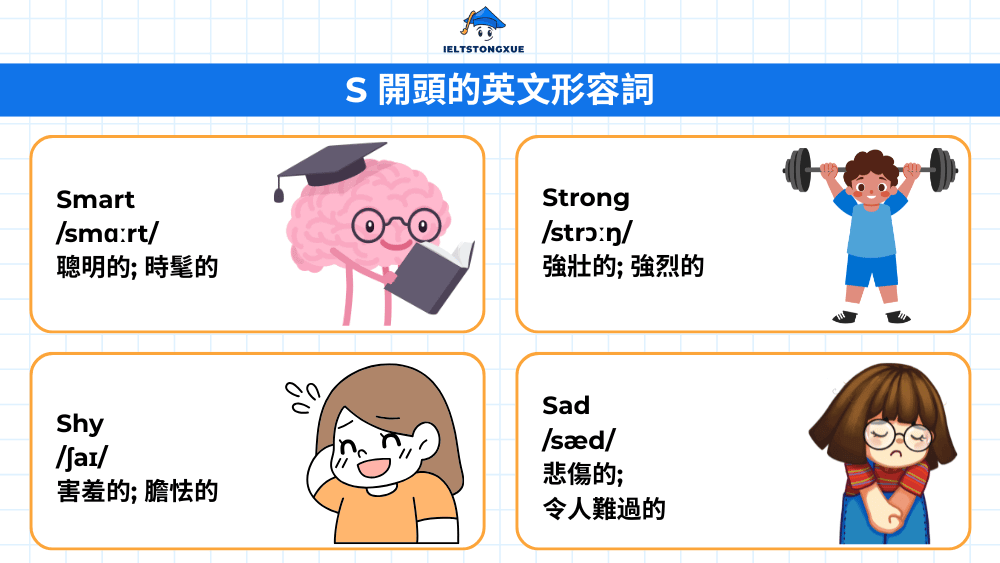
| Smart
/smɑːrt/ |
聰明的;時髦的 | She is a smart student who always achieves excellent grades.(她是一位聰明的學生,總是取得優異成績。) |
| Strong
/strɔːŋ/ |
強壯的;強烈的 | Regular exercise helps build strong muscles.(定期運動有助於建立強壯的肌肉。) |
| Successful
/səkˈsesfəl/ |
成功的 | She became a successful entrepreneur through hard work.(她透過努力工作成為成功的企業家。) |
| Serious
/ˈsɪriəs/ |
嚴肅的;嚴重的 | Climate change is a serious global challenge.(氣候變遷是一個嚴重的全球挑戰。) |
| Shy
/ʃaɪ/ |
害羞的;膽怯的 | The shy child gradually became more confident.(這個害羞的孩子逐漸變得更有自信。) |
| Selfish
/ˈselfɪʃ/ |
自私的 | Selfish behavior damages relationships.(自私的行為會破壞人際關係。) |
| Stubborn
/ˈstʌbərn/ |
固執的;頑固的 | His stubborn attitude prevented compromise.(他固執的態度阻礙了妥協。) |
| Sincere
/sɪnˈsɪr/ |
真誠的;誠摯的 | She offered sincere apologies for the mistake.(她為錯誤提供了真誠的道歉。) |
| Sensible
/ˈsensəbəl/ |
明智的;理智的 | Making sensible decisions requires careful consideration.(做出明智的決定需要仔細考慮。) |
| Skilled
/skɪld/ |
熟練的;有技能的 | Skilled workers receive higher wages.(熟練工人獲得較高薪資。) |
| 情感與狀態 | ||
| Sad
/sæd/ |
悲傷的;令人難過的 | She felt sad when saying goodbye to her friends.(向朋友道別時她感到悲傷。) |
| Sure
/ʃʊr/ |
確信的;可靠的 | I am sure that you will pass the examination.(我確信你會通過考試。) |
| Satisfied
/ˈsætɪsfaɪd/ |
滿意的 | The customers were satisfied with the service quality.(顧客對服務品質感到滿意。) |
| Scared
/skerd/ |
害怕的 | Many people feel scared when speaking in public.(許多人在公開演講時感到害怕。) |
| Surprised
/sərˈpraɪzd/ |
驚訝的 | Everyone was surprised by the announcement.(每個人都對這項宣布感到驚訝。) |
| Sleepy
/ˈsliːpi/ |
睏倦的;想睡的 | Students feel sleepy after lunch.(學生午餐後感到睏倦。) |
| Stressed
/strest/ |
有壓力的;緊張的 | Stressed employees perform less effectively.(有壓力的員工表現較差。) |
| Stunning
/ˈstʌnɪŋ/ |
極好的;令人震驚的 | The mountain view was absolutely stunning.(山景絕對令人驚嘆。) |
| 尺寸與形狀 | ||
| Small
/smɔːl/ |
小的;少的 | They live in a small apartment near the university.(他們住在大學附近的一間小公寓。) |
| Short
/ʃɔːrt/ |
短的;矮的 | The presentation should be short and concise.(簡報應該簡短且簡潔。) |
| Straight
/streɪt/ |
直的;筆直的 | Draw a straight line with a ruler.(用尺畫一條直線。) |
| Steep
/stiːp/ |
陡峭的;急劇的 | The steep mountain path requires careful climbing.(陡峭的山路需要謹慎攀爬。) |
| Slim
/slɪm/ |
苗條的;微小的 | Regular exercise helps maintain a slim figure.(定期運動有助於保持苗條身材。) |
| Square
/skwer/ |
正方形的;四方的 | The table has a square shape.(這張桌子是正方形的。) |
| Shallow
/ˈʃæloʊ/ |
淺的;膚淺的 | Children can play safely in the shallow pool.(兒童可以在淺水池安全地玩耍。) |
| Sharp
/ʃɑːrp/ |
鋒利的;尖銳的 | Handle sharp knives with extreme care.(極為小心地使用鋒利的刀具。) |
| Solid
/ˈsɑːlɪd/ |
固體的;堅固的 | The foundation requires solid construction materials.(地基需要堅固的建築材料。) |
| 品質與特性 | ||
| Special
/ˈspeʃəl/ |
特別的;專門的 | This restaurant offers special discounts on weekends.(這家餐廳在週末提供特別折扣。) |
| Simple
/ˈsɪmpəl/ |
簡單的;樸素的 | The solution to the problem was surprisingly simple.(問題的解決方案出乎意料地簡單。) |
| Safe
/seɪf/ |
安全的 | The neighborhood is safe for children to play outside.(這個社區對孩子在外玩耍是安全的。) |
| Soft
/sɔːft/ |
柔軟的;溫和的 | The pillow is soft and comfortable.(這個枕頭柔軟舒適。) |
| Slow
/sloʊ/ |
緩慢的 | The traffic moves slow during rush hour.(尖峰時段交通移動緩慢。) |
| Sweet
/swiːt/ |
甜的;可愛的 | The dessert tastes sweet and delicious.(這道甜點嚐起來甜美可口。) |
| Smooth
/smuːð/ |
平滑的;順利的 | The transition to the new system was smooth.(過渡到新系統很順利。) |
| Suitable
/ˈsuːtəbəl/ |
合適的;適當的 | This course is suitable for beginners.(這門課程適合初學者。) |
| Surprising
/sərˈpraɪzɪŋ/ |
令人驚訝的 | The test results were surprising to everyone.(測驗結果讓每個人都感到驚訝。) |
| Similar
/ˈsɪmɪlər/ |
相似的;類似的 | The two approaches are similar in many aspects.(這兩種方法在許多方面相似。) |
| Significant
/sɪɡˈnɪfɪkənt/ |
重要的;顯著的 | Education plays a significant role in personal development.(教育在個人發展中扮演重要角色。) |
| Specific
/spəˈsɪfɪk/ |
明確的;特定的 | Please provide specific examples to support your argument.(請提供明確的例子來支持你的論點。) |
| Scientific
/ˌsaɪənˈtɪfɪk/ |
科學的 | The research follows scientific methods and procedures.(這項研究遵循科學方法和程序。) |
| 社會與文化 | ||
| Social
/ˈsoʊʃəl/ |
社會的;社交的 | Social media has changed communication patterns dramatically.(社群媒體大幅改變了溝通模式。) |
| Standard
/ˈstændərd/ |
標準的;普通的 | The hotel provides standard amenities for all guests.(飯店為所有客人提供標準設施。) |
| Silent
/ˈsaɪlənt/ |
安靜的;沉默的 | The library should remain silent during study hours.(圖書館在學習時段應保持安靜。) |
| Separate
/ˈseprət/ |
分開的;獨立的 | Each student has a separate workspace.(每位學生都有獨立的工作空間。) |
| Structured
/ˈstrʌktʃərd/ |
有組織的;結構化的 | A structured approach improves learning efficiency.(有組織的方法能提升學習效率。) |
| Sophisticated
/səˈfɪstɪkeɪtɪd/ |
精密的;老練的 | The device uses sophisticated technology.(這個裝置使用精密技術。) |
| Sustainable
/səˈsteɪnəbəl/ |
永續的;可持續的 | Sustainable development protects future generations.(永續發展保護未來世代。) |
| Stable
/ˈsteɪbəl/ |
穩定的;穩固的 | A stable economy attracts foreign investment.(穩定的經濟吸引外國投資。) |
| 感官描述 | ||
| Sour
/ˈsaʊər/ |
酸的;刻薄的 | Lemons have a distinctively sour taste.(檸檬有獨特的酸味。) |
| Spicy
/ˈspaɪsi/ |
辛辣的;刺激的 | Thai cuisine is known for spicy flavors.(泰國料理以辛辣風味聞名。) |
| Shiny
/ˈʃaɪni/ |
閃亮的;有光澤的 | The polished surface looks shiny and clean.(拋光表面看起來閃亮且乾淨。) |
| Sticky
/ˈstɪki/ |
黏的;棘手的 | Wash your hands after touching sticky substances.(接觸黏性物質後要洗手。) |
| Stiff
/stɪf/ |
僵硬的;拘謹的 | My neck feels stiff after sitting too long.(坐太久後我的脖子感到僵硬。) |
IV. S 開頭的其他常用詞類: 構建流暢語句的關鍵元素
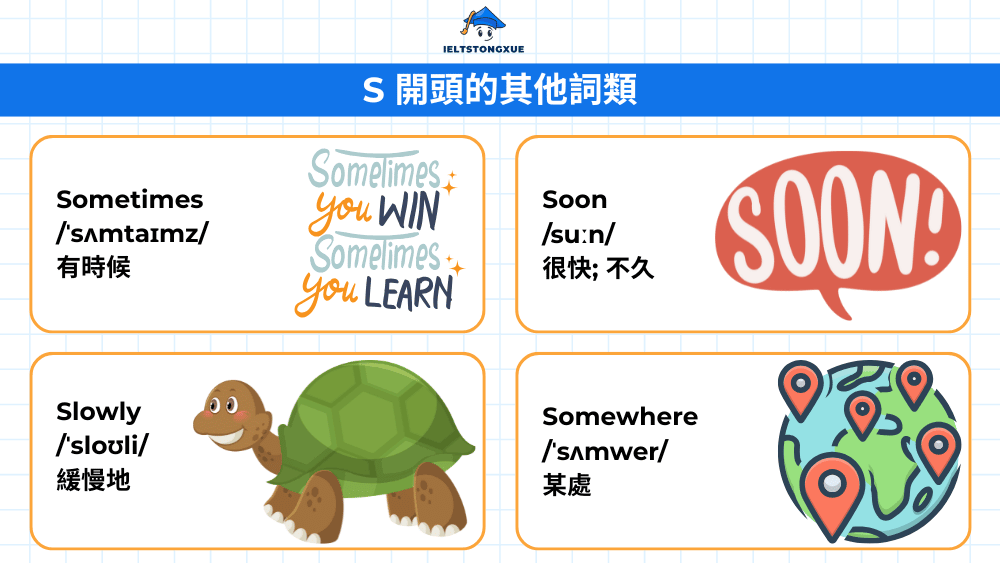
副詞、介系詞、連接詞等詞類在句子中扮演著連接、修飾和補充的重要角色。它們幫助你表達時間、地點、方式、程度、邏輯關係等,使句子結構更完整、語意更清晰、表達更流暢。掌握這些「S」開頭的關鍵詞類,將顯著提升你組織語句和精確表達的能力,讓你的英文溝通更加自然順暢。
| S 開頭的英文單字 | 意思 | 例子 |
| So
/soʊ/ |
如此;因此;所以 | The weather was cold, so we stayed indoors.(天氣很冷,所以我們待在室內。) |
| Sometimes
/ˈsʌmtaɪmz/ |
有時候 | Sometimes I walk to work instead of taking the bus.(有時候我步行上班而不搭公車。) |
| Soon
/suːn/ |
很快;不久 | The results will be announced soon.(結果很快就會公布。) |
| Still
/stɪl/ |
仍然;還是 | She is still working on the project.(她仍在進行這個專案。) |
| Since
/sɪns/ |
自從;因為 | I have lived here since 2020.(我自2020年起就住在這裡。) |
| Slowly
/ˈsloʊli/ |
緩慢地 | Please speak slowly so everyone can understand.(請慢慢說,這樣每個人都能理解。) |
| Suddenly
/ˈsʌdənli/ |
突然地 | The lights went out suddenly during the storm.(暴風雨期間燈光突然熄滅。) |
| Seriously
/ˈsɪriəsli/ |
認真地;嚴重地 | You should take this opportunity seriously.(你應該認真看待這個機會。) |
| Successfully
/səkˈsesfəli/ |
成功地 | The team successfully completed the challenging task.(團隊成功完成了這項具挑戰性的任務。) |
| Significantly
/sɪɡˈnɪfɪkəntli/ |
顯著地;重要地 | The new policy significantly improved workplace efficiency.(新政策顯著改善了工作場所效率。) |
| Simply
/ˈsɪmpli/ |
簡單地;僅僅 | Simply follow the instructions on the package.(只需遵循包裝上的說明。) |
| Specifically
/spəˈsɪfɪkli/ |
明確地;特別地 | The program is specifically designed for advanced learners.(這個課程是專門為進階學習者設計的。) |
| Somewhere
/ˈsʌmwer/ |
某處 | I left my keys somewhere in the office.(我把鑰匙落在辦公室某處了。) |
| Such
/sʌtʃ/ |
如此的;這樣的 | It was such a wonderful experience that I will never forget.(這是如此美好的經歷,我永遠不會忘記。) |
要記住以字母 S 開頭的英文單字,你可以透過下方的 Quizlet 應用程式來複習單字:
V. 鞏固學習成果: S 開頭的英文單字戰演練與自我評估
理論學習固然重要,但唯有透過實際練習,才能真正將知識內化、鞏固記憶、檢驗理解程度並發現自己的弱點。以下的實戰演練將幫助你主動應用所學的「S」開頭單字,提升詞彙運用能力,將被動認知轉化為主動表達的實力。我鼓勵你積極參與每一項練習,將其視為檢視學習成效和持續進步的寶貴機會。
此練習旨在強化你對「S」開頭單字在句子中正確用法的掌握,包括詞形變化、時態選擇和詞語搭配。請從括號中選出最適合填入空格的選項,使句子語法正確且語意完整。
- She _______ (study / studies / studied) at the library every afternoon to prepare for the IELTS examination.
- The company has _______ (successful / successfully / success) expanded its business into international markets.
- Please speak _______ (slow / slowly / slower) because some participants are not native speakers.
- This solution is _______ (simple / simply / simpler) than the previous approach we considered.
- The research team will _______ (send / sending / sent) the final report to the committee next Monday.
- He felt _______ (surprise / surprised / surprising) when he received the scholarship notification.
- Technology plays a _______ (significance / significant / significantly) role in modern education.
- The athlete _______ (strengthen / strengthens / strengthened) her muscles through daily training.
- Environmental issues require _______ (serious / seriously / seriousness) attention from governments worldwide.
- The professor _______ (suggest / suggested / suggesting) reading additional materials for better understanding.
- Her presentation was _______ (structure / structured / structuring) logically and clearly.
- Students should _______ (separate / separately / separation) facts from opinions in academic writing.
- The team worked _______ (steady / steadily / steadiness) toward achieving their objectives.
- Regular exercise _______ (strengthen / strengthens / strengthening) both physical and mental health.
- The conference provided _______ (specialize / specialized / specialization) training for healthcare professionals.
正確答案:
- studies(現在簡單式第三人稱單數)
- successfully(副詞修飾動詞 expanded)
- slowly(副詞修飾動詞 speak)
- simpler(比較級形容詞)
- send(未來式助動詞 will 後接原形動詞)
- surprised(過去分詞作形容詞,表示人的感受)
- significant(形容詞修飾名詞 role)
- strengthens(現在簡單式第三人稱單數)
- serious(形容詞修飾名詞 attention)
- suggested(過去簡單式)
- structured(過去分詞作形容詞)
- separate(情態動詞 should 後接原形動詞)
- steadily(副詞修飾動詞 worked)
- strengthens(現在簡單式第三人稱單數)
- specialized(過去分詞作形容詞修飾 training)
總結
總結來說,S 開頭的英文單字不僅是日常英語溝通的重要基礎,更是展現語言深度與表達力的關鍵所在。當你能靈活運用這些詞彙,無論在學業、工作還是考試中,都能自信地表達自己的想法。透過 IELTSTongXue 提供的精選單字與實用例句,你不僅能高效擴充詞彙量,還能真正培養語感與應試實力。現在就開始行動,讓學習成為通往流利英文的最佳投資!

