



你是否曾經想過,該如何高效記住那些以 O 開頭的英文單字,讓英文表達更自然又具層次?事實上,O 開頭的單字在日常對話、學術寫作與各類英語考試中都極為常見。從 obvious(明顯的)到 opportunity(機會),這些詞不僅高頻實用,更展現出你的語言層次與思維精準度。熟練掌握它們,等同於開啟更靈活、更自然的英語表達新境界。
在學習過程中,許多學生容易死記硬背,卻忽略了語境與應用的關聯。透過圖像聯想、例句學習與主題分類,本篇文章將帶你以更輕鬆且有效的方式記住最實用的 O 開頭單字。從基礎詞彙到進階用語,每個字都搭配清晰解釋與真實語境示例,幫助你建立語感,並在口說與寫作中自然運用。
由 IELTSTongXue 專業團隊整理的這份詞彙指南,不僅適合備考 IELTS 或托福的學習者,也非常適合想在職場或學術場景中強化英文實力的你。立即探索下文,展開你的 O 字母詞彙之旅,讓英語學習變得更有趣、更具成就感!
I. O 開頭英文詞彙總覽
本章節將為您呈現約 250 個精選的 O 開頭單字,依照詞類系統化分類,讓您能夠有條理地掌握這些重要詞彙。
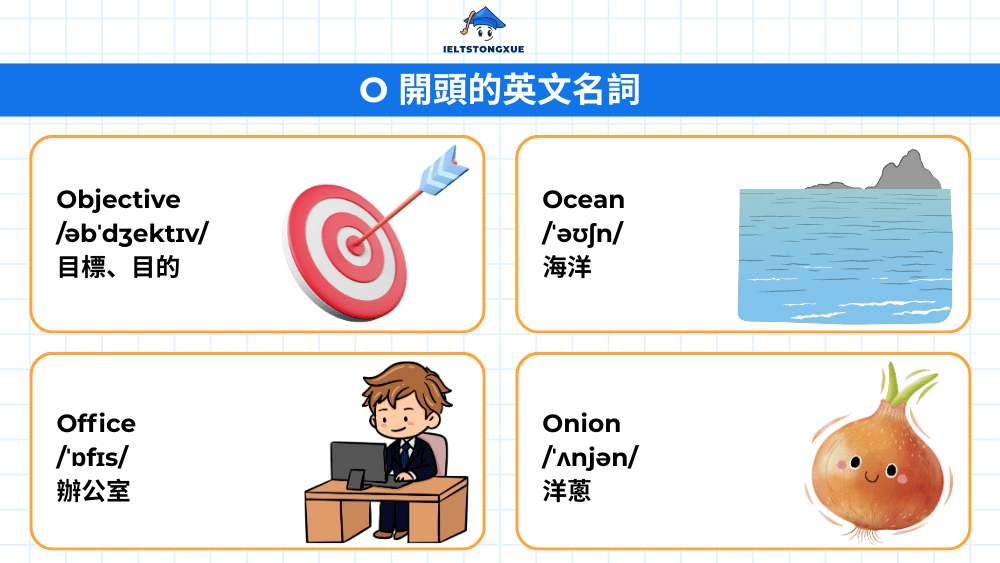
1. O 開頭的實用名詞:掌握日常溝通基石
名詞作為句子的主體,是表達人物、事物、地點與抽象概念的核心要素。掌握 O 開頭的名詞,能讓您在日常溝通中更精確地描述周遭世界,為流暢對話奠定堅實基礎。
以下表格整理了 80 個常用的 O 開頭名詞,涵蓋生活物件、人物職業、食物飲品及抽象概念等多元主題:
| O 開頭的英文單字 | 意思 | 例子 |
| Object
/ˈɒbdʒɪkt/ |
物體、物件、目標 | She picked up a strange object from the ground.
(她從地上撿起一個奇怪的物體。) |
| Objective
/əbˈdʒektɪv/ |
目標、目的 | Our main objective is to improve customer satisfaction.
(我們的主要目標是提升顧客滿意度。) |
| Obligation
/ˌɒblɪˈɡeɪʃn/ |
義務、責任 | You have no obligation to accept their offer.
(你沒有義務接受他們的提議。) |
| Observation
/ˌɒbzəˈveɪʃn/ |
觀察、觀測 | His observation about human behavior was quite insightful.
(他對人類行為的觀察相當深入。) |
| Observer
/əbˈzɜːvə/ |
觀察者 | The election observers monitored the voting process.
(選舉觀察員監督投票過程。) |
| Obstacle
/ˈɒbstəkl/ |
障礙、阻礙 | Lack of funding is the main obstacle to the project.
(資金不足是這個計畫的主要障礙。) |
| Occasion
/əˈkeɪʒn/ |
場合、時機 | This is a special occasion for our family.
(這對我們家庭來說是個特別的場合。) |
| Occupation
/ˌɒkjuˈpeɪʃn/ |
職業、工作 | Please state your name and occupation.
(請說明您的姓名和職業。) |
| Ocean
/ˈəʊʃn/ |
海洋 | The Pacific Ocean is the largest ocean in the world.
(太平洋是世界上最大的海洋。) |
| Offer
/ˈɒfə/ |
提議、報價 | I received a job offer from a multinational company.
(我收到一家跨國公司的工作邀約。) |
| Office
/ˈɒfɪs/ |
辦公室 | She works in an office in the city center.
(她在市中心的一間辦公室工作。) |
| Officer
/ˈɒfɪsə/ |
官員、警官 | The police officer asked to see my driver’s license.
(警官要求查看我的駕駛執照。) |
| Oil
/ɔɪl/ |
油、石油 | Olive oil is healthier than butter for cooking.
(橄欖油比奶油更適合烹飪。) |
| Olive
/ˈɒlɪv/ |
橄欖 | Greek salad is made with tomatoes, feta cheese, and olives.
(希臘沙拉是用番茄、菲達起司和橄欖製成的。) |
| Onion
/ˈʌnjən/ |
洋蔥 | Chop the onion into small pieces before adding it to the soup.
(在加入湯中之前,將洋蔥切成小塊。) |
| Opening
/ˈəʊpənɪŋ/ |
開口、空缺、開幕 | There’s an opening for a marketing manager in our company.
(我們公司有一個行銷經理的職缺。) |
| Opera
/ˈɒpərə/ |
歌劇 | We attended a beautiful opera performance last night.
(我們昨晚參加了一場精彩的歌劇演出。) |
| Operation
/ˌɒpəˈreɪʃn/ |
手術、操作、運作 | The doctor said the operation was successful.
(醫生說手術很成功。) |
| Operator
/ˈɒpəreɪtə/ |
操作員、接線員 | Please wait while I transfer you to an operator.
(請稍候,我將為您轉接到服務人員。) |
| Opinion
/əˈpɪnjən/ |
意見、看法 | In my opinion, we should postpone the meeting.
(依我的看法,我們應該延後會議。) |
| Opponent
/əˈpəʊnənt/ |
對手、反對者 | He defeated his opponent in the final match.
(他在決賽中擊敗了對手。) |
| Opportunity
/ˌɒpəˈtjuːnəti/ |
機會 | This internship is a great opportunity to gain work experience.
(這個實習是獲得工作經驗的絕佳機會。) |
| Opposition
/ˌɒpəˈzɪʃn/ |
反對、對立 | The proposal faced strong opposition from local residents.
(這項提案遭到當地居民的強烈反對。) |
| Option
/ˈɒpʃn/ |
選項、選擇 | You have two options: accept the offer or decline it.
(你有兩個選擇:接受或拒絕這項提議。) |
| Orange
/ˈɒrɪndʒ/ |
橙、橘子 | Fresh orange juice is rich in vitamin C.
(新鮮柳橙汁富含維生素C。) |
| Orbit
/ˈɔːbɪt/ |
軌道 | The satellite was launched into orbit around Earth.
(衛星被發射到環繞地球的軌道上。) |
| Orchard
/ˈɔːtʃəd/ |
果園 | We visited an apple orchard and picked fresh fruit.
(我們參觀了一座蘋果園並採摘新鮮水果。) |
| Orchestra
/ˈɔːkɪstrə/ |
管弦樂團 | The symphony orchestra performed Beethoven’s Fifth Symphony.
(交響樂團演奏了貝多芬的第五號交響曲。) |
| Order
/ˈɔːdə/ |
命令、順序、訂單 | I placed an order for a new laptop online.
(我在網上訂購了一台新筆記型電腦。) |
| Organ
/ˈɔːɡən/ |
器官、風琴 | The heart is a vital organ that pumps blood throughout the body.
(心臟是一個將血液輸送到全身的重要器官。) |
| Organization
/ˌɔːɡənaɪˈzeɪʃn/ |
組織、機構 | She works for a non-profit organization that helps refugees.
(她在一個幫助難民的非營利組織工作。) |
| Origin
/ˈɒrɪdʒɪn/ |
起源、出身 | The origin of this tradition dates back to ancient times.
(這個傳統的起源可以追溯到古代。) |
| Original
/əˈrɪdʒənl/ |
原作、原件 | This is a copy; the original painting is in the museum.
(這是複製品,原畫在博物館裡。) |
| Outcome
/ˈaʊtkʌm/ |
結果、成果 | We’re waiting to see the outcome of the election.
(我們正在等待選舉的結果。) |
| Outfit
/ˈaʊtfɪt/ |
全套服裝、裝備 | She bought a new outfit for the job interview.
(她為工作面試買了一套新衣服。) |
| Outlet
/ˈaʊtlet/ |
出口、銷售點、插座 | Please plug the charger into the electrical outlet.
(請將充電器插入電源插座。) |
| Outline
/ˈaʊtlaɪn/ |
大綱、輪廓 | Before writing the essay, create a detailed outline.
(在撰寫文章之前,先建立詳細的大綱。) |
| Output
/ˈaʊtpʊt/ |
產量、輸出 | The factory increased its output by 20% this year.
(工廠今年的產量增加了 20%。) |
| Outset
/ˈaʊtset/ |
開始、開端 | From the outset, we knew this project would be challenging.
(從一開始,我們就知道這個專案會很有挑戰性。) |
| Outside
/ˌaʊtˈsaɪd/ |
外部、外面 | Let’s go outside and enjoy the sunshine.
(我們到外面享受陽光吧。) |
| Oven
/ˈʌvn/ |
烤箱 | Preheat the oven to 180 degrees Celsius before baking.
(烘烤前將烤箱預熱至攝氏 180 度。) |
| Overflow
/ˌəʊvəˈfləʊ/ |
溢出、氾濫 | Heavy rain caused an overflow of the river.
(大雨導致河水氾濫。) |
| Overhead
/ˌəʊvəˈhed/ |
經常開支、高架的 | The company needs to reduce its overhead costs.
(公司需要降低經常開支。) |
| Overlap
/ˌəʊvəˈlæp/ |
重疊、交疊 | There’s some overlap between these two courses.
(這兩門課程有些內容重疊。) |
| Overseas
/ˌəʊvəˈsiːz/ |
海外 | Many students choose to study overseas for better opportunities.
(許多學生選擇到海外求學以獲得更好的機會。) |
| Overview
/ˈəʊvəvjuː/ |
概述、概覽 | This chapter provides an overview of the main theories.
(本章提供了主要理論的概述。) |
| Owner
/ˈəʊnə/ |
所有者、擁有者 | The restaurant owner greeted us personally at the door.
(餐廳老闆親自在門口迎接我們。) |
| Ownership
/ˈəʊnəʃɪp/ |
所有權 | The document proves ownership of the property.
(這份文件證明了該物業的所有權。) |
| Ox
/ɒks/ |
公牛 | Farmers used oxen to plow the fields in ancient times.
(古代農民使用公牛來犁田。) |
| Oxygen
/ˈɒksɪdʒən/ |
氧氣 | Plants produce oxygen through photosynthesis.
(植物透過光合作用產生氧氣。) |
| Oyster
/ˈɔɪstə/ |
牡蠣 | Fresh oysters are considered a delicacy in many countries.
(新鮮牡蠣在許多國家被視為美食。) |
| Oat
/əʊt/ |
燕麥 | Oats are a nutritious breakfast option rich in fiber.
(燕麥是富含纖維的營養早餐選擇。) |
| Oasis
/əʊˈeɪsɪs/ |
綠洲 | The desert travelers finally reached an oasis after days of journey.
(沙漠旅行者在數天的旅程後終於到達了綠洲。) |
| Oath
/əʊθ/ |
誓言、宣誓 | The witness took an oath to tell the truth in court.
(證人在法庭上宣誓說實話。) |
| Obedience
/əˈbiːdiəns/ |
服從、順從 | The dog showed perfect obedience to its trainer’s commands.
(那隻狗對訓練師的命令表現出完美的服從。) |
| Obesity
/əʊˈbiːsəti/ |
肥胖症 | Obesity is a major health problem in many developed countries.
(肥胖症是許多已開發國家的主要健康問題。) |
| Obituary
/əˈbɪtʃuəri/ |
訃聞 | The newspaper published an obituary for the famous actor.
(報紙刊登了這位著名演員的訃聞。) |
| Objection
/əbˈdʒekʃn/ |
反對、異議 | The lawyer raised an objection during the trial.
(律師在審判期間提出異議。) |
| Obsession
/əbˈseʃn/ |
癡迷、困擾 | His obsession with perfectionism often delays his work.
(他對完美主義的執著經常延誤他的工作。) |
| Occupant
/ˈɒkjupənt/ |
占用者、居住者 | The previous occupant left the apartment in excellent condition.
(前任住戶讓公寓保持在極佳狀態。) |
| Occurrence
/əˈkʌrəns/ |
發生、事件 | Such natural disasters are a rare occurrence in this region.
(這種自然災害在這個地區很少發生。) |
| Odds
/ɒdz/ |
機率、可能性 | The odds of winning the lottery are extremely low.
(中彩券的機率極低。) |
| Odor
/ˈəʊdə/ |
氣味 | There was a strange odor coming from the kitchen.
(廚房傳來一股奇怪的氣味。) |
| Offense
/əˈfens/ |
冒犯、罪行、進攻 | I didn’t mean to cause offense with my comment.
(我的評論並非有意冒犯。) |
| Offering
/ˈɒfərɪŋ/ |
祭品、供品、提供物 | The temple received offerings from devotees every day.
(寺廟每天都會收到信徒的供品。) |
| Official
/əˈfɪʃl/ |
官員、公務員 | Government officials attended the ceremony.
(政府官員出席了典禮。) |
| Offspring
/ˈɒfsprɪŋ/ |
子女、後代 | The lion protected its offspring from predators.
(獅子保護牠的後代免受掠食者侵害。) |
| Ointment
/ˈɔɪntmənt/ |
藥膏 | Apply this ointment to the wound twice daily.
(每天兩次將這種藥膏塗在傷口上。) |
| Olympics
/əˈlɪmpɪks/ |
奧林匹克運動會 | The Summer Olympics are held every four years.
(夏季奧運會每四年舉行一次。) |
| Omen
/ˈəʊmən/ |
預兆、徵兆 | Some cultures consider black cats an omen of bad luck.
(有些文化認為黑貓是厄運的預兆。) |
| Omission
/əˈmɪʃn/ |
遺漏、省略 | There was a significant omission in the report.
(報告中有一個重大遺漏。) |
| Onset
/ˈɒnset/ |
開始、發作 | The medication helps delay the onset of symptoms.
(這種藥物有助於延緩症狀的發作。) |
| Opal
/ˈəʊpl/ |
蛋白石 | The ring featured a beautiful opal stone.
(這枚戒指鑲有一顆美麗的蛋白石。) |
| Openness
/ˈəʊpənnəs/ |
開放、坦率 | His openness about his struggles inspired many people.
(他對自己掙扎的坦率態度激勵了許多人。) |
| Optimism
/ˈɒptɪmɪzəm/ |
樂觀主義 | Despite the challenges, she maintained her optimism.
(儘管面臨挑戰,她仍保持樂觀。) |
| Ore
/ɔː/ |
礦石 | Iron ore is extracted from mines and processed into steel.
(鐵礦石從礦山開採出來並加工成鋼鐵。) |
| Organism
/ˈɔːɡənɪzəm/ |
生物、有機體 | Scientists study microorganisms under microscopes.
(科學家在顯微鏡下研究微生物。) |
| Orientation
/ˌɔːriənˈteɪʃn/ |
方向、定位、新生訓練 | New students attended an orientation session before classes began.
(新生在開課前參加了新生訓練。) |
| Ornament
/ˈɔːnəmənt/ |
裝飾品 | We decorated the Christmas tree with colorful ornaments.
(我們用彩色裝飾品裝飾聖誕樹。) |
| Outbreak
/ˈaʊtbreɪk/ |
爆發、突發 | The government responded quickly to the disease outbreak.
(政府迅速應對疾病爆發。) |
| Outburst
/ˈaʊtbɜːst/ |
爆發、突發 | His angry outburst surprised everyone in the meeting.
(他憤怒的爆發讓會議上的每個人都感到驚訝。) |
| Outcast
/ˈaʊtkɑːst/ |
被放逐者、被遺棄者 | She felt like an outcast in her new school.
(她在新學校感覺像個局外人。) |
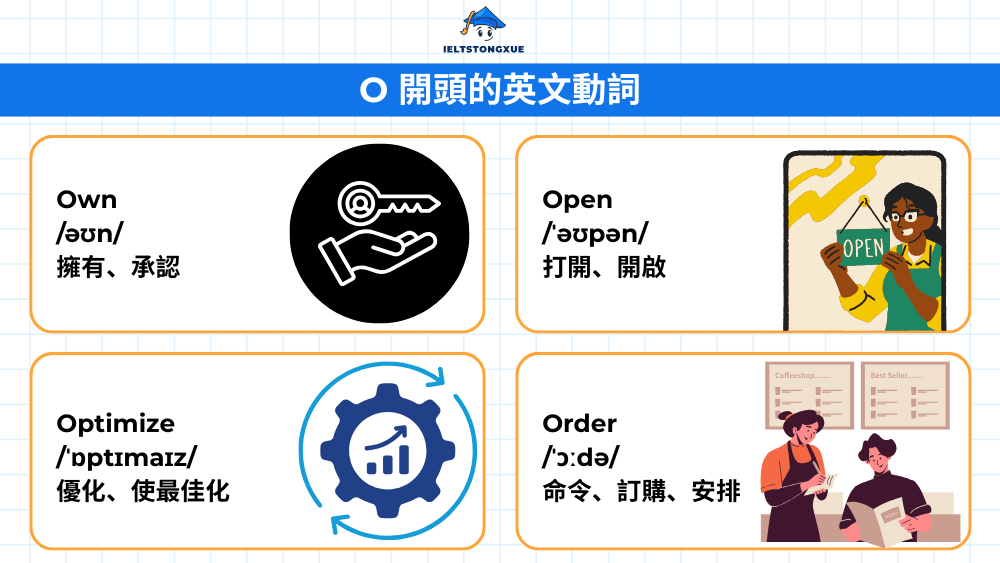
2. O 開頭的關鍵動詞:豐富您的表達能力
動詞是句子的靈魂,能夠生動地傳達行為、動作與狀態變化。熟練運用 O 開頭的動詞,將使您的英文表達更加精確且富有動態感,讓溝通變得更加流暢自然。
以下表格精選了 80 個實用的 O 開頭動詞,涵蓋一般動作、思考感知及各種互動情境:
| O 開頭的英文單字 | 意思 | 例子 |
| Obey
/əˈbeɪ/ |
服從、遵守 | Children should obey their parents and teachers.
(孩子們應該服從父母和老師。) |
| Observe
/əbˈzɜːv/ |
觀察、遵守、慶祝 | Scientists observe animal behavior in their natural habitat.
(科學家在自然棲息地觀察動物行為。) |
| Obsess
/əbˈses/ |
使著迷、使困擾 | Don’t obsess over small mistakes; learn from them.
(不要為小錯誤困擾,要從中學習。) |
| Obstruct
/əbˈstrʌkt/ |
阻礙、妨礙 | Please don’t obstruct the entrance with your luggage.
(請不要用行李阻礙入口。) |
| Obtain
/əbˈteɪn/ |
獲得、取得 | You need to obtain permission before entering the restricted area.
(你需要獲得許可才能進入管制區。) |
| Occur
/əˈkɜː/ |
發生、出現 | Accidents can occur when drivers are distracted.
(當駕駛分心時可能會發生事故。) |
| Occupy
/ˈɒkjupaɪ/ |
占據、占用、使忙碌 | Reading and writing occupy most of my free time.
(閱讀和寫作占據了我大部分的空閒時間。) |
| Offend
/əˈfend/ |
冒犯、得罪 | I didn’t mean to offend you with my remarks.
(我的話並非有意冒犯你。) |
| Offer
/ˈɒfə/ |
提供、提議 | The company offered him a promotion with higher salary.
(公司提供他升職機會並加薪。) |
| Omit
/əˈmɪt/ |
省略、遺漏 | Please don’t omit any important details from your report.
(請不要在報告中遺漏任何重要細節。) |
| Open
/ˈəʊpən/ |
打開、開啟 | Can you open the window to let some fresh air in?
(你能打開窗戶讓新鮮空氣進來嗎?) |
| Operate
/ˈɒpəreɪt/ |
操作、運作、動手術 | The surgeon will operate on the patient tomorrow morning.
(外科醫生將於明天早上為病人動手術。) |
| Oppose
/əˈpəʊz/ |
反對、對抗 | Many citizens oppose the construction of the new highway.
(許多市民反對建造新的高速公路。) |
| Oppress
/əˈpres/ |
壓迫、壓制 | The dictator oppressed his people for decades.
(獨裁者壓迫人民數十年。) |
| Opt
/ɒpt/ |
選擇、決定 | I opted to take the train instead of driving.
(我選擇搭火車而不是開車。) |
| Optimize
/ˈɒptɪmaɪz/ |
優化、使最佳化 | We need to optimize our website for better search engine ranking.
(我們需要優化網站以獲得更好的搜尋引擎排名。) |
| Orchestrate
/ˈɔːkɪstreɪt/ |
精心策劃、編管弦樂曲 | The manager orchestrated a successful marketing campaign.
(經理精心策劃了一次成功的行銷活動。) |
| Order
/ˈɔːdə/ |
命令、訂購、安排 | I ordered a pizza for dinner online.
(我在網上訂了一份披薩當晚餐。) |
| Organize
/ˈɔːɡənaɪz/ |
組織、安排 | She organized a charity event to raise funds for the hospital.
(她組織了一場慈善活動為醫院籌款。) |
| Orient
/ˈɔːrient/ |
使適應、使熟悉、定向 | The training program helps new employees orient themselves to company culture.
(培訓計畫幫助新員工適應公司文化。) |
| Originate
/əˈrɪdʒɪneɪt/ |
起源、發源 | Many English words originate from Latin and Greek.
(許多英文單字源自拉丁文和希臘文。) |
| Oscillate
/ˈɒsɪleɪt/ |
振盪、擺動、猶豫 | The pendulum oscillates back and forth regularly.
(鐘擺規律地來回擺動。) |
| Outdo
/ˌaʊtˈduː/ |
勝過、超越 | She always tries to outdo her previous performance.
(她總是試圖超越自己以往的表現。) |
| Outgrow
/ˌaʊtˈɡrəʊ/ |
長大而不適用、成長超過 | Children quickly outgrow their clothes and shoes.
(孩子們很快就會長大而穿不下衣服和鞋子。) |
| Outlast
/ˌaʊtˈlɑːst/ |
比…持久、比…長壽 | Quality products outlast cheap alternatives.
(優質產品比廉價替代品更耐用。) |
| Outline
/ˈaʊtlaɪn/ |
概述、勾勒 | The professor outlined the main points of the lecture.
(教授概述了講座的要點。) |
| Outlive
/ˌaʊtˈlɪv/ |
比…活得長 | Women tend to outlive men in most countries.
(在大多數國家,女性往往比男性長壽。) |
| Outnumber
/ˌaʊtˈnʌmbə/ |
在數量上超過 | Female students outnumber male students in this program.
(這個課程的女學生人數超過男學生。) |
| Outperform
/ˌaʊtpəˈfɔːm/ |
表現勝過、超越 | Our team outperformed all competitors this quarter.
(我們的團隊本季度表現超越所有競爭對手。) |
| Output
/ˈaʊtpʊt/ |
輸出、生產 | The factory outputs 10,000 units per day.
(工廠每天生產 10,000 個單位。) |
| Outrage
/ˈaʊtreɪdʒ/ |
激怒、使憤慨 | The scandal outraged the public.
(這起醜聞激怒了公眾。) |
| Outrun
/ˌaʊtˈrʌn/ |
跑得比…快、超過 | The athlete outran all his competitors in the marathon.
(這名運動員在馬拉松比賽中跑得比所有競爭對手都快。) |
| Outsell
/ˌaʊtˈsel/ |
賣得比…多 | This smartphone model outsells all others in the market.
(這款智慧型手機型號的銷量超過市場上所有其他產品。) |
| Outshine
/ˌaʊtˈʃaɪn/ |
比…出色、使相形見絀 | Her talent outshines everyone else in the competition.
(她的才華使比賽中其他人相形見絀。) |
| Outwit
/ˌaʊtˈwɪt/ |
智勝、以機智戰勝 | The detective outwitted the criminal and solved the case.
(偵探智勝罪犯並破案。) |
| Owe
/əʊ/ |
欠、應給予 | I owe you an apology for my rude behavior yesterday.
(我昨天的無禮行為應該向你道歉。) |
| Own
/əʊn/ |
擁有、承認 | She owns three apartments in the city.
(她在城市裡擁有三套公寓。) |
| Overcome
/ˌəʊvəˈkʌm/ |
克服、戰勝 | He worked hard to overcome his fear of public speaking.
(他努力克服對公開演講的恐懼。) |
| Overdo
/ˌəʊvəˈduː/ |
做得過分、過度 | Don’t overdo the exercise when you’re just starting out.
(剛開始運動時不要過度。) |
| Overdose
/ˈəʊvədəʊs/ |
服藥過量 | The patient accidentally overdosed on sleeping pills.
(病人不小心服用過量安眠藥。) |
| Overeat
/ˌəʊvərˈiːt/ |
吃得過多 | It’s easy to overeat during holiday celebrations.
(在節日慶祝活動中很容易吃得過多。) |
| Overestimate
/ˌəʊvərˈestɪmeɪt/ |
高估 | Don’t overestimate your abilities and take unnecessary risks.
(不要高估自己的能力並承擔不必要的風險。) |
| Overflow
/ˌəʊvəˈfləʊ/ |
溢出、氾濫 | The river overflowed its banks after heavy rainfall.
(大雨過後河水溢出河岸。) |
| Overhear
/ˌəʊvəˈhɪə/ |
無意中聽到、偷聽到 | I accidentally overheard their conversation about the surprise party.
(我無意中聽到他們關於驚喜派對的對話。) |
| Overheat
/ˌəʊvəˈhiːt/ |
過熱 | Be careful not to let the engine overheat during long drives.
(長途駕駛時要小心不要讓引擎過熱。) |
| Overlap
/ˌəʊvəˈlæp/ |
重疊、部分重疊 | Our vacation dates overlap with the conference schedule.
(我們的假期日期與會議日程重疊。) |
| Overload
/ˌəʊvəˈləʊd/ |
使超載、使負荷過重 | Don’t overload the washing machine with too many clothes.
(不要在洗衣機裡放太多衣服使其超載。) |
| Overlook
/ˌəʊvəˈlʊk/ |
忽視、俯瞰 | Don’t overlook the importance of regular health check-ups.
(不要忽視定期健康檢查的重要性。) |
| Overnight
/ˌəʊvəˈnaɪt/ |
過夜、突然 | Success doesn’t happen overnight; it requires consistent effort.
(成功不會一夜之間發生,需要持續努力。) |
| Overpower
/ˌəʊvəˈpaʊə/ |
制服、壓倒 | The police managed to overpower the suspect.
(警方設法制服了嫌疑人。) |
| Overreact
/ˌəʊvəriˈækt/ |
反應過度 | Try not to overreact to criticism; use it constructively.
(盡量不要對批評反應過度,要建設性地利用它。) |
| Override
/ˌəʊvəˈraɪd/ |
推翻、否決 | The manager can override the automatic system if necessary.
(必要時經理可以推翻自動系統。) |
| Overrun
/ˌəʊvəˈrʌn/ |
超出、泛濫 | The meeting overran by 30 minutes.
(會議超時了 30 分鐘。) |
| Oversee
/ˌəʊvəˈsiː/ |
監督、監視 | The supervisor oversees the daily operations of the department.
(主管監督部門的日常運作。) |
| Overshadow
/ˌəʊvəˈʃædəʊ/ |
使黯然失色、遮蔽 | His achievements overshadowed those of his colleagues.
(他的成就使同事們相形見絀。) |
| Oversleep
/ˌəʊvəˈsliːp/ |
睡過頭 | I overslept this morning and missed my bus.
(我今天早上睡過頭錯過了公車。) |
| Overspend
/ˌəʊvəˈspend/ |
超支、花費過多 | Many people overspend during the holiday season.
(許多人在假期季節花費過多。) |
| Overstate
/ˌəʊvəˈsteɪt/ |
誇大、言過其實 | The report overstates the company’s financial problems.
(報告誇大了公司的財務問題。) |
| Overstep
/ˌəʊvəˈstep/ |
超越、逾越 | Be careful not to overstep your authority in this matter.
(在這件事上要小心不要逾越你的權限。) |
| Overtake
/ˌəʊvəˈteɪk/ |
超過、趕上 | The sports car overtook us on the highway.
(那輛跑車在高速公路上超過了我們。) |
| Overthrow
/ˌəʊvəˈθrəʊ/ |
推翻、打倒 | The revolution aimed to overthrow the corrupt government.
(革命旨在推翻腐敗政府。) |
| Overturn
/ˌəʊvəˈtɜːn/ |
推翻、傾覆 | The court decided to overturn the previous ruling.
(法院決定推翻先前的裁決。) |
| Overwhelm
/ˌəʊvəˈwelm/ |
壓倒、使不知所措 | Don’t let stress overwhelm you during exam period.
(考試期間不要讓壓力壓垮你。) |
| Overwork
/ˌəʊvəˈwɜːk/ |
過度工作、使工作過度 | Many employees overwork themselves to meet deadlines.
(許多員工為了趕上截止日期而過度工作。) |
| Oxidize
/ˈɒksɪdaɪz/ |
氧化、使生銹 | Iron oxidizes when exposed to moisture and air.
(鐵暴露在潮濕和空氣中時會氧化。) |
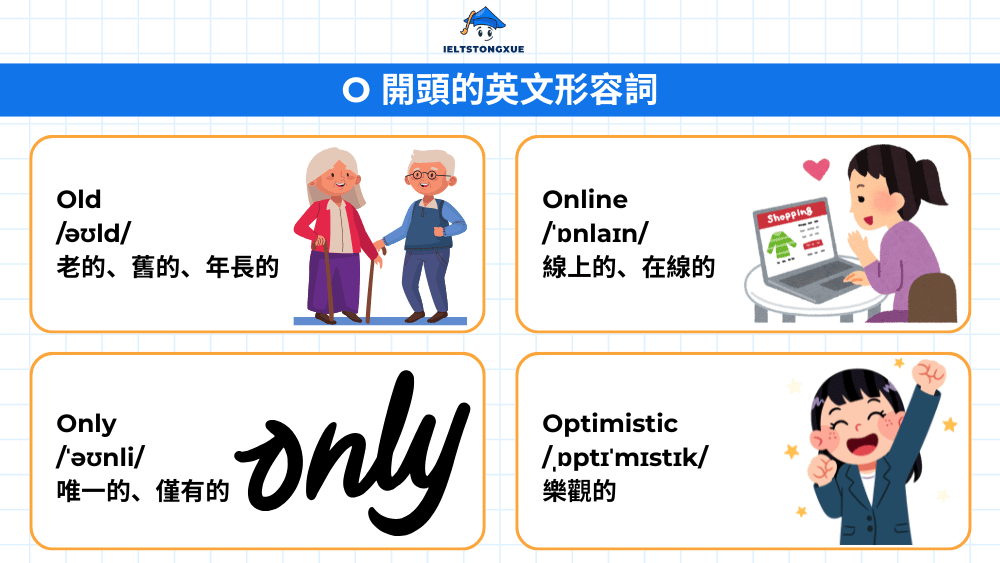
3. O 開頭的描述性形容詞: 精準刻畫人事物
形容詞為名詞增添色彩與細節,讓您的描述更加生動具體。掌握 O 開頭的形容詞,能讓您更精準地表達人物特質、情緒狀態及事物性質,使溝通內容更加豐富立體。
以下表格整理了 80 個常用的 O 開頭形容詞,涵蓋人物特質、情緒描述及事物狀態等多元面向:
| O 開頭的英文單字 | 意思 | 例子 |
| Obedient
/əˈbiːdiənt/ |
順從的、服從的 | The obedient dog followed every command from its owner.
(那隻順從的狗遵從主人的每一個命令。) |
| Obese
/əʊˈbiːs/ |
肥胖的 | Obese individuals have a higher risk of developing diabetes.
(肥胖的人患糖尿病的風險較高。) |
| Objective
/əbˈdʒektɪv/ |
客觀的、目標的 | A good journalist should remain objective when reporting news.
(優秀的記者在報導新聞時應保持客觀。) |
| Obligatory
/əˈblɪɡətri/ |
義務的、強制的 | Attendance at the safety training session is obligatory.
(參加安全培訓課程是強制性的。) |
| Oblique
/əˈbliːk/ |
傾斜的、間接的 | He made an oblique reference to the incident.
(他間接提及了那次事件。) |
| Oblivious
/əˈblɪviəs/ |
遺忘的、未察覺的 | She was completely oblivious to the danger around her.
(她完全沒有察覺到周圍的危險。) |
| Obnoxious
/əbˈnɒkʃəs/ |
令人討厭的、可憎的 | His obnoxious behavior at the party upset many guests.
(他在派對上令人討厭的行為惹惱了許多賓客。) |
| Obscure
/əbˈskjʊə/ |
模糊的、晦澀的、不著名的 | The meaning of this ancient text remains obscure.
(這篇古文的意義仍然模糊不清。) |
| Observant
/əbˈzɜːvənt/ |
善於觀察的、警覺的 | An observant detective can notice small details others miss.
(善於觀察的偵探能注意到其他人忽略的小細節。) |
| Obsessive
/əbˈsesɪv/ |
著迷的、強迫性的 | His obsessive attention to detail sometimes delays projects.
(他對細節的強迫性關注有時會延誤計畫。) |
| Obsolete
/ˈɒbsəliːt/ |
過時的、廢棄的 | Many technologies become obsolete within a few years.
(許多技術在幾年內就變得過時。) |
| Obstinate
/ˈɒbstɪnət/ |
固執的、頑固的 | The obstinate child refused to eat vegetables.
(那個固執的孩子拒絕吃蔬菜。) |
| Obvious
/ˈɒbviəs/ |
明顯的、顯而易見的 | It was obvious that she was nervous about the presentation.
(很明顯她對這次演講感到緊張。) |
| Occasional
/əˈkeɪʒənl/ |
偶爾的、臨時的 | I enjoy an occasional glass of wine with dinner.
(我喜歡偶爾在晚餐時喝一杯紅酒。) |
| Occupational
/ˌɒkjuˈpeɪʃənl/ |
職業的、職業性的 | Back pain is a common occupational hazard for office workers.
(背痛是辦公室工作人員常見的職業病。) |
| Odd
/ɒd/ |
奇怪的、單數的、零散的 | There was something odd about his behavior today.
(他今天的行為有些奇怪。) |
| Odorless
/ˈəʊdələs/ |
無味的、無氣味的 | Carbon monoxide is a colorless and odorless gas.
(一氧化碳是一種無色無味的氣體。) |
| Offensive
/əˈfensɪv/ |
冒犯的、無禮的、攻擊性的 | His offensive comments upset everyone at the meeting.
(他無禮的評論讓會議上的每個人都感到不悅。) |
| Official
/əˈfɪʃl/ |
官方的、正式的 | The official announcement will be made tomorrow.
(官方公告將於明天發布。) |
| Old
/əʊld/ |
老的、舊的、年長的 | This is an old tradition that dates back centuries.
(這是一個可以追溯到幾個世紀前的古老傳統。) |
| Old-fashioned
/ˌəʊld ˈfæʃnd/ |
老式的、過時的 | My grandfather has old-fashioned views about technology.
(我祖父對科技有著老派的看法。) |
| Olive
/ˈɒlɪv/ |
橄欖色的 | She wore an olive green jacket to the event.
(她穿了一件橄欖綠色的外套參加活動。) |
| Olympic
/əˈlɪmpɪk/ |
奧林匹克的 | He won an Olympic gold medal in swimming.
(他在游泳項目中贏得奧運金牌。) |
| Ominous
/ˈɒmɪnəs/ |
不祥的、凶兆的 | Dark clouds gathered in an ominous sign of the approaching storm.
(烏雲聚集是暴風雨即將來臨的不祥徵兆。) |
| Ongoing
/ˈɒnɡəʊɪŋ/ |
進行中的、持續的 | The investigation is still ongoing.
(調查仍在進行中。) |
| Online
/ˈɒnlaɪn/ |
線上的、在線的 | Many people prefer online shopping to visiting physical stores.
(許多人比起實體店更喜歡線上購物。) |
| Only
/ˈəʊnli/ |
唯一的、僅有的 | She is the only person who knows the password.
(她是唯一知道密碼的人。) |
| Open
/ˈəʊpən/ |
開放的、公開的、坦率的 | The museum is open from 9 AM to 5 PM daily.
(博物館每天上午 9 點到下午 5 點開放。) |
| Open-minded
/ˌəʊpən ˈmaɪndɪd/ |
思想開明的、虛心的 | An open-minded approach helps you learn from different perspectives.
(思想開明的態度幫助你從不同角度學習。) |
| Operational
/ˌɒpəˈreɪʃənl/ |
運作的、可使用的 | The new system will be operational next month.
(新系統將於下個月開始運作。) |
| Opinionated
/əˈpɪnjəneɪtɪd/ |
固執己見的、武斷的 | He’s very opinionated and rarely changes his mind.
(他非常固執己見,很少改變想法。) |
| Opposite
/ˈɒpəzɪt/ |
相反的、對立的 | They have opposite views on politics.
(他們對政治有相反的看法。) |
| Optimal
/ˈɒptɪməl/ |
最佳的、最理想的 | We need to find the optimal solution to this problem.
(我們需要找到解決這個問題的最佳方案。) |
| Optimistic
/ˌɒptɪˈmɪstɪk/ |
樂觀的 | Despite the setbacks, she remained optimistic about the future.
(儘管遭遇挫折,她對未來仍保持樂觀。) |
| Optional
/ˈɒpʃənl/ |
可選擇的、非強制的 | Attendance at the workshop is optional.
(參加研討會是可選擇的。) |
| Oral
/ˈɔːrəl/ |
口頭的、口腔的 | Students will have both written and oral exams.
(學生將進行筆試和口試。) |
| Orange
/ˈɒrɪndʒ/ |
橙色的 | She painted her bedroom walls a bright orange color.
(她把臥室牆壁漆成明亮的橙色。) |
| Orchestral
/ɔːˈkestrəl/ |
管弦樂的 | The orchestral performance was magnificent.
(管弦樂演出非常壯觀。) |
| Orderly
/ˈɔːdəli/ |
有序的、整潔的 | Please form an orderly queue at the entrance.
(請在入口處排成整齊的隊伍。) |
| Ordinary
/ˈɔːdnri/ |
普通的、平凡的 | It was just an ordinary day until the unexpected happened.
(在意外發生之前,這只是一個普通的日子。) |
| Organic
/ɔːˈɡænɪk/ |
有機的、器官的 | Many consumers prefer organic vegetables and fruits.
(許多消費者偏好有機蔬菜和水果。) |
| Organizational
/ˌɔːɡənaɪˈzeɪʃənl/ |
組織的、編制的 | Good organizational skills are essential for project management.
(良好的組織能力對專案管理至關重要。) |
| Oriental
/ˌɔːriˈentl/ |
東方的、東方人的 | The restaurant serves authentic Oriental cuisine.
(這家餐廳提供正宗的東方美食。) |
| Original
/əˈrɪdʒənl/ |
原始的、獨創的、新穎的 | She has a very original approach to problem-solving.
(她有一種非常新穎的解決問題方法。) |
| Ornamental
/ˌɔːnəˈmentl/ |
裝飾的、裝飾用的 | The garden features many ornamental plants and flowers.
(花園裡有許多裝飾性植物和花卉。) |
| Orphan
/ˈɔːfn/ |
孤兒的、無父母的 | The orphan children were cared for by the local community.
(孤兒們受到當地社區的照顧。) |
| Orthodox
/ˈɔːθədɒks/ |
正統的、傳統的 | He follows orthodox religious practices.
(他遵循正統的宗教習俗。) |
| Other
/ˈʌðə/ |
其他的、另外的 | Do you have any other questions?
(你還有其他問題嗎?) |
| Outdoor
/ˈaʊtdɔː/ |
戶外的、露天的 | We enjoy outdoor activities like hiking and camping.
(我們喜歡健行和露營等戶外活動。) |
| Outer
/ˈaʊtə/ |
外部的、外面的 | The outer layer of the Earth is called the crust.
(地球的外層稱為地殼。) |
| Outgoing
/ˌaʊtˈɡəʊɪŋ/ |
外向的、友善的、即將離職的 | Her outgoing personality makes her popular among colleagues.
(她外向的個性使她在同事中很受歡迎。) |
| Outstanding
/aʊtˈstændɪŋ/ |
傑出的、顯著的、未解決的 | He received an award for his outstanding contribution to science.
(他因對科學的傑出貢獻而獲獎。) |
| Outward
/ˈaʊtwəd/ |
向外的、外表的 | Despite her outward confidence, she was nervous inside.
(儘管外表自信,她內心其實很緊張。) |
| Oval
/ˈəʊvl/ |
橢圓形的 | The table has an oval shape.
(這張桌子是橢圓形的。) |
| Overall
/ˌəʊvərˈɔːl/ |
全面的、總體的 | The overall quality of the product is excellent.
(產品的整體品質非常優秀。) |
| Overcast
/ˌəʊvəˈkɑːst/ |
陰天的、多雲的 | The sky was overcast and it looked like rain.
(天空陰沉,看起來要下雨了。) |
| Overconfident
/ˌəʊvəˈkɒnfɪdənt/ |
過於自信的 | Being overconfident can lead to careless mistakes.
(過於自信可能會導致粗心的錯誤。) |
| Overcome
/ˌəʊvəˈkʌm/ |
被制服的、被壓倒的 | She was overcome with emotion during the ceremony.
(她在典禮期間被情緒壓倒。) |
| Overdue
/ˌəʊvəˈdjuː/ |
過期的、延誤的 | The library book is three days overdue.
(圖書館的書逾期三天了。) |
| Overhead
/ˌəʊvəˈhed/ |
在頭頂上的、高架的 | Birds flew overhead in formation.
(鳥兒排成隊形在頭頂飛過。) |
| Overnight
/ˌəʊvəˈnaɪt/ |
通宵的、一夜的 | We took an overnight train to the city.
(我們搭了一班通宵火車到城市。) |
| Overseas
/ˌəʊvəˈsiːz/ |
海外的、國外的 | She works for an overseas company.
(她在一家海外公司工作。) |
| Oversized
/ˌəʊvəˈsaɪzd/ |
超大的、過大的 | He wore an oversized jacket to keep warm.
(他穿了一件超大號外套保暖。) |
| Overt
/əʊˈvɜːt/ |
公開的、明顯的 | There was overt hostility between the two groups.
(兩個團體之間存在明顯的敵意。) |
| Overwhelming
/ˌəʊvəˈwelmɪŋ/ |
壓倒性的、勢不可擋的 | The team won by an overwhelming majority.
(該隊以壓倒性多數獲勝。) |
| Overworked
/ˌəʊvəˈwɜːkt/ |
工作過度的、過勞的 | Many healthcare workers feel overworked and underpaid.
(許多醫護人員感到工作過度且薪酬過低。) |
| Overweight
/ˌəʊvəˈweɪt/ |
超重的 | Being overweight increases the risk of heart disease.
(超重會增加心臟病的風險。) |
| Owing
/ˈəʊɪŋ/ |
欠的、應支付的 | There is still money owing on the mortgage.
(抵押貸款還有錢沒還。) |
| Own
/əʊn/ |
自己的、本身的 | Everyone has their own unique talents.
(每個人都有自己獨特的才能。) |
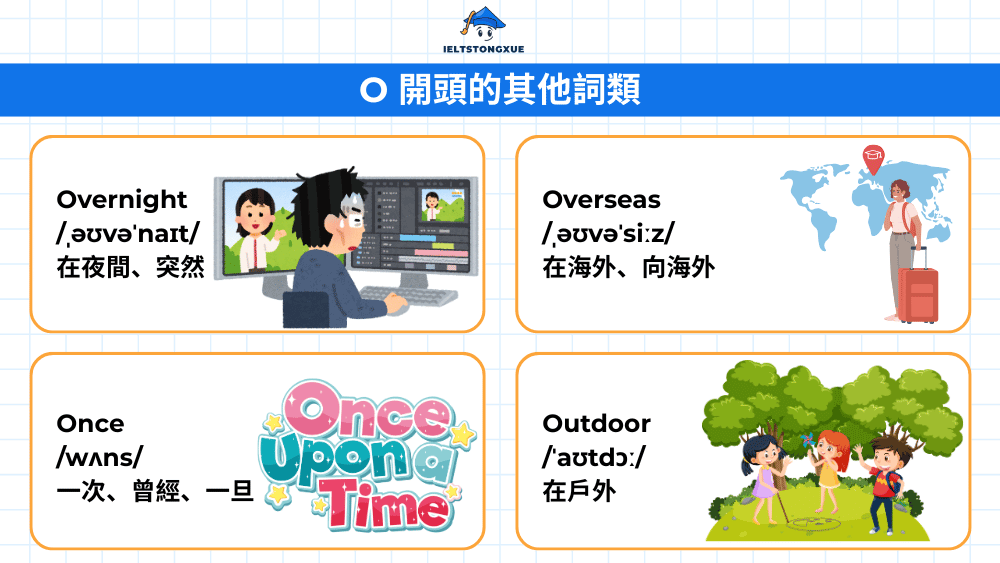
4. O 開頭的其他重要詞類
除了名詞、動詞和形容詞之外,副詞、介系詞、連接詞和感嘆詞雖然數量相對較少,卻在英文句子結構中扮演著不可或缺的角色。這些詞類能夠連結句子成分、表達語氣情感,並為語句增添豐富的層次感,是構建完整流暢表達的關鍵要素。
4.1. 常見副詞
副詞用來修飾動詞、形容詞或其他副詞,能夠精確表達時間、頻率、程度和方式等概念。以下整理了常用的 O 開頭副詞:
| O 開頭的英文單字 | 意思 | 例子 |
| Occasionally
/əˈkeɪʒnəli/ |
偶爾、有時 | I occasionally meet my old friends for coffee.
(我偶爾會和老朋友見面喝咖啡。) |
| Obviously
/ˈɒbviəsli/ |
明顯地、顯然 | She was obviously upset about the news.
(她顯然對這個消息感到不安。) |
| Often
/ˈɒfn/ |
經常、常常 | We often go to the cinema on weekends.
(我們週末經常去電影院。) |
| Once
/wʌns/ |
一次、曾經、一旦 | I have only been to Paris once in my life.
(我一生只去過巴黎一次。) |
| Only
/ˈəʊnli/ |
只、僅僅、才 | I only have ten dollars left in my wallet.
(我錢包裡只剩下十美元。) |
| Onward
/ˈɒnwəd/ |
向前、前進地 | From this point onward, we need to be more careful.
(從這一點往後,我們需要更加小心。) |
| Openly
/ˈəʊpənli/ |
公開地、坦率地 | She spoke openly about her experiences during the interview.
(她在面試中坦率地談論自己的經歷。) |
| Optionally
/ˈɒpʃənəli/ |
可選擇地、隨意地 | You can optionally add extra features to your package.
(你可以選擇在套餐中添加額外功能。) |
| Ordinarily
/ˈɔːdnrəli/ |
通常、平常 | Ordinarily, I don’t work on Sundays.
(通常我星期天不工作。) |
| Originally
/əˈrɪdʒənəli/ |
最初、原本 | The building was originally constructed in 1850.
(這座建築最初建於 1850 年。) |
| Otherwise
/ˈʌðəwaɪz/ |
否則、不然 | Study hard, otherwise you will fail the exam.
(努力學習,否則你會考試不及格。) |
| Out
/aʊt/ |
向外、在外 | Please go out and get some fresh air.
(請出去呼吸一些新鮮空氣。) |
| Outdoor
/ˈaʊtdɔː/ |
在戶外 | We prefer to eat outdoor when the weather is nice.
(天氣好的時候我們喜歡在戶外用餐。) |
| Outright
/ˈaʊtraɪt/ |
完全地、徹底地 | The proposal was rejected outright by the committee.
(該提案被委員會徹底否決。) |
| Outside
/ˌaʊtˈsaɪd/ |
在外面 | The children are playing outside in the garden.
(孩子們在花園外面玩耍。) |
| Outward
/ˈaʊtwəd/ |
向外地、表面上 | The door opens outward, not inward.
(門是向外開的,不是向內開。) |
| Over
/ˈəʊvə/ |
在…之上、結束 | The meeting is over now.
(會議現在結束了。) |
| Overall
/ˌəʊvərˈɔːl/ |
總體上、全面地 |
Overall, the project was a success. (總體而言,這個專案是成功的。) |
| Overnight
/ˌəʊvəˈnaɪt/ |
在夜間、突然 | The package will be delivered overnight.
(包裹將在夜間送達。) |
| Overseas
/ˌəʊvəˈsiːz/ |
在海外、向海外 | He traveled overseas for business.
(他到海外出差。) |
4.2. 核心介系詞
介系詞用來表達名詞或代名詞與句子其他部分之間的關係,特別是時間、位置和方向等概念。以下是常用的 O 開頭介系詞:
| O 開頭的英文單字 | 意思 | 例子 |
| Of
/ɒv/ |
…的、屬於 | The cover of the book is damaged.
(這本書的封面損壞了。) |
| Off
/ɒf/ |
離開、脫離 | Please take your shoes off before entering.
(進入前請脫鞋。) |
| On
/ɒn/ |
在…上面、關於 | The keys are on the table.
(鑰匙在桌子上。) |
| Onto
/ˈɒntə/ |
到…上、向…上 | The cat jumped onto the sofa.
(貓跳到沙發上。) |
| Opposite
/ˈɒpəzɪt/ |
在…對面 | The bank is opposite the post office.
(銀行在郵局對面。) |
| Out of
/aʊt ɒv/ |
從…出來、由於 | She walked out of the room angrily.
(她生氣地走出房間。) |
| Outside
/ˌaʊtˈsaɪd/ |
在…外面 | Wait outside the building.
(在建築物外面等待。) |
| Over
/ˈəʊvə/ |
在…上方、越過 |
The plane flew over the mountains. (飛機飛越山脈。) |
4.3. 常用連接詞與感嘆詞
連接詞用來連結詞語、片語或子句,而感嘆詞則用來表達情緒或反應。以下是常用的 O 開頭連接詞與感嘆詞:
| O 開頭的英文單字 | 意思 | 例子 |
| Or
/ɔː/ |
或者、否則 | Would you like tea or coffee?
(你想要茶還是咖啡?) |
| Otherwise
/ˈʌðəwaɪz/ |
否則、不然 | Leave now, otherwise you’ll be late.
(現在離開,否則你會遲到。) |
| Oh
/əʊ/ |
哦、啊(表示驚訝等) | Oh, I didn’t know you were here!
(哦,我不知道你在這裡!) |
| Oops
/ʊps/ |
哎呀(表示驚訝或犯錯) | Oops, I dropped my phone!
(哎呀,我把手機掉了!) |
| Ouch
/aʊtʃ/ |
哎喲(表示疼痛) | Ouch! That hurt!
(哎喲!好痛!) |
要記住以字母 O 開頭的英文單字,你可以透過下方的 Quizlet 應用程式來複習單字:
II. 實戰演練: O 開頭英文單字練習題
理論學習固然重要,但唯有透過實際練習,才能真正內化這些 O 單字,把所學轉化為靈活且具表達力的語言能力。本章節精心設計了多樣化的練習題型,幫助您檢驗學習成效,並在實際應用中加深對詞彙的理解與記憶。所有練習均基於前述詞彙列表設計,確保學習的連貫性與系統性。
1. 練習1: 填空題
填空題旨在測試您在特定語境下選擇正確 O 開頭單字的能力,幫助您理解單字的實際用法。請從括號中選出最適合的單字填入空格:
- The weather forecast shows ____ skies for tomorrow, so we might not see any sunshine. (obvious / overcast / outgoing)
- She is known for being very ____ and friendly, which makes her perfect for customer service roles. (oblivious / outgoing / obstinate)
- It’s ____ that the company needs to improve its communication strategies. (obvious / oval / ornamental)
- The museum has an impressive collection of ____ paintings from the 19th century. (original / optional / overcast)
- Despite many ____, the team successfully completed the project on time. (ornaments / obstacles / orbits)
- You need to ____ permission from your supervisor before taking leave. (obtain / omit / oppose)
- The athlete managed to ____ the world record by 0.5 seconds. (overlook / overcome / outdo)
- In my ____, this is the best restaurant in the city. (opinion / operation / occupation)
| 答案 | 解釋 |
|
根據語境「可能看不到陽光」,overcast(陰天的)是最合適的選擇。 |
|
描述適合客戶服務的個性特質,outgoing(外向友善的)最符合。 |
|
It’s obvious that… 是常見句型,表示「…是顯而易見的」。 |
|
博物館收藏原作畫作符合語境。 |
|
「儘管有許多障礙」符合句子邏輯。 |
|
obtain permission 是固定搭配,表示「獲得許可」。 |
|
outdo the record 表示打破或超越紀錄。 |
|
In my opinion 是常用片語,表示「依我看來」。 |
2. 練習2: 造句題
本類型練習旨在綜合考驗您的詞彙運用、語法結構和實際寫作能力。請使用指定的 O 開頭單字完成以下練習:
- object
- observe
- obvious
- occasion
- offer
- official
- omit
- oppose
- opinion
- outcome
答案:
- She refused to touch the strange object on the table. (她拒絕碰那個在桌上的奇怪物體。)
- The scientists observed the behavior of the animals closely. (科學家密切觀察這些動物的行為。)
- It was obvious that he didn’t prepare for the presentation. (很明顯他沒有準備這場報告。)
- We wore traditional clothes for the wedding occasion. (我們為婚禮這個場合穿上了傳統服裝。)
- She offered me a seat next to the window. (她給了我靠窗的座位。)
- The official statement was released yesterday afternoon. (官方聲明於昨天下午發布。)
- Please do not omit any important details in your report. (請不要在報告中遺漏任何重要細節。)
- Many citizens opposed the new tax law. (許多市民反對這項新稅法。)
- In my opinion, this is the best solution to the problem. (我認為這是解決這個問題的最佳方案。)
- We were all satisfied with the outcome of the project. (我們對這個專案的結果都很滿意。)
結論
透過本篇內容,你已全面掌握最實用、最具代表性的 O 開頭的英文單字,這不僅能強化你的字彙基礎,更是邁向高階英文表達的重要一步。真正的進步來自不斷練習與應用——試著在寫作、口說和聽力中靈活運用這些詞彙,讓英文成為你的思考語言。
想更高效地提升學習成果?立即加入 IELTSTongXue 的進階詞彙訓練課程,開啟你的高分英語進化之路,讓每一個字都成為你通往成功的力量!

