


你是否曾經在用英文描述身體不適時,突然卡住,不知道「發燒」、「頭痛」或「喉嚨痛」該怎麼說?其實,只要掌握最實用的疾病英文單字與症狀表達,你就能自然地與醫生溝通、閱讀健康資訊,甚至在IELTS或TOEFL口說中精準運用這些詞彙。
在醫療與生活日益國際化的今天,懂得運用疾病相關詞彙,不只是語言能力的展現,更是跨文化交流與自我照護的重要橋樑。想像一下,當你能用流暢的英文描述病情、理解診斷報告時,那份自信將讓你真正「掌握語言,也掌握健康」。
本篇由 IELTSTongXue 精心策劃,完整整理超過300個常見疾病英文單字,從日常不適到專業醫學術語皆一應俱全。你將學會如何用英文準確描述症狀、疾病與治療過程,讓學習不再死記,而是能靈活應用於真實生活與國際溝通中。
I. 基礎醫療英文術語一覽表
建立醫療英文的基礎,首先需要理解幾個核心詞彙的精確含義與使用時機。這些基礎術語看似相似,但在醫學專業與日常對話中有著微妙而重要的差異。掌握這些差異能讓你的表達更精準,也更能理解醫療人員的專業說明。
| 疾病英文單字 | 意思 | 例句 |
| Illness
/ˈɪlnəs/ |
疾病、不適 | He’s been suffering from a mental illness for years.(他多年來飽受心理疾病之苦。) |
| Sickness
/ˈsɪknəs/ |
病症、噁心感 | She experienced morning sickness during pregnancy.(她懷孕期間有孕吐現象。) |
| Disease
/dɪˈziːz/ |
疾病(醫學) | Cardiovascular disease remains a leading cause of death worldwide.(心血管疾病仍是全球主要死因。) |
| Condition
/kənˈdɪʃən/ |
病況、狀況 | Diabetes is a chronic condition that requires ongoing management.(糖尿病是需要持續管理的慢性病況。) |
| Infection
/ɪnˈfekʃən/ |
感染 | The wound developed a bacterial infection.(傷口出現細菌感染。) |
| Virus
/ˈvaɪrəs/ |
病毒 | The flu virus spreads rapidly during winter.(流感病毒在冬季迅速傳播。) |
| Bacteria
/bækˈtɪəriə/ |
細菌 | Antibiotics are used to fight bacterial infections.(抗生素用於對抗細菌感染。) |
| Chronic disease
/ˈkrɒnɪk dɪˈziːz/ |
慢性病 | Managing chronic disease requires lifestyle changes.(管理慢性病需要改變生活方式。) |
| Acute disease
/əˈkjuːt dɪˈziːz/ |
急性病 | Acute appendicitis requires immediate surgery.(急性闌尾炎需要立即手術。) |
| Contagious
/kənˈteɪdʒəs/ |
傳染性的 | The common cold is highly contagious.(普通感冒具有高度傳染性。) |
| Non-contagious
/nɒn kənˈteɪdʒəs/ |
非傳染性的 | Diabetes is a non-contagious disease.(糖尿病是非傳染性疾病。) |
II. 常見疾病與症狀英文單字
日常生活中,我們經常遇到各類身體不適與病症。無論是輕微的頭痛、感冒,或是需要專科治療的慢性疾病,掌握精確的疾病英文詞彙能幫助你在國際醫療情境中清楚表達症狀,獲得適當的醫療協助。以下將按照身體系統與病症類型,為你完整呈現最常用的疾病英文單字。
1. 疼痛相關疾病與症狀
疼痛是身體發出的重要警訊。不同類型的疼痛反映了不同的病理狀態,精確描述疼痛的性質能協助醫師快速判斷病因。
| 疾病英文單字 | 意思 | 例句 |
| Pain
/peɪn/ |
疼痛 | He felt sharp pain in his chest.(他感到胸口劇烈的疼痛。) |
| Ache
/eɪk/ |
隱痛、痠痛 | My muscles ache after the long run.(長跑之後我的肌肉感到痠痛。) |
| Soreness
/ˈsɔːrnəs/ |
痠痛、壓痛 | There is soreness in my shoulders after lifting weights.(舉重後我的肩膀感到痠痛。) |
| Sharp pain
/ʃɑːrp peɪn/ |
刺痛、尖銳痛 | I felt a sharp pain in my lower abdomen.(我下腹部突然感到刺痛。) |
| Dull pain
/dʌl peɪn/ |
悶痛、鈍痛 | He has a dull pain in his back.(他的背部有持續的悶痛。) |
| Throbbing pain
/ˈθrɒbɪŋ peɪn/ |
搏動痛、抽痛 | I have a throbbing pain in my temples.(我的太陽穴一陣一陣地抽痛。) |
| Burning pain
/ˈbɜːrnɪŋ peɪn/ |
灼熱痛、灼痛 | She complained of a burning pain in her stomach.(她抱怨胃部有灼熱般的疼痛。) |
| Cramping
/ˈkræmpɪŋ/ |
絞痛、痙攣痛 | He had stomach cramping after eating spoiled food.(吃了變質食物後他出現胃絞痛。) |
| Tenderness
/ˈtendərnəs/ |
壓痛 | The doctor checked for tenderness around the wound.(醫生檢查了傷口周圍是否有壓痛。) |
| Acute pain
/əˈkjuːt peɪn/ |
急性痛 | She felt acute pain when she twisted her ankle.(她扭到腳踝時感到劇烈疼痛。) |
| Chronic pain
/ˈkrɒnɪk peɪn/ |
慢性痛 | He suffers from chronic back pain.(他長期受背痛困擾。) |
| Crushing pain
/ˈkrʌʃɪŋ peɪn/ |
壓迫痛 | The patient reported crushing pain in the chest.(病人報告胸口有強烈壓迫感。) |
| Distended pain
/dɪˈstendɪd peɪn/ |
脹痛 | I feel distended pain after overeating.(吃太多後我覺得肚子脹痛。) |
| Piercing pain
/ˈpɪərsɪŋ peɪn/ |
刺骨痛 | A piercing pain shot through his leg.(他的小腿突然傳來刺骨的痛。) |
| Radiating pain
/ˈreɪdieɪtɪŋ peɪn/ |
放射痛、擴散痛 | The radiating pain spreads from my neck to my shoulders.(疼痛從脖子放射到肩膀。) |
| Stabbing pain
/ˈstæbɪŋ peɪn/ |
刀刺痛 | I felt stabbing pain in my chest.(我感覺胸口被刀刺般的疼痛。) |
| Tearing pain
/ˈteərɪŋ peɪn/ |
撕裂痛 | He experienced tearing pain during the injury.(受傷時他感到撕裂般的疼痛。) |
| Tingling pain
/ˈtɪŋɡlɪŋ peɪn/ |
刺痛、麻刺感 | My fingers have tingling pain after holding the ice pack.(拿冰袋太久後我的手指出現刺痛感。) |
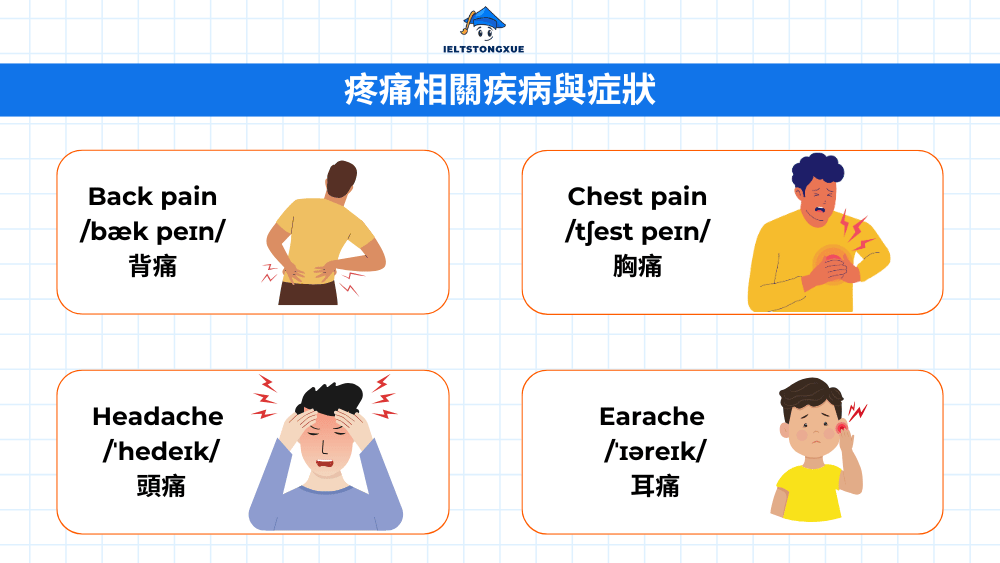
| Back pain
/bæk peɪn/ |
背痛 | I often have back pain after sitting for hours.(長時間久坐後我常覺得背痛。) |
| Chest pain
/tʃest peɪn/ |
胸痛 | Chest pain can be a sign of heart disease.(胸痛可能是心臟病的徵兆。) |
| Headache
/ˈhedeɪk/ |
頭痛 | I have a terrible headache today.(我今天頭痛得很厲害。) |
| Earache
/ˈɪəreɪk/ |
耳痛 | My child has an earache after swimming.(我的孩子游泳後耳朵疼痛。) |
2. 日常身體不適
這些是我們最常遇到的身體不適症狀,從輕微的疲勞到需要立即就醫的發燒,都是日常健康管理的重要指標。
| 疾病英文單字 | 意思 | 例句 |
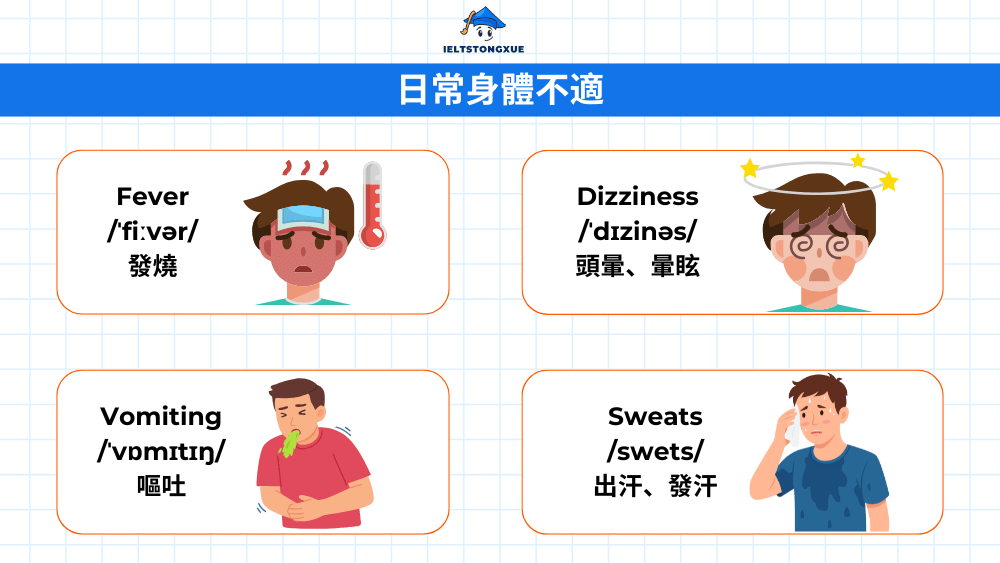
| Fever
/ˈfiːvər/ |
發燒 | I have a fever and feel weak all over.(我發燒了,全身無力。) |
| High fever
/haɪ ˈfiːvər/ |
高燒 | The child has a high fever and needs medical attention.(孩子發高燒,需要就醫。) |
| Chill
/tʃɪl/ |
發冷、寒顫 | She felt a chill and started to shiver.(她感到一陣寒意並開始發抖。) |
| Shivering
/ˈʃɪvərɪŋ/ |
發抖、顫抖 | He was shivering because of the cold.(他因寒冷而發抖。) |
| Fatigue
/fəˈtiːɡ/ |
疲勞、疲倦 | I’m suffering from fatigue due to overwork.(因為工作過度,我感到極度疲勞。) |
| Weakness
/ˈwiːknəs/ |
虛弱 | She felt weakness after being sick for a week.(生病一週後,她感到虛弱。) |
| Dizziness
/ˈdɪzinəs/ |
頭暈、暈眩 | I stood up too quickly and felt dizziness.(我起身太快,感到一陣暈眩。) |
| Vertigo
/ˈvɜːrtɪɡoʊ/ |
眩暈(天旋地轉) | He suffers from vertigo when he looks down from heights.(他從高處往下看時會感到眩暈。) |
| Nausea
/ˈnɔːziə/ |
噁心 | I felt nausea after eating spoiled food.(吃了變質的食物後我感到噁心。) |
| Vomiting
/ˈvɒmɪtɪŋ/ |
嘔吐 | The patient started vomiting after the meal.(病人吃完飯後開始嘔吐。) |
| Insomnia
/ɪnˈsɒmniə/ |
失眠 | I’ve been struggling with insomnia lately.(我最近一直有失眠問題。) |
| Drowsy
/ˈdraʊzi/ |
昏沉、嗜睡 | The medicine made me feel drowsy.(這種藥讓我感到昏昏欲睡。) |
| Black out
/blæk aʊt/ |
昏厥、暫時失去意識 | He suddenly blacked out during the meeting.(他在會議中突然昏倒。) |
| Unconsciousness
/ʌnˈkɒnʃəsnəs/ |
昏迷 | The accident caused her to lose consciousness.(那場意外使她陷入昏迷。) |
| Bloated
/ˈbləʊtɪd/ |
腹脹、胃脹氣 | I feel bloated after eating too much.(吃太多後我覺得肚子脹。) |
| Pale face
/peɪl feɪs/ |
面色蒼白 | He looked tired and had a pale face.(他看起來很疲倦,臉色蒼白。) |
| Sweats
/swets/ |
出汗、發汗 | He woke up covered in sweats.(他醒來時全身都是汗。) |
| Night sweats
/naɪt swets/ |
夜間盜汗 | She often experiences night sweats.(她經常在夜裡盜汗。) |
| Thirsty
/ˈθɜːrsti/ |
口渴 | I’m very thirsty after the workout.(運動後我非常口渴。) |
| Loss of appetite
/lɒs əv ˈæpɪtaɪt/ |
食慾不振 | I have a loss of appetite due to stress.(因為壓力,我沒有食慾。) |
| Weight loss
/weɪt lɒs/ |
體重減輕 | Sudden weight loss can be a sign of illness.(突然體重減輕可能是疾病的徵兆。) |
| Swelling
/ˈswelɪŋ/ |
腫脹 | There is swelling around his ankle.(他的腳踝周圍腫起來了。) |
| Rash
/ræʃ/ |
皮疹 | I developed a rash after eating seafood.(吃了海鮮後我起了皮疹。) |
| Itch
/ɪtʃ/ |
搔癢 | My arms itch after touching the plant.(碰到那種植物後,我的手臂發癢。) |
3. 牙齒疾病英文單字
口腔健康直接影響整體生活品質。牙科疾病雖常見,但若能及早察覺並正確表達,就能獲得妥善治療。
| 疾病英文單字 | 意思 | 例句 |
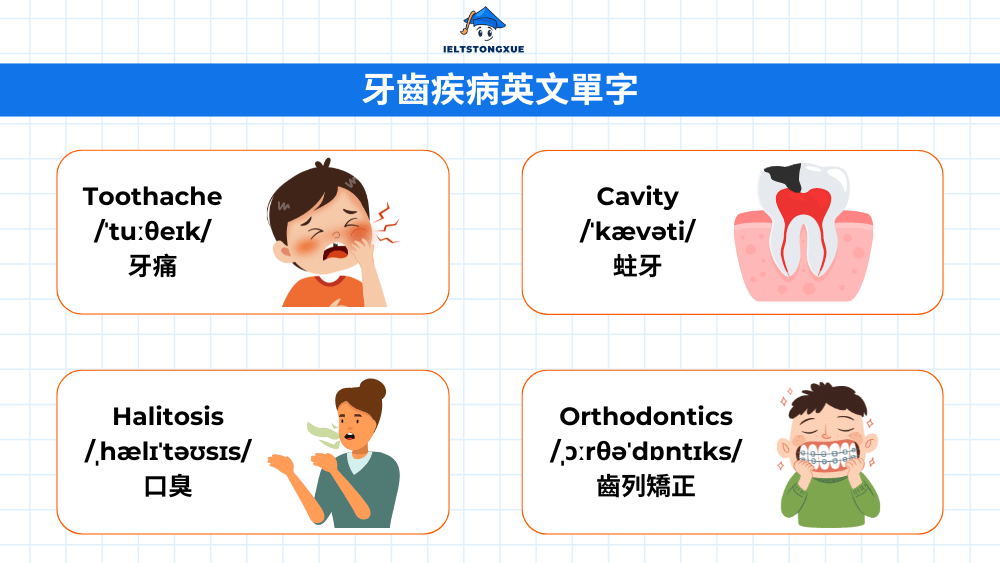
| Toothache
/ˈtuːθeɪk/ |
牙痛 | I have a toothache that keeps me awake at night.(我有牙痛,晚上都睡不著。) |
| Cavity
/ˈkævəti/ |
蛀牙 | The dentist found a small cavity in my molar.(牙醫在我的臼齒發現了一個小蛀洞。) |
| Tooth decay
/tuːθ dɪˈkeɪ/ |
齲齒 | Poor oral hygiene can lead to tooth decay.(口腔清潔不佳會導致齲齒。) |
| Gum inflammation
/ɡʌm ˌɪnfləˈmeɪʃən/ |
牙齦發炎 | My gums are swollen due to gum inflammation.(我的牙齦因發炎而腫脹。) |
| Gingivitis
/ˌdʒɪndʒɪˈvaɪtɪs/ |
牙齦炎 | Gingivitis can cause bleeding gums.(牙齦炎可能導致牙齦出血。) |
| Periodontal disease
/ˌperiəˈdɒntəl dɪˈziːz/ |
牙周病 | Periodontal disease can lead to tooth loss.(牙周病可能導致牙齒脫落。) |
| Wisdom tooth
/ˈwɪzdəm tuːθ/ |
智齒 | My wisdom tooth is growing sideways.(我的智齒長歪了。) |
| Bad breath
/bæd breθ/ |
口臭 | He suffers from bad breath even after brushing.(即使刷牙後他仍有口臭。) |
| Halitosis
/ˌhælɪˈtəʊsɪs/ |
口臭(醫學術語) | Halitosis is often caused by bacteria in the mouth.(口臭常由口腔細菌引起。) |
| Dental abscess
/ˈdentəl ˈæbses/ |
牙膿腫、牙瘡 | The dental abscess caused severe pain in her jaw.(牙膿腫讓她的下巴劇烈疼痛。) |
| Aphthous ulcer
/ˈæfθəs ˈʌlsər/ |
口瘡、口腔潰瘍 | I have an aphthous ulcer on my tongue.(我的舌頭上有個口瘡。) |
| Stomatitis
/ˌstəʊməˈtaɪtɪs/ |
口腔炎 | Stomatitis makes it painful to eat or drink.(口腔炎使進食喝水變得疼痛。) |
| Gum
/ɡʌm/ |
牙齦、牙肉 | Healthy gums are pink and firm.(健康的牙齦呈粉紅色且結實。) |
| Dental calculus
/ˈdentəl ˈkælkjʊləs/ |
牙結石 | The dentist removed dental calculus from my teeth.(牙醫清除了我牙齒上的牙結石。) |
| Tartar
/ˈtɑːrtər/ |
齒垢、牙石 | Tartar buildup can damage your gums.(牙石堆積可能損害牙齦。) |
| Incisor
/ɪnˈsaɪzər/ |
門牙 | The front incisors are used for cutting food.(前門牙用來切斷食物。) |
| Canine
/ˈkeɪnaɪn/ |
犬齒 | The canine teeth help tear food apart.(犬齒有助於撕裂食物。) |
| Molar
/ˈməʊlər/ |
臼齒 | Molars are important for grinding food.(臼齒用於磨碎食物。) |
| Crown
/kraʊn/ |
牙套、牙冠 | I got a dental crown to protect my broken tooth.(我裝了一個牙冠保護斷牙。) |
| Denture
/ˈdentʃər/ |
假牙 | My grandfather wears dentures.(我祖父戴著假牙。) |
| Root canal treatment
/ruːt kəˈnæl ˈtriːtmənt/ |
根管治療 | I had root canal treatment to save my tooth.(我做了根管治療來保住牙齒。) |
| Filling
/ˈfɪlɪŋ/ |
補牙 | The dentist placed a new filling in my tooth.(牙醫幫我補了一顆牙。) |
| Orthodontics
/ˌɔːrθəˈdɒntɪks/ |
齒列矯正 | My daughter is receiving orthodontic treatment.(我女兒正在接受齒列矯正。) |
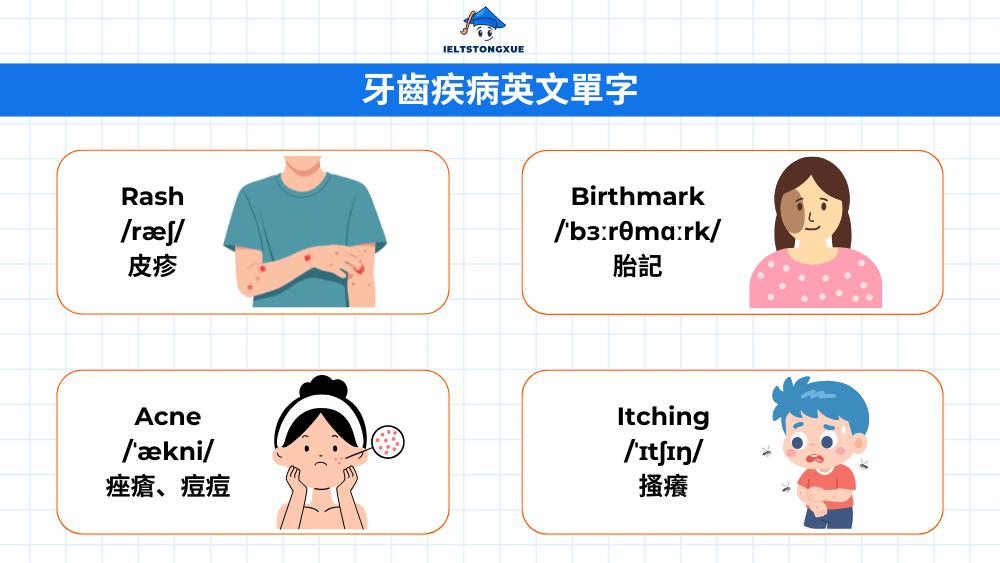
4. 皮膚疾病英文單字
皮膚是人體最大的器官,也是許多疾病的外顯指標。準確描述皮膚狀況能幫助皮膚科醫師迅速做出判斷。
| 疾病英文單字 | 意思 | 例句 |
| Rash
/ræʃ/ |
皮疹 | I developed a rash after using a new lotion.(使用新乳液後我出現了皮疹。) |
| Eczema
/ˈeksɪmə/ |
濕疹 | Eczema causes dry and itchy skin.(濕疹會引起皮膚乾燥和搔癢。) |
| Dermatitis
/ˌdɜːrməˈtaɪtɪs/ |
皮膚炎 | He has dermatitis from contact with chemicals.(他因接觸化學物質而患皮膚炎。) |
| Hives
/haɪvz/ |
蕁麻疹 | She broke out in hives after eating shrimp.(吃了蝦子後她全身起蕁麻疹。) |
| Urticaria
/ˌɜːrtɪˈkeəriə/ |
風疹塊、蕁麻疹 | Urticaria is often caused by an allergic reaction.(風疹塊通常由過敏引起。) |
| Acne
/ˈækni/ |
痤瘡、痘痘 | Teenagers often suffer from acne.(青少年常有痤瘡問題。) |
| Pimple
/ˈpɪmpəl/ |
青春痘 | I got a pimple on my chin.(我下巴上長了一顆青春痘。) |
| Itching
/ˈɪtʃɪŋ/ |
搔癢 | The insect bite caused severe itching.(蚊蟲叮咬導致劇烈搔癢。) |
| Dry skin
/draɪ skɪn/ |
皮膚乾燥 | Drink more water to prevent dry skin.(多喝水可以預防皮膚乾燥。) |
| Swelling
/ˈswelɪŋ/ |
腫脹 | There is swelling around the wound.(傷口周圍出現腫脹。) |
| Psoriasis
/səˈraɪəsɪs/ |
牛皮癬、銀屑病 | Psoriasis causes thick, scaly patches on the skin.(牛皮癬會導致皮膚出現厚厚的鱗屑。) |
| Measles
/ˈmiːzəlz/ |
麻疹 | Measles is a contagious viral infection.(麻疹是一種具傳染性的病毒感染。) |
| Athlete’s foot
/ˈæθliːts fʊt/ |
香港腳、足癬 | He caught athlete’s foot from the gym shower.(他在健身房淋浴間感染了香港腳。) |
| Ringworm
/ˈrɪŋwɜːrm/ |
癬 | Ringworm appears as a circular rash.(癬表現為圓形皮疹。) |
| Wart
/wɔːrt/ |
疣 | A wart appeared on his finger.(他的手指上長了一顆疣。) |
| Mole
/məʊl/ |
痣 | She has a small mole on her cheek.(她臉頰上有一顆小痣。) |
| Birthmark
/ˈbɜːrθmɑːrk/ |
胎記 | His birthmark is on his shoulder.(他的胎記在肩膀上。) |
| Freckle
/ˈfrekəl/ |
雀斑 | She has freckles across her nose.(她鼻子上有雀斑。) |
| Burn
/bɜːrn/ |
燒傷、灼傷 | He suffered a burn on his hand while cooking.(他煮飯時手被燙傷了。) |
| Sunburn
/ˈsʌnbɜːrn/ |
曬傷 | Use sunscreen to prevent sunburn.(使用防曬霜可預防曬傷。) |
| Frostbite
/ˈfrɒstbaɪt/ |
凍瘡 | Frostbite can occur in extremely cold weather.(在極冷的天氣下可能會凍傷。) |
| Boil
/bɔɪl/ |
癤、膿瘡 | A painful boil formed on his neck.(他的脖子上長了一顆疼痛的癤子。) |
| Abscess
/ˈæbses/ |
膿瘡 | The abscess needs to be drained by a doctor.(膿瘡需要醫生處理排膿。) |
| Scabies
/ˈskeɪbiːz/ |
疥瘡 | Scabies spreads easily through close contact.(疥瘡容易透過密切接觸傳染。) |
| Lupus
/ˈluːpəs/ |
狼瘡 | Lupus affects both the skin and internal organs.(紅斑性狼瘡會影響皮膚及內臟。) |
| Skin cancer
/skɪn ˈkænsər/ |
皮膚癌 | Using sunscreen reduces the risk of skin cancer.(使用防曬可降低皮膚癌風險。) |
| Baldness
/ˈbɔːldnəs/ |
禿頭、脫髮 | Baldness is often caused by genetics.(禿頭通常由遺傳造成。) |
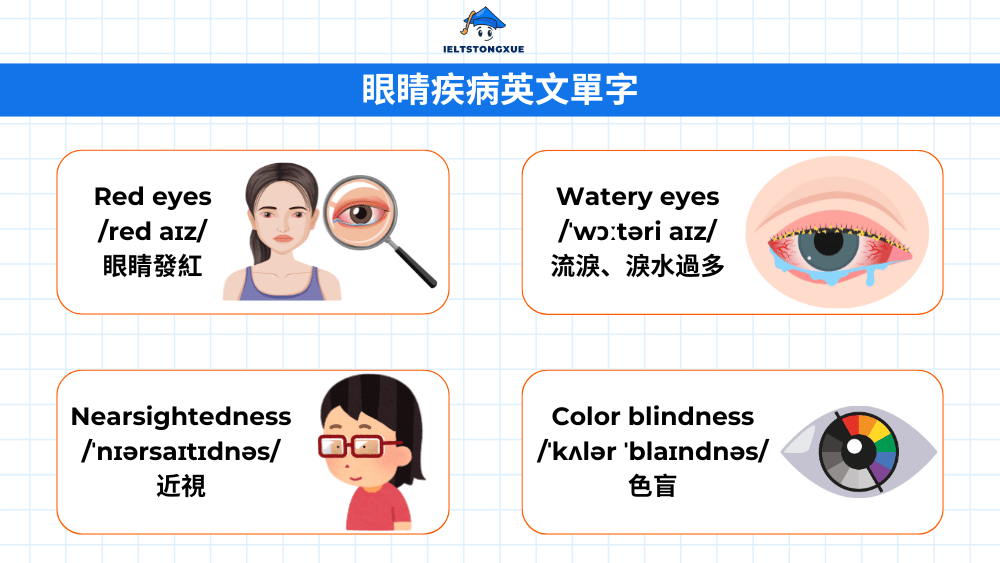
5. 眼睛疾病英文單字
視力是我們與世界互動的重要管道。眼睛疾病英文單字的掌握,能讓你在眼科就診時精確表達視力問題。
| 眼睛疾病英文 | 意思 | 例句 |
| Conjunctivitis
/kənˌdʒʌŋktɪˈvaɪtɪs/ |
結膜炎(紅眼病) | Conjunctivitis causes redness and itching in the eyes.(結膜炎會導致眼睛紅腫與搔癢。) |
| Red eyes
/red aɪz/ |
眼睛發紅 | His red eyes are due to lack of sleep.(他眼睛發紅是因為睡眠不足。) |
| Stye
/staɪ/ |
針眼、麥粒腫 | I have a painful stye on my eyelid.(我的眼皮上長了一顆痛的針眼。) |
| Dry eyes
/draɪ aɪz/ |
乾眼症 | Looking at screens too long can cause dry eyes.(長時間看螢幕可能導致乾眼症。) |
| Watery eyes
/ˈwɔːtəri aɪz/ |
流淚、淚水過多 | Watery eyes may be caused by allergies.(流淚可能由過敏引起。) |
| Eye strain
/aɪ streɪn/ |
眼睛疲勞 | I feel eye strain after working on the computer all day.(整天看電腦後,我的眼睛很疲勞。) |
| Blurred vision
/blɜːrd ˈvɪʒən/ |
視力模糊 | I have blurred vision when I read small text.(我看小字時會視線模糊。) |
| Nearsightedness
/ˈnɪərsaɪtɪdnəs/ |
近視 | Nearsightedness makes it hard to see distant objects.(近視使人難以看清遠處物體。) |
| Farsightedness
/ˈfɑːrsaɪtɪdnəs/ |
遠視 | Farsightedness causes difficulty focusing on nearby objects.(遠視者難以看清近處。) |
| Astigmatism
/əˈstɪɡmətɪzəm/ |
散光 | Astigmatism causes blurry or distorted vision.(散光會導致視線模糊或扭曲。) |
| Glaucoma
/ɡlaʊˈkoʊmə/ |
青光眼 | Glaucoma can lead to blindness if not treated.(若不治療,青光眼可能導致失明。) |
| Cataract
/ˈkætərækt/ |
白內障 | Cataracts cause cloudy vision in older adults.(白內障會使老年人視線模糊。) |
| Eye infection
/aɪ ɪnˈfekʃən/ |
眼部感染 | An eye infection can cause swelling and discharge.(眼部感染會引起腫脹與分泌物。) |
| Retinal detachment
/ˈretɪnəl dɪˈtætʃmənt/ |
視網膜剝離 | Retinal detachment is a serious eye emergency.(視網膜剝離是一種嚴重的眼疾。) |
| Color blindness
/ˈkʌlər ˈblaɪndnəs/ |
色盲 | People with color blindness cannot distinguish certain colors.(色盲者無法分辨特定顏色。) |
| Eye twitching
/aɪ ˈtwɪtʃɪŋ/ |
眼皮跳動 | Eye twitching can be caused by stress or fatigue.(眼皮跳動可能由壓力或疲勞引起。) |
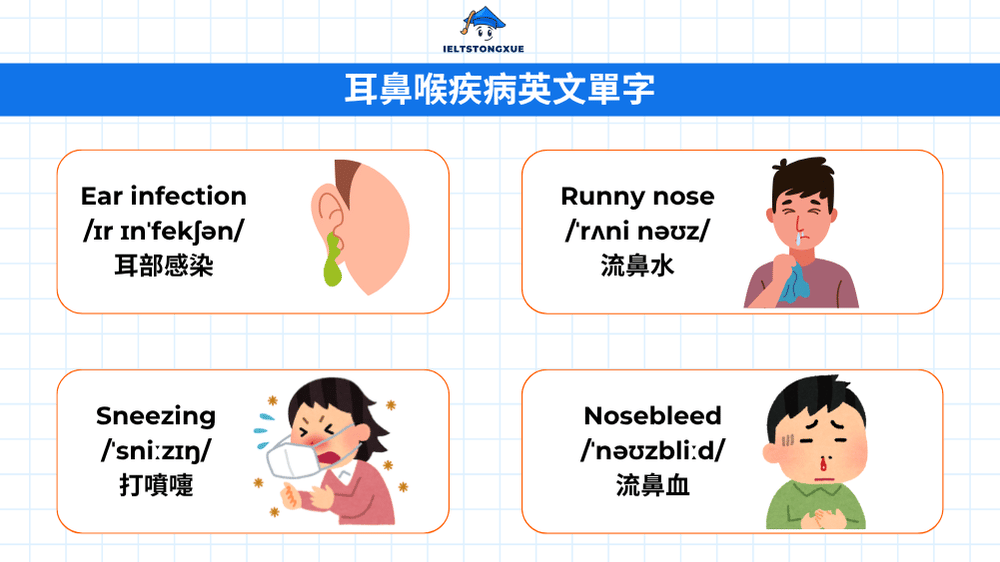
6. 耳鼻喉疾病英文單字
耳鼻喉疾病是最常見的健康問題之一,從普通感冒到需要專科治療的鼻竇炎,都需要適當的醫療照護。
| 疾病英文單字 | 意思 | 例句 |
| Ear infection
/ɪr ɪnˈfekʃən/ |
耳部感染 | Ear infection is common among young children.(耳部感染在兒童中很常見。) |
| Earache
/ˈɪəreɪk/ |
耳痛 | I have an earache after swimming.(游泳後我耳朵痛。) |
| Tinnitus
/ˈtɪnɪtəs/ |
耳鳴 | Tinnitus causes a ringing sound in the ears.(耳鳴會讓人聽到嗡嗡聲。) |
| Deafness
/ˈdefnəs/ |
失聽、耳聾 | He was born with partial deafness.(他天生部分耳聾。) |
| Nasal congestion
/ˈneɪzəl kənˈdʒestʃən/ |
鼻塞 | I can’t sleep because of nasal congestion.(我因鼻塞而睡不著。) |
| Runny nose
/ˈrʌni nəʊz/ |
流鼻水 | I have a runny nose from the cold.(我感冒流鼻水。) |
| Sneezing
/ˈsniːzɪŋ/ |
打噴嚏 | He keeps sneezing because of allergies.(他因過敏不停打噴嚏。) |
| Sore throat
/sɔːr θroʊt/ |
喉嚨痛 | Drinking warm tea helps relieve a sore throat.(喝溫茶有助於舒緩喉嚨痛。) |
| Tonsillitis
/ˌtɒnsɪˈlaɪtɪs/ |
扁桃腺炎 | The child has tonsillitis and can’t swallow easily.(孩子得了扁桃腺炎,吞嚥困難。) |
| Sinus infection
/ˈsaɪnəs ɪnˈfekʃən/ |
鼻竇炎 | A sinus infection causes pressure and headaches.(鼻竇炎會導致頭痛與壓迫感。) |
| Cold
/koʊld/ |
感冒 | I caught a cold from my coworker.(我被同事傳染感冒。) |
| Flu
/fluː/ |
流感 | The flu spreads quickly in winter.(流感在冬天迅速傳播。) |
| Allergic rhinitis
/əˈlɜːrdʒɪk raɪˈnaɪtɪs/ |
過敏性鼻炎 | Allergic rhinitis causes constant sneezing.(過敏性鼻炎會引起不斷打噴嚏。) |
| Laryngitis
/ˌlærɪnˈdʒaɪtɪs/ |
喉炎 | Laryngitis makes it difficult to speak.(喉炎使說話變得困難。) |
| Ear wax
/ɪr wæks/ |
耳垢 | Too much ear wax can block hearing.(耳垢過多會影響聽力。) |
| Nosebleed
/ˈnəʊzbliːd/ |
流鼻血 | He often gets a nosebleed during hot weather.(他天氣熱時常流鼻血。) |
| Loss of smell
/lɒs əv smel/ |
失去嗅覺 | Loss of smell may occur after infection.(感染後可能會失去嗅覺。) |
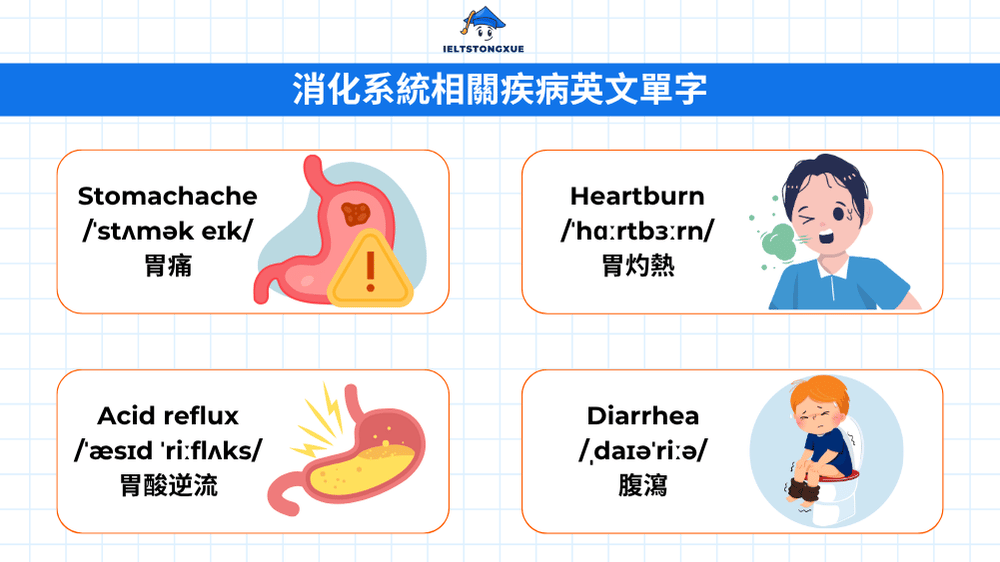
7. 消化系統相關疾病英文單字
消化系統健康直接影響營養吸收與整體健康。從輕微的胃痛到慢性腸道疾病,這些詞彙能幫助你向醫師清楚說明消化問題。
| 疾病英文單字 | 意思 | 例句 |
| Indigestion
/ˌɪndɪˈdʒestʃən/ |
消化不良 | I often suffer from indigestion after heavy meals.(吃太飽後我常有消化不良。) |
| Stomachache
/ˈstʌmək eɪk/ |
胃痛 | He complained of stomachache after lunch.(他午餐後抱怨胃痛。) |
| Gastritis
/ɡæsˈtraɪtɪs/ |
胃炎 | Gastritis causes burning pain in the stomach.(胃炎會引起灼熱感。) |
| Ulcer
/ˈʌlsər/ |
潰瘍 | The doctor diagnosed him with a stomach ulcer.(醫生診斷他患有胃潰瘍。) |
| Heartburn
/ˈhɑːrtbɜːrn/ |
胃灼熱 | Spicy food gives me heartburn.(吃辣會讓我胃灼熱。) |
| Acid reflux
/ˈæsɪd ˈriːflʌks/ |
胃酸逆流 | Acid reflux causes discomfort after eating.(胃酸逆流會讓人飯後不適。) |
| Constipation
/ˌkɒnstɪˈpeɪʃən/ |
便祕 | Drink more water to prevent constipation.(多喝水可預防便祕。) |
| Diarrhea
/ˌdaɪəˈriːə/ |
腹瀉 | He had diarrhea after eating street food.(吃路邊攤後他拉肚子了。) |
| Bloating
/ˈbləʊtɪŋ/ |
腹脹 | I feel bloating after drinking soda.(喝汽水後我覺得肚子脹。) |
| Food poisoning
/fuːd ˈpɔɪzənɪŋ/ |
食物中毒 | They were hospitalized due to food poisoning.(他們因食物中毒被送醫。) |
| Appendicitis
/əˌpendɪˈsaɪtɪs/ |
闌尾炎 | Appendicitis often requires surgery.(闌尾炎通常需要開刀治療。) |
| Gallstones
/ˈɡɔːlstəʊnz/ |
膽結石 | Gallstones can cause severe abdominal pain.(膽結石會引起劇烈腹痛。) |
| Hepatitis
/ˌhepəˈtaɪtɪs/ |
肝炎 | Hepatitis affects the liver’s function.(肝炎會影響肝臟功能。) |
| Liver cirrhosis
/ˈlɪvər səˈroʊsɪs/ |
肝硬化 | Liver cirrhosis is caused by long-term alcohol use.(長期飲酒會導致肝硬化。) |
| Pancreatitis
/ˌpæŋkrɪəˈtaɪtɪs/ |
胰臟炎 | Pancreatitis may cause severe abdominal pain.(胰臟炎會引起劇烈腹痛。) |
| Irritable bowel syndrome (IBS)
/ˈɪrɪtəbl ˈbaʊəl ˈsɪndrəʊm/ |
腸躁症 | Stress can trigger irritable bowel syndrome.(壓力可能引發腸躁症。) |
| Colitis
/kəˈlaɪtɪs/ |
結腸炎 | Colitis causes stomach cramps and diarrhea.(結腸炎會引起腹痛與腹瀉。) |
8. 婦科與產科疾病英文單字
女性特有的健康議題需要專門的醫療詞彙。掌握這些婦科與產科疾病英文能讓你在就診時更有信心地討論敏感的健康問題。
| 疾病英文單字 | 意思 | 例句 |
| Menstruation
/ˌmenstruˈeɪʃən/ |
月經 | Irregular menstruation can be caused by stress.(壓力可能導致月經不規律。) |
| Period pain
/ˈpɪəriəd peɪn/ |
經痛 | She takes medicine to relieve period pain.(她吃藥來緩解經痛。) |
| Premenstrual syndrome (PMS)
/ˌpriːˈmenstruəl ˈsɪndrəʊm/ |
經前症候群 | PMS can cause mood swings and fatigue.(經前症候群會引起情緒波動與疲勞。) |
| Ovarian cyst
/oʊˈvɛəriən sɪst/ |
卵巢囊腫 | The doctor discovered an ovarian cyst during the checkup.(醫生在檢查中發現卵巢囊腫。) |
| Endometriosis
/ˌendoʊmiːtriˈoʊsɪs/ |
子宮內膜異位症 | Endometriosis can cause severe menstrual pain.(子宮內膜異位症可能導致劇烈經痛。) |
| Fibroid
/ˈfaɪbrɔɪd/ |
子宮肌瘤 | Uterine fibroids may lead to heavy bleeding.(子宮肌瘤可能導致經血過多。) |
| Pelvic inflammatory disease (PID)
/ˈpelvɪk ˌɪnfləˈmeɪʃən dɪˈziːz/ |
骨盆腔發炎 | PID can result in chronic pelvic pain.(骨盆腔發炎可能導致慢性骨盆痛。) |
| Vaginitis
/ˌvædʒɪˈnaɪtɪs/ |
陰道炎 | Vaginitis can cause itching and unusual discharge.(陰道炎會引起搔癢與異常分泌物。) |
| Pregnancy
/ˈpreɡnənsi/ |
懷孕 | She confirmed her pregnancy with a test.(她透過測試確認懷孕。) |
| Miscarriage
/ˈmɪskærɪdʒ/ |
流產 | She suffered a miscarriage in the early stage.(她在懷孕初期流產了。) |
| Premature birth
/ˌpriːməˈtʃʊr bɜːrθ/ |
早產 | The baby was born premature but healthy.(嬰兒早產但健康。) |
| Cesarean section
(C-section) /sɪˈzeəriən ˈsekʃən/ |
剖腹產 | She delivered her baby by cesarean section.(她透過剖腹產生下嬰兒。) |
| Postpartum depression
/ˌpoʊstˈpɑːrtəm dɪˈpreʃən/ |
產後憂鬱 | Postpartum depression affects many new mothers.(產後憂鬱影響許多新手媽媽。) |
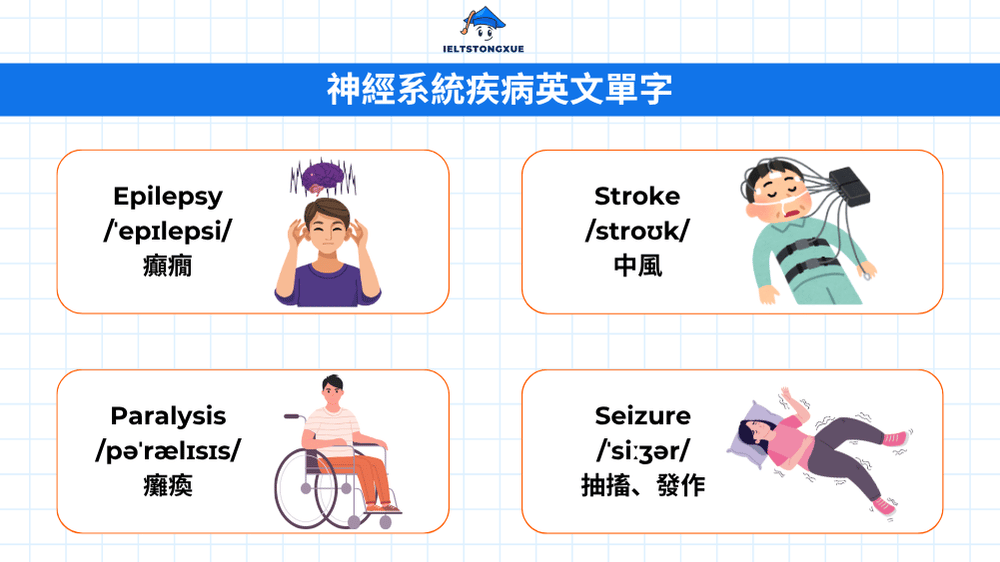
9. 神經系統疾病英文單字
神經系統疾病往往影響深遠,從輕微的神經痛到嚴重的神經退化疾病,都需要專業的醫療照護。
| 疾病英文單字 | 意思 | 例句 |
| Headache
/ˈhedeɪk/ |
頭痛 | I have a headache after working all day.(工作一整天後我頭痛。) |
| Migraine
/ˈmaɪɡreɪn/ |
偏頭痛 | Bright light can trigger a migraine.(強光可能引發偏頭痛。) |
| Dizziness
/ˈdɪzinəs/ |
頭暈 | She felt dizziness after standing up quickly.(她起身太快感到頭暈。) |
| Epilepsy
/ˈepɪlepsi/ |
癲癇 | Epilepsy causes sudden seizures.(癲癇會引起突發性抽搐。) |
| Stroke
/stroʊk/ |
中風 | He is recovering after a stroke.(他在中風後康復中。) |
| Paralysis
/pəˈrælɪsɪs/ |
癱瘓 | The injury caused partial paralysis.(受傷導致部分癱瘓。) |
| Parkinson’s disease
/ˈpɑːrkɪnsənz dɪˈziːz/ |
帕金森氏症 | Parkinson’s disease affects movement and coordination.(帕金森氏症影響身體動作協調。) |
| Alzheimer’s disease
/ˈɑːltshaɪmərz dɪˈziːz/ |
阿茲海默症 | Alzheimer’s disease causes memory loss.(阿茲海默症會導致記憶喪失。) |
| Multiple sclerosis (MS)
/ˈmʌltɪpl skləˈrəʊsɪs/ |
多發性硬化症 | Multiple sclerosis affects the brain and spinal cord.(多發性硬化症會影響大腦與脊髓。) |
| Neuralgia
/njuˈrældʒə/ |
神經痛 | Neuralgia causes sharp facial pain.(神經痛會引起臉部刺痛。) |
| Seizure
/ˈsiːʒər/ |
抽搐、發作 | The patient experienced a seizure during sleep.(病人在睡眠中發作。) |
| Coma
/ˈkoʊmə/ |
昏迷 | He has been in a coma for two days.(他已經昏迷兩天。) |
10. 呼吸系統疾病英文單字
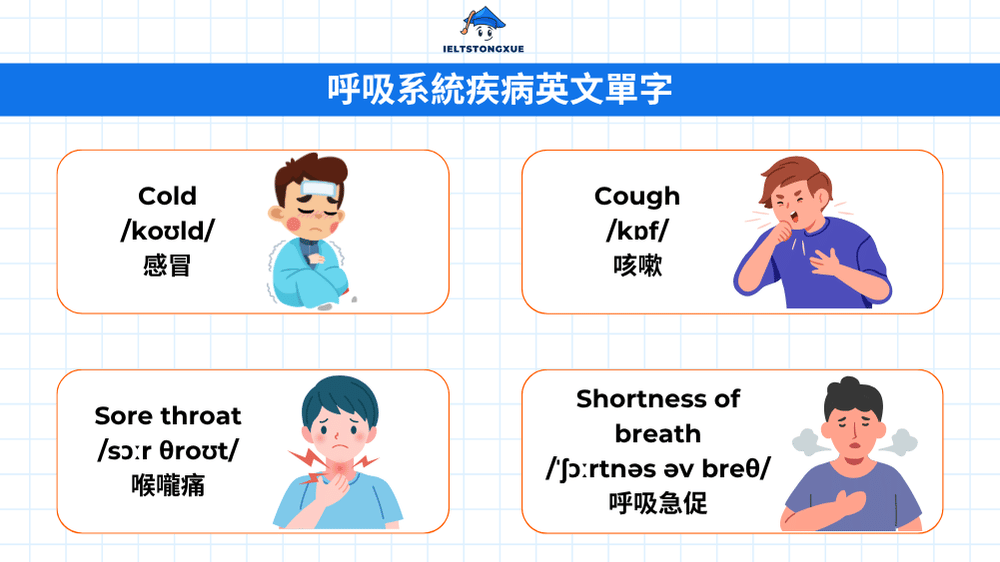
呼吸系統健康對生命至關重要。從常見的氣喘到嚴重的肺部感染,這些詞彙能幫助你準確描述呼吸問題。
| 疾病英文單字 | 意思 | 例句 |
| Cold
/koʊld/ |
感冒 | I caught a cold after getting wet in the rain.(淋雨後我感冒了。) |
| Flu
/fluː/ |
流感 | The flu can spread quickly in crowded places.(流感在擁擠的地方容易傳播。) |
| Cough
/kɒf/ |
咳嗽 | He has a dry cough that won’t go away.(他有持續的乾咳。) |
| Sore throat
/sɔːr θroʊt/ |
喉嚨痛 | A sore throat often accompanies a cold.(喉嚨痛常與感冒同時出現。) |
| Bronchitis
/brɒŋˈkaɪtɪs/ |
支氣管炎 | Bronchitis causes coughing and chest discomfort.(支氣管炎會引起咳嗽與胸悶。) |
| Pneumonia
/njuːˈmoʊniə/ |
肺炎 | The elderly are more vulnerable to pneumonia.(老年人較容易感染肺炎。) |
| Asthma
/ˈæzmə/ |
氣喘 | Asthma attacks can be triggered by dust.(灰塵可能引發氣喘發作。) |
| Shortness of breath
/ˈʃɔːrtnəs əv breθ/ |
呼吸急促 | He felt shortness of breath after climbing stairs.(爬樓後他感到呼吸急促。) |
| Allergic cough
/əˈlɜːrdʒɪk kɒf/ |
過敏性咳嗽 | Allergic cough worsens during pollen season.(過敏性咳嗽在花粉季節會加劇。) |
| Tuberculosis (TB)
/tjuːˌbɜːrkjʊˈloʊsɪs/ |
結核病 | TB is a contagious disease affecting the lungs.(結核病是一種傳染性肺病。) |
| COPD (Chronic Obstructive Pulmonary Disease)
/ˌsiː oʊ piː ˈdiː/ |
慢性阻塞性肺病 | COPD makes it difficult to breathe normally.(慢性阻塞性肺病使呼吸困難。) |
| Sinusitis
/ˌsaɪnəˈsaɪtɪs/ |
鼻竇炎 | Sinusitis causes facial pressure and nasal blockage.(鼻竇炎會引起臉部壓痛與鼻塞。) |
| Lung cancer
/lʌŋ ˈkænsər/ |
肺癌 | Smoking greatly increases the risk of lung cancer.(吸菸大幅增加罹患肺癌的風險。) |
11. 心理疾病英文單字
心理健康與身體健康同樣重要。掌握心理疾病英文詞彙能幫助你在需要時尋求適當的專業協助。
| 心理疾病英文 | 意思 | 例句 |
| Depression
/dɪˈpreʃən/ |
憂鬱症 | She has been struggling with depression for years.(她多年來一直與憂鬱症抗爭。) |
| Anxiety
/æŋˈzaɪəti/ |
焦慮症 | Anxiety can cause rapid heartbeat and sweating.(焦慮會導致心跳加快與出汗。) |
| Panic attack
/ˈpænɪk əˈtæk/ |
恐慌發作 | He experienced a panic attack during the flight.(他在飛行途中出現恐慌發作。) |
| Bipolar disorder
/ˌbaɪˈpoʊlər dɪsˈɔːrdər/ |
躁鬱症 | People with bipolar disorder have extreme mood swings.(躁鬱症患者會出現極端情緒波動。) |
| Obsessive-compulsive disorder (OCD)
/əbˈsesɪv kəmˈpʌlsɪv dɪsˈɔːrdər/ |
強迫症 | OCD makes people repeat certain actions.(強迫症讓人重複做某些行為。) |
| Post-traumatic stress disorder (PTSD)
/poʊst trɔːˈmætɪk strest dɪsˈɔːrdər/ |
創傷後壓力症候群 | PTSD may develop after a severe accident.(嚴重事故後可能出現創傷後壓力症。) |
| Phobia
/ˈfoʊbiə/ |
恐懼症 | He has a phobia of heights.(他懼高。) |
| Eating disorder
/ˈiːtɪŋ dɪsˈɔːrdər/ |
飲食失調 | Eating disorders can lead to serious health issues.(飲食失調可能導致嚴重健康問題。) |
| Insomnia
/ɪnˈsɒmniə/ |
失眠 | Stress and anxiety often cause insomnia.(壓力與焦慮常導致失眠。) |
| Schizophrenia
/ˌskɪtsəˈfriːniə/ |
精神分裂症 | Schizophrenia affects how a person thinks and behaves.(精神分裂症會影響思考與行為。) |
| Addiction
/əˈdɪkʃən/ |
成癮 | Internet addiction is becoming more common among teenagers.(青少年網路成癮越來越普遍。) |
12. 心血管疾病英文單字
心血管系統是生命的核心動力。掌握心血管疾病英文不僅能幫助你理解自己的健康狀況,也能在緊急情況下及時溝通。
| 心血管疾病英文 | 意思 | 例句 |
| Heart disease
/hɑːrt dɪˈziːz/ |
心臟病 | He has a family history of heart disease.(他有心臟病家族史。) |
| Heart attack
/hɑːrt əˈtæk/ |
心臟病發作 | He was rushed to the hospital after a heart attack.(他心臟病發作後被緊急送醫。) |
| Stroke
/stroʊk/ |
中風 | A stroke can cause paralysis or speech problems.(中風可能導致癱瘓或說話困難。) |
| High blood pressure (hypertension)
/haɪ blʌd ˈpreʃər/ |
高血壓 | High blood pressure can damage blood vessels.(高血壓會損害血管。) |
| Low blood pressure (hypotension)
/loʊ blʌd ˈpreʃər/ |
低血壓 | She often feels dizzy due to low blood pressure.(她因低血壓常感到頭暈。) |
| Atherosclerosis
/ˌæθəroʊskləˈroʊsɪs/ |
動脈硬化 | Atherosclerosis narrows the arteries and restricts blood flow.(動脈硬化會使血管變窄、血流受阻。) |
| Arrhythmia
/əˈrɪðmiə/ |
心律不整 | Arrhythmia can cause irregular heartbeats.(心律不整會導致心跳不規律。) |
| Angina
/ænˈdʒaɪnə/ |
心絞痛 | Angina causes chest pain due to poor blood flow.(心絞痛是因血流不暢引起的胸痛。) |
| Cardiac arrest
/ˈkɑːrdiæk əˈrest/ |
心臟驟停 | Immediate CPR is needed in cardiac arrest.(心臟驟停時需立刻進行心肺復甦。) |
| Palpitation
/ˌpælpɪˈteɪʃən/ |
心悸 | She felt palpitations after drinking too much coffee.(喝太多咖啡後她感到心悸。) |
| Cholesterol
/kəˈlestərɒl/ |
胆固醇 | High cholesterol increases the risk of heart disease.(高膽固醇會增加心臟病風險。) |
13. 泌尿系統疾病英文單字
泌尿系統健康常被忽略,但這些疾病會嚴重影響生活品質。掌握相關詞彙能讓你不再對就診感到尷尬。
| 疾病英文單字 | 意思 | 例句 |
| Urinary tract infection (UTI)
/ˈjʊrɪnɛri trækt ɪnˈfekʃən/ |
泌尿道感染 | UTI causes pain during urination.(泌尿道感染會導致排尿疼痛。) |
| Frequent urination
/ˈfriːkwənt ˌjʊrəˈneɪʃən/ |
頻尿 | Frequent urination is a symptom of diabetes.(頻尿是糖尿病的症狀之一。) |
| Painful urination
/ˈpeɪnfl ˌjʊrəˈneɪʃən/ |
排尿疼痛 | Painful urination can indicate an infection.(排尿疼痛可能代表感染。) |
| Kidney stone
/ˈkɪdni stoʊn/ |
腎結石 | He suffered from a kidney stone last year.(他去年得了腎結石。) |
| Bladder infection
/ˈblædər ɪnˈfekʃən/ |
膀胱炎 | Bladder infection causes frequent and painful urination.(膀胱炎會導致頻尿與疼痛。) |
| Cystitis
/sɪsˈtaɪtɪs/ |
膀胱炎(醫學用語) | Cystitis often occurs in women.(膀胱炎常見於女性。) |
| Nephritis
/nɪˈfraɪtɪs/ |
腎炎 | Nephritis affects the kidneys’ ability to filter waste.(腎炎會影響腎臟過濾功能。) |
| Incontinence
/ɪnˈkɒntɪnəns/ |
失禁 | Urinary incontinence is common among the elderly.(尿失禁在老年人中很常見。) |
| Prostatitis
/ˌprɒstəˈtaɪtɪs/ |
攝護腺炎 | Prostatitis can cause pain and difficulty urinating.(攝護腺炎會引起排尿困難與疼痛。) |
| Kidney failure
/ˈkɪdni ˈfeɪljər/ |
腎衰竭 | Dialysis is needed for kidney failure patients.(腎衰竭患者需要洗腎。) |
| Urinary retention
/ˈjʊrɪnɛri rɪˈtenʃən/ |
尿滯留 | Urinary retention can be a medical emergency.(尿滯留可能是緊急狀況。) |
III. 慢性病與重大疾病英文單字
慢性病與重大疾病需要長期醫療照護與生活管理。這些疾病英文單字不僅關乎個人健康,也影響家庭與社會資源的配置。準確理解與表達這些醫學術語,能讓你更有效地與醫療團隊溝通,制定最適合的治療計畫。
1. 糖尿病與高血壓英文單字
糖尿病與高血壓是全球最常見的慢性病,影響數億人口的生活品質。掌握這些詞彙能幫助你更好地管理自己或家人的健康。
| 疾病英文單字 | 意思 | 例句 |
| Diabetes
/ˌdaɪəˈbiːtiːz/ |
糖尿病 | Diabetes requires careful diet and regular checkups.(糖尿病需要控制飲食與定期檢查。) |
| Type 1 diabetes
/taɪp wʌn ˌdaɪəˈbiːtiːz/ |
第一型糖尿病 | Type 1 diabetes is usually diagnosed in childhood.(第一型糖尿病通常在兒童時期診斷出。) |
| Type 2 diabetes
/taɪp tuː ˌdaɪəˈbiːtiːz/ |
第二型糖尿病 | Type 2 diabetes can often be controlled by lifestyle changes.(第二型糖尿病可透過生活方式改善控制。) |
| High blood sugar
/haɪ blʌd ˈʃʊɡər/ |
高血糖 | High blood sugar levels can damage organs over time.(長期高血糖會損害器官。) |
| Low blood sugar
/loʊ blʌd ˈʃʊɡər/ |
低血糖 | Skipping meals can cause low blood sugar.(不吃飯可能導致低血糖。) |
| Insulin
/ˈɪnsjʊlɪn/ |
胰島素 | Insulin helps control blood sugar levels.(胰島素能幫助控制血糖。) |
| Blood glucose test
/blʌd ˈɡluːkoʊs test/ |
血糖測試 | I take a blood glucose test every morning.(我每天早上都測血糖。) |
| Hypertension
/ˌhaɪpərˈtenʃən/ |
高血壓 | Hypertension increases the risk of heart attack.(高血壓會增加心臟病風險。) |
| Hypotension
/ˌhaɪpoʊˈtenʃən/ |
低血壓 | Hypotension may cause dizziness or fainting.(低血壓可能引起頭暈或昏倒。) |
| Blood pressure monitor
/blʌd ˈpreʃər ˈmɒnɪtər/ |
血壓計 | He uses a blood pressure monitor at home.(他在家使用血壓計。) |
2. 各類癌症英文單字
癌症是全球主要死因之一。了解癌症相關詞彙能幫助你理解診斷報告,與醫療團隊進行有意義的討論,並做出知情的治療決策。
| 疾病英文單字 | 意思 | 例句 |
| Cancer
/ˈkænsər/ |
癌症 | Cancer can affect any part of the body.(癌症可能影響身體任何部位。) |
| Lung cancer
/lʌŋ ˈkænsər/ |
肺癌 | Lung cancer is strongly linked to smoking.(肺癌與吸菸密切相關。) |
| Breast cancer
/brest ˈkænsər/ |
乳癌 | Early detection improves breast cancer survival rates.(早期發現可提高乳癌存活率。) |
| Prostate cancer
/ˈprɒsteɪt ˈkænsər/ |
攝護腺癌 | Prostate cancer is common in older men.(攝護腺癌在老年男性中常見。) |
| Colon cancer
/ˈkoʊlən ˈkænsər/ |
大腸癌 | Colon cancer screening is recommended after age 50.(50歲後建議進行大腸癌篩檢。) |
| Skin cancer
/skɪn ˈkænsər/ |
皮膚癌 | Sunscreen can help prevent skin cancer.(防曬霜可幫助預防皮膚癌。) |
| Liver cancer
/ˈlɪvər ˈkænsər/ |
肝癌 | Hepatitis B can increase the risk of liver cancer.(B型肝炎會增加罹患肝癌的風險。) |
| Cervical cancer
/ˈsɜːrvɪkəl ˈkænsər/ |
子宮頸癌 | The HPV vaccine helps prevent cervical cancer.(HPV疫苗能預防子宮頸癌。) |
| Stomach cancer
/ˈstʌmək ˈkænsər/ |
胃癌 | Stomach cancer is often linked to diet.(胃癌常與飲食習慣有關。) |
| Blood cancer (leukemia)
/bluːd ˈkænsər/ |
血癌(白血病) | Leukemia affects the production of blood cells.(白血病會影響血細胞生成。) |
| Pancreatic cancer
/ˌpæŋkriˈætɪk ˈkænsər/ |
胰臟癌 | Pancreatic cancer is difficult to detect early.(胰臟癌在早期不易發現。) |
| Bone cancer
/boʊn ˈkænsər/ |
骨癌 | Bone cancer may cause pain and swelling.(骨癌可能引起疼痛與腫脹。) |
3. 先天性疾病英文單字
先天性疾病英文涵蓋了出生時就存在的各類健康問題。這些疾病可能源自遺傳基因或胎兒發育過程中的異常,需要特殊的醫療照護與支持。
| 先天性疾病英文 | 意思 | 例句 |
| Congenital disease
/kənˈdʒenɪtəl dɪˈziːz/ |
先天性疾病 | Congenital diseases are present at birth.(先天性疾病在出生時即存在。) |
| Genetic disorder
/dʒəˈnetɪk dɪsˈɔːrdər/ |
遺傳性疾病 | Genetic disorders can be passed from parents to children.(遺傳性疾病可由父母傳給子女。) |
| Down syndrome
/daʊn ˈsɪndrəʊm/ |
唐氏症 | Down syndrome causes developmental delays.(唐氏症會導致發展遲緩。) |
| Cleft lip
/klef lɪp/ |
唇裂 | Surgery can correct cleft lip in infants.(手術可矯正嬰兒的唇裂。) |
| Cleft palate
/klef ˈpælɪt/ |
顎裂 | Cleft palate affects feeding and speech.(顎裂會影響進食與說話。) |
| Muscular dystrophy
/ˈmʌskjʊlər ˈdɪstrəfi/ |
肌肉萎縮症 | Muscular dystrophy weakens muscles over time.(肌肉萎縮症會隨時間導致肌肉無力。) |
| Hemophilia
/ˌhiːməˈfɪliə/ |
血友病 | Hemophilia causes difficulty in blood clotting.(血友病患者的血液不易凝固。) |
| Cystic fibrosis
/ˈsɪstɪk faɪˈbroʊsɪs/ |
囊性纖維化 | Cystic fibrosis affects the lungs and digestive system.(囊性纖維化會影響肺部與消化系統。) |
| Spina bifida
/ˌspaɪnə ˈbɪfɪdə/ |
脊柱裂 | Spina bifida occurs when the spinal cord doesn’t form properly.(脊柱裂是脊髓發育不完全造成的。) |
| Albinism
/ˈælbɪnɪzəm/ |
白化症 | People with albinism have very light skin and hair.(白化症患者的皮膚與頭髮顏色很淺。) |
IV. 醫療情境與就診英文單字
掌握實際醫療情境中的英文詞彙,能讓你在面對國際醫療環境時更有信心。從預約掛號到完成治療,每個環節都有專屬的醫療術語。這些詞彙不僅幫助你順利就診,也能讓你更好地理解醫療流程與權益。
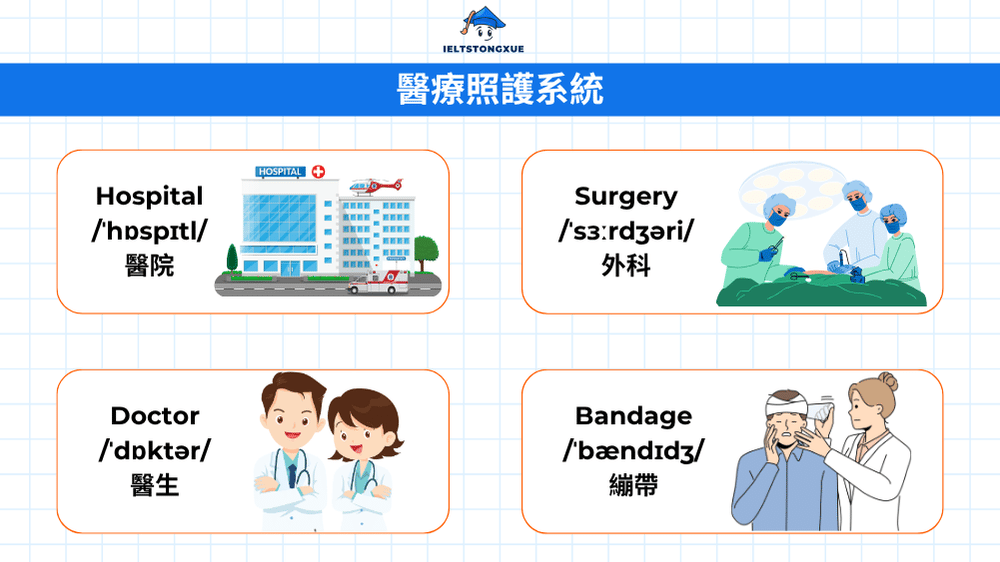
1. 醫療照護系統:科別、人員與地點英文單字
了解醫療體系的架構與人員分工,能讓你在就診時快速找到正確的醫療資源。
1.1. 醫療地點
| 英文單字 | 意思 | 例句 |
| Hospital
/ˈhɒspɪtl/ |
醫院 | She was taken to the hospital after the accident.(她在事故後被送往醫院。) |
| Clinic
/ˈklɪnɪk/ |
診所 | I went to the local clinic for a checkup.(我去當地診所做檢查。) |
| Emergency room (ER)
/ɪˈmɜːrdʒənsi ruːm/ |
急診室 | He was rushed to the ER with chest pain.(他因胸痛被緊急送往急診室。) |
| Operating room (OR)
/ˈɒpəreɪtɪŋ ruːm/ |
手術室 | The patient is being prepared in the operating room.(病人在手術室做準備。) |
| Pharmacy
/ˈfɑːrməsi/ |
藥局 | You can buy medicine at the nearest pharmacy.(你可以在附近的藥局買藥。) |
| Laboratory
/ləˈbɒrətɔːri/ |
實驗室 | The blood samples were sent to the laboratory.(血液樣本已送至實驗室。) |
| Maternity ward
/məˈtɜːrnɪti wɔːrd/ |
產科病房 | She gave birth in the maternity ward.(她在產科病房生產。) |
| Intensive care unit (ICU)
/ɪnˈtensɪv keər ˈjuːnɪt/ |
加護病房 | The patient is in the ICU after surgery.(手術後病人被送進加護病房。) |
| Waiting room
/ˈweɪtɪŋ ruːm/ |
等候室 | Please wait in the waiting room until your name is called.(請在等候室等待叫號。) |
| Reception desk
/rɪˈsepʃən desk/ |
接待櫃檯 | Check in at the reception desk first.(請先到接待櫃檯報到。) |
1.2. 醫療科別
| 英文單字 | 意思 | 例句 |
| Internal medicine
/ɪnˈtɜːrnəl ˈmedɪsɪn/ |
內科 | He visited the internal medicine department for a checkup.(他去內科做健康檢查。) |
| Surgery
/ˈsɜːrdʒəri/ |
外科 | She works in the surgery department.(她在外科部門工作。) |
| Pediatrics
/ˌpiːdiˈætrɪks/ |
小兒科 | The child was seen by a pediatrics specialist.(孩子由小兒科醫師看診。) |
| Obstetrics and gynecology (OB-GYN)
/əbˈstetrɪks ænd ˌɡaɪnɪˈkɒlədʒi/ |
婦產科 | She has an appointment at the OB-GYN clinic.(她預約了婦產科門診。) |
| Dermatology
/ˌdɜːrməˈtɒlədʒi/ |
皮膚科 | He went to dermatology for a skin rash.(他為皮疹去皮膚科。) |
| Ophthalmology
/ˌɒfθælˈmɒlədʒi/ |
眼科 | Ophthalmology deals with eye diseases.(眼科專門處理眼部疾病。) |
| Otolaryngology (ENT)
/ˌoʊtoʊˌlærɪŋˈɡɒlədʒi/ |
耳鼻喉科 | He was referred to ENT for hearing problems.(他因聽力問題被轉介到耳鼻喉科。) |
| Cardiology
/ˌkɑːrdiˈɒlədʒi/ |
心臟科 | Cardiology focuses on heart conditions.(心臟科主要治療心臟疾病。) |
| Neurology
/njʊˈrɒlədʒi/ |
神經科 | She was sent to neurology for dizziness.(她因頭暈被轉介至神經科。) |
| Psychiatry
/saɪˈkaɪətri/ |
精神科 | Psychiatry helps patients with mental disorders.(精神科幫助治療心理疾病患者。) |
| Oncology
/ɒnˈkɒlədʒi/ |
腫瘤科 | He is receiving treatment in the oncology department.(他正在腫瘤科接受治療。) |
| Orthopedics
/ˌɔːrθəˈpiːdɪks/ |
骨科 | The doctor specializes in orthopedics.(那位醫師專精於骨科。) |
1.3. 醫療人員
| 英文單字 | 意思 | 例句 |
| Doctor
/ˈdɒktər/ |
醫生 | The doctor examined the patient carefully.(醫生仔細檢查了病人。) |
| Nurse
/nɜːrs/ |
護士 | The nurse gave me an injection.(護士幫我打針。) |
| Surgeon
/ˈsɜːrdʒən/ |
外科醫生 | The surgeon performed a complex operation.(外科醫生進行了一項複雜手術。) |
| Dentist
/ˈdentɪst/ |
牙醫 | I have a dental appointment with my dentist tomorrow.(我明天有牙醫門診。) |
| Pharmacist
/ˈfɑːrməsɪst/ |
藥師 | The pharmacist explained how to take the medicine.(藥師解釋了如何服藥。) |
| Paramedic
/ˌpærəˈmedɪk/ |
急救人員 | Paramedics arrived quickly after the accident.(意外發生後急救人員迅速趕到。) |
| Therapist
/ˈθerəpɪst/ |
治療師 | She works as a physical therapist.(她是一名物理治療師。) |
| Psychologist
/saɪˈkɒlədʒɪst/ |
心理學家 | The psychologist helps patients manage stress.(心理學家協助病人管理壓力。) |
| Midwife
/ˈmɪdwaɪf/ |
助產士 | The midwife assisted during childbirth.(助產士在分娩時提供協助。) |
| Radiologist
/ˌreɪdiˈɒlədʒɪst/ |
放射科醫師 | The radiologist analyzed the X-ray images.(放射科醫師分析了X光片。) |
| Lab technician
/læb tekˈnɪʃən/ |
實驗室技師 | The lab technician processed the blood samples.(實驗室技師處理了血液樣本。) |
| Receptionist
/rɪˈsepʃənɪst/ |
櫃檯接待員 | The receptionist scheduled my next appointment.(接待員幫我預約了下次看診時間。) |
2. 醫療流程:預約、諮詢、診斷、治療英文單字
完整的就醫流程涵蓋了多個階段,每個階段都有其特定的英文術語。
2.1. 預約與報到
| 英文單字 | 意思 | 例句 |
| Make an appointment
/meɪk ən əˈpɔɪntmənt/ |
預約看診 | I need to make an appointment with the doctor.(我需要預約看醫生。) |
| Cancel an appointment
/ˈkænsəl ən əˈpɔɪntmənt/ |
取消預約 | She called to cancel her appointment.(她打電話取消預約。) |
| Reschedule
/ˌriːˈʃedjuːl/ |
改期 | I want to reschedule my appointment to next week.(我想把預約改到下週。) |
| Check-in
/tʃek ɪn/ |
報到 | Please check in at the front desk.(請到前台報到。) |
| Patient form
/ˈpeɪʃənt fɔːrm/ |
病人表格 | Fill out this patient form before your consultation.(請在看診前填寫病人表格。) |
| Insurance card
/ɪnˈʃʊrəns kɑːrd/ |
健保卡/保險卡 | Don’t forget to bring your insurance card.(別忘了帶保險卡。) |
| Waiting list
/ˈweɪtɪŋ lɪst/ |
候診名單 | Your name is on the waiting list.(你的名字在候診名單上。) |
| Reception desk
/rɪˈsepʃən desk/ |
接待櫃台 | Check in at the reception desk first.(請先到接待櫃台登記。) |
| Medical record
/ˈmedɪkl ˈrekərd/ |
病歷 | The nurse asked for my medical record.(護士索取了我的病歷。) |
2.2. 診斷過程
| 英文單字 | 意思 | 例句 |
| Symptom
/ˈsɪmptəm/ |
症狀 | Fever is a common symptom of infection.(發燒是感染的常見症狀。) |
| Diagnosis
/ˌdaɪəɡˈnoʊsɪs/ |
診斷 | The doctor made a diagnosis after reviewing the test results.(醫生在查看檢查結果後做出診斷。) |
| Examination
/ɪɡˌzæmɪˈneɪʃən/ |
檢查 | I had a full physical examination last week.(我上週做了全身健康檢查。) |
| X-ray
/ˈeks reɪ/ |
X光 | The doctor ordered an X-ray of my chest.(醫生要求做胸部X光檢查。) |
| Ultrasound
/ˈʌltrəsaʊnd/ |
超音波 | The ultrasound showed no abnormalities.(超音波檢查未發現異常。) |
| Blood test
/blʌd test/ |
血液檢查 | A blood test can reveal signs of infection.(血液檢查可顯示感染跡象。) |
| Urine test
/ˈjʊrɪn test/ |
尿液檢查 | The doctor asked for a urine test sample.(醫生要求提供尿液檢體。) |
| CT scan
/siː tiː skæn/ |
電腦斷層掃描 | The CT scan helped detect the tumor.(電腦斷層掃描幫助發現腫瘤。) |
| MRI
/ˌem ɑːr ˈaɪ/ |
核磁共振 | The patient underwent an MRI for brain examination.(病人接受核磁共振腦部檢查。) |
| Checkup
/ˈtʃekʌp/ |
健康檢查 | I go for a regular checkup every six months.(我每半年做一次健康檢查。) |
| Biopsy
/ˈbaɪɒpsi/ |
活檢 | The biopsy confirmed the presence of cancer cells.(活檢確認有癌細胞。) |
2.3. 治療與用藥
| 英文單字 | 意思 | 例句 |
| Treatment
/ˈtriːtmənt/ |
治療 | The patient responded well to treatment.(病人對治療反應良好。) |
| Therapy
/ˈθerəpi/ |
療法 | Physical therapy helps improve mobility.(物理治療有助於改善活動力。) |
| Medication
/ˌmedɪˈkeɪʃən/ |
藥物 | The doctor prescribed new medication for pain.(醫生開了新的止痛藥。) |
| Prescription
/prɪˈskrɪpʃən/ |
處方 | You need a doctor’s prescription for this drug.(這種藥需要醫生處方。) |
| Injection
/ɪnˈdʒekʃən/ |
注射 | The nurse gave me a flu injection.(護士幫我打了流感疫苗。) |
| Surgery
/ˈsɜːrdʒəri/ |
手術 | He needs surgery to repair his knee.(他需要手術修復膝蓋。) |
| Operation
/ˌɒpəˈreɪʃən/ |
手術(同義) | The operation lasted for three hours.(手術持續了三小時。) |
| Rehabilitation
/ˌriːəˌbɪlɪˈteɪʃən/ |
復健 | He is now in rehabilitation after surgery.(他手術後正在進行復健。) |
| Bandage
/ˈbændɪdʒ/ |
繃帶 | The nurse wrapped a bandage around my arm.(護士替我手臂纏上繃帶。) |
| Antibiotic
/ˌæntibaɪˈɒtɪk/ |
抗生素 | The doctor prescribed antibiotics for the infection.(醫生開了抗生素治療感染。) |
| Painkiller
/ˈpeɪnˌkɪlər/ |
止痛藥 | Take a painkiller if the pain is severe.(若疼痛劇烈可服止痛藥。) |
| Vaccination
/ˌvæksɪˈneɪʃən/ |
疫苗接種 | Vaccination helps prevent infectious diseases.(疫苗接種可預防傳染病。) |
3. 急救與初級護理英文單字:事故、傷害、CPR
緊急情況下,能夠用英文清楚表達傷勢與需求,可能攸關生命安全。以下是急救與初級護理的核心詞彙。
3.1. 緊急狀況
| 英文單字 | 意思 | 例句 |
| Emergency
/ɪˈmɜːrdʒənsi/ |
緊急情況 | Call 911 in case of an emergency.(遇到緊急情況時請撥打911。) |
| Accident
/ˈæksɪdənt/ |
意外事故 | He was injured in a car accident.(他在車禍中受傷。) |
| Injury
/ˈɪndʒəri/ |
傷害 | The player suffered a serious leg injury.(那位球員腿部嚴重受傷。) |
| Burn
/bɜːrn/ |
燒傷 | He got a burn from hot water.(他被熱水燙傷了。) |
| Bleeding
/ˈbliːdɪŋ/ |
出血 | Apply pressure to stop the bleeding.(加壓止血。) |
| Fracture
/ˈfræktʃər/ |
骨折 | She has a fracture in her arm.(她的手臂骨折了。) |
| Heart attack
/ˈhɑːrt əˌtæk/ |
心臟病發作 | He was rushed to the hospital after a heart attack.(他心臟病發作後被送醫。) |
| Stroke
/stroʊk/ |
中風 | A stroke can cause sudden numbness or weakness.(中風可能引起突然麻木或無力。) |
| Choking
/ˈtʃoʊkɪŋ/ |
噎住 | The child was choking on food.(孩子被食物噎住。) |
| Unconscious
/ʌnˈkɒnʃəs/ |
失去意識 | He was found unconscious on the floor.(他被發現倒在地上失去意識。) |
| Seizure
/ˈsiːʒər/ |
抽搐、癲癇發作 | The patient had a seizure during sleep.(病人在睡眠中發生癲癇發作。) |
| Allergic reaction
/əˈlɜːrdʒɪk riˈækʃən/ |
過敏反應 | She had an allergic reaction to peanuts.(她對花生產生過敏反應。) |
3.2. 急救措施
| 英文單字 | 意思 | 例句 |
| First aid
/fɜːrst eɪd/ |
急救 | Learning first aid can save lives.(學習急救可以拯救生命。) |
| CPR (Cardiopulmonary Resuscitation)
/ˌsiː piː ɑːr/ |
心肺復甦術 | He performed CPR on the unconscious man.(他為昏迷男子進行心肺復甦術。) |
| Bandage
/ˈbændɪdʒ/ |
繃帶 | Apply a bandage to cover the wound.(用繃帶包紮傷口。) |
| Disinfect
/ˌdɪsɪnˈfekt/ |
消毒 | Disinfect the cut before applying medicine.(上藥前先消毒傷口。) |
| Ice pack
/aɪs pæk/ |
冰袋 | Use an ice pack to reduce swelling.(使用冰袋減輕腫脹。) |
| Stop the bleeding
/stɒp ðə ˈbliːdɪŋ/ |
止血 | Press firmly to stop the bleeding.(用力按壓止血。) |
| Call for help
/kɔːl fɔːr help/ |
呼救 | Call for help immediately if someone faints.(若有人昏倒,立即呼救。) |
| Perform CPR
/pərˈfɔːrm siː piː ɑːr/ |
進行心肺復甦 | The lifeguard performed CPR successfully.(救生員成功進行了心肺復甦。) |
| Use an AED
/juːz ən ˌeɪ iː ˈdiː/ |
使用自動體外除顫器 | Use an AED if the person has no pulse.(若病人無脈搏,請使用AED。) |
4. 現代健康議題
隨著全球化與醫療科技進步,新的健康議題不斷出現。掌握這些現代醫療詞彙能讓你更好地理解當代健康挑戰。
4.1. 疫苗與免疫
| 英文單字 | 意思 | 例句 |
| Vaccine
/ˈvæksiːn/ |
疫苗 | The flu vaccine is available every winter.(每年冬季都可接種流感疫苗。) |
| Vaccination
/ˌvæksɪˈneɪʃən/ |
疫苗接種 | Vaccination protects against serious diseases.(疫苗接種可預防嚴重疾病。) |
| Immunity
/ɪˈmjuːnɪti/ |
免疫力 | Regular exercise helps strengthen immunity.(規律運動有助於增強免疫力。) |
| Booster shot
/ˈbuːstər ʃɑːt/ |
加強針 | Don’t forget to get your booster shot.(別忘了打加強針。) |
| Antibody
/ˈæntɪˌbɒdi/ |
抗體 | Antibodies help the body fight infections.(抗體幫助身體抵抗感染。) |
| Immunization record
/ˌɪmjunəˈzeɪʃən ˈrekərd/ |
免疫紀錄 | Keep your child’s immunization record updated.(保持孩子的免疫紀錄最新。) |
| Flu shot
/fluː ʃɒt/ |
流感疫苗 | I get a flu shot every year.(我每年都接種流感疫苗。) |
| COVID-19 vaccine
/ˌkoʊvɪd naɪnˈtiːn ˈvæksiːn/ |
新冠疫苗 | The COVID-19 vaccine reduces the risk of infection.(新冠疫苗可降低感染風險。) |
| Side effects
/saɪd ɪˈfekts/ |
副作用 | Some people experience mild side effects after vaccination.(有些人接種疫苗後會出現輕微副作用。) |
4.2. 流行病學
| 英文單字 | 意思 | 例句 |
| Epidemic
/ˌepɪˈdemɪk/ |
流行病 | The flu epidemic spread quickly across the city.(流感疫情迅速蔓延全市。) |
| Pandemic
/pænˈdemɪk/ |
全球大流行 | COVID-19 became a global pandemic in 2020.(COVID-19在2020年成為全球大流行。) |
| Outbreak
/ˈaʊtbreɪk/ |
爆發 | There was an outbreak of measles in the area.(該地區爆發麻疹疫情。) |
| Infection rate
/ɪnˈfekʃən reɪt/ |
感染率 | The infection rate has dropped significantly.(感染率已大幅下降。) |
| Quarantine
/ˈkwɒrəntiːn/ |
隔離 | The patient was kept in quarantine for two weeks.(病人被隔離兩週。) |
| Transmission
/trænzˈmɪʃən/ |
傳播 | The virus transmission occurs through droplets.(病毒透過飛沫傳播。) |
| Patient zero
/ˈpeɪʃənt ˈzɪəroʊ/ |
零號病人 | Scientists identified the patient zero of the outbreak.(科學家找到了疫情的零號病人。) |
| Contact tracing
/ˈkɒntækt ˈtreɪsɪŋ/ |
接觸者追蹤 | Contact tracing helps control the spread of disease.(接觸者追蹤有助於控制疫情擴散。) |
4.3. 新興疾病與檢測
| 英文單字 | 意思 | 例句 |
| Emerging disease
/ɪˈmɜːrdʒɪŋ dɪˈziːz/ |
新興疾病 | COVID-19 is an example of an emerging disease.(COVID-19是新興疾病的例子。) |
| Variant
/ˈveəriənt/ |
變異株 | A new variant of the virus has been detected.(已檢測出新的病毒變異株。) |
| Rapid test
/ˈræpɪd test/ |
快篩檢測 | Rapid tests can provide results within minutes.(快篩能在數分鐘內提供結果。) |
| PCR test
/ˌpiː siː ˈɑːr test/ |
PCR檢測 | The PCR test is highly accurate for detecting infection.(PCR檢測對感染檢出率高。) |
| Antigen test
/ˈæntɪdʒən test/ |
抗原檢測 | Antigen tests are used for quick screening.(抗原檢測用於快速篩查。) |
| Antibody test
/ˈæntɪˌbɒdi test/ |
抗體檢測 | The antibody test shows if you had a past infection.(抗體檢測可顯示是否曾感染。) |
| Screening
/ˈskriːnɪŋ/ |
篩檢 | Regular screening helps detect diseases early.(定期篩檢有助於早期發現疾病。) |
結語
學習「疾病英文單字」不只是記憶詞彙,而是打開理解世界的新窗口。當你能用英文描述身體狀況、閱讀健康資訊、或與國際醫師交流時,語言將成為守護自我與關懷他人的力量。這份整理不僅讓你熟悉醫療情境用語,更幫助你在真實生活與學術表達中自信應對。
若你想讓學習更系統、更有效,IELTSTongXue 提供的智慧學習資源與真題練習,將引導你從基礎詞彙走向流暢運用。今天就開始,把知識化為行動,讓每一個英文字都成為你邁向更高層次英語能力的基石。

