



你是否常在看國際新聞或法庭劇時卡詞,想問「這句報導裡的法律用語怎麼懂?」犯罪英文並非只能給律師看:掌握關鍵詞彙與程序概念,就能快速理解案情與新聞重點。
在這篇《犯罪英文入門》中,IELTSTongXue 將帶你走進語言與法律交會的精彩領域,從各類罪行(暴力、財產、網路犯罪)到法庭角色、審判流程,一次掌握最實用的詞彙與例句。不論你是想提升閱讀理解力,還是想在國際議題討論中更有份量——這篇文章都會讓你發現:學「犯罪英文」,原來也能這麼有趣、這麼貼近生活。
我們要讓犯罪英文變得像追劇一樣好玩、像解謎一樣過癮!
I. 深入剖析犯罪英文中的各類罪行
刑事司法體系根據犯罪對象與性質,將罪行劃分為多個類別:針對人身的暴力犯罪、侵犯財產的經濟犯罪、涉及金融系統的白領犯罪,以及隨科技發展而生的網路犯罪等。每個類別都有其專屬的法律術語與特定語境,掌握這些分類能幫助你更精確地理解犯罪的英文表達方式。
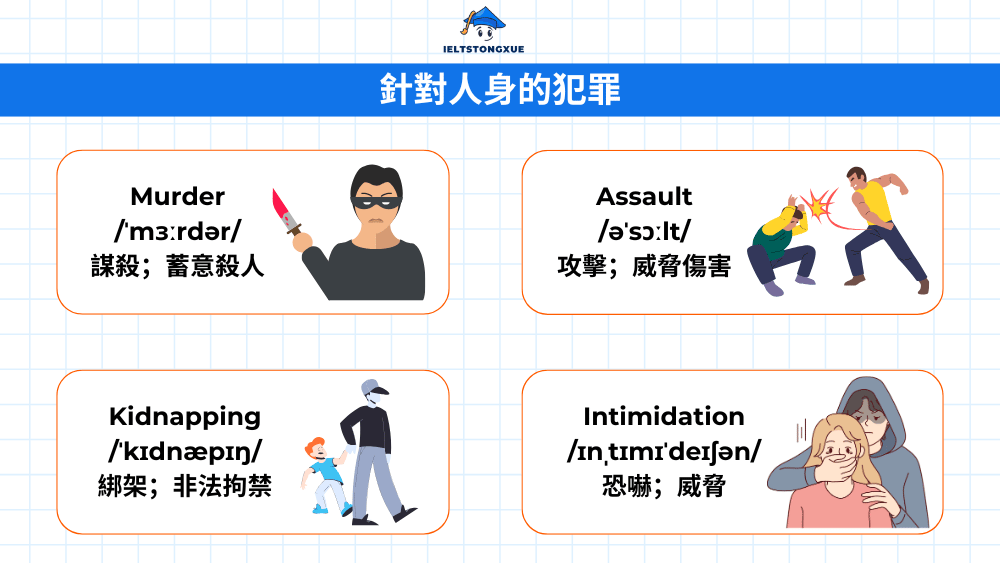
1. 針對人身的犯罪
針對人身的犯罪是指直接侵害個人身體、生命或自由的行為,這類罪行在法律體系中被視為最嚴重的違法行為之一。
| 犯罪英文單字 | 意義 | 例句 |
| Murder
/ˈmɜːrdər/ |
謀殺;蓄意殺人 | The suspect was charged with first-degree murder after the premeditated attack.(嫌疑人在有預謀的攻擊後被控一級謀殺罪。) |
| Manslaughter
/ˈmænslɔːtər/ |
過失殺人;非預謀殺人 | He was convicted of manslaughter because the killing was not premeditated.(他被判過失殺人罪,因為該殺人行為並非預謀。) |
| Assault
/əˈsɔːlt/ |
攻擊;威脅傷害 | The man was arrested for assault after threatening the victim with a weapon.(該男子在用武器威脅受害者後因攻擊罪被捕。) |
| Battery
/ˈbætəri/ |
毆打;實際傷害 | Battery charges were filed when the defendant physically struck the victim.(當被告實際毆打受害者時,毆打罪名被提起。) |
| Kidnapping
/ˈkɪdnæpɪŋ/ |
綁架;非法拘禁 | The kidnapping case drew national attention when the child was taken across state lines.(當孩童被帶過州界時,這起綁架案引起全國關注。) |
| Sexual Assault
/ˈsekʃuəl əˈsɔːlt/ |
性侵害 | The survivor reported the sexual assault to authorities immediately after the incident.(倖存者在事件發生後立即向當局報告性侵害。) |
| Rape
/reɪp/ |
強姦 | He was sentenced to 20 years in prison for rape and aggravated assault.(他因強姦和加重攻擊罪被判處20年監禁。) |
| Domestic Violence
/dəˈmestɪk ˈvaɪələns/ |
家庭暴力 | Domestic violence cases often go unreported due to fear and emotional manipulation.(家庭暴力案件常因恐懼和情感操控而未被報案。) |
| Intimidation
/ɪnˌtɪmɪˈdeɪʃən/ |
恐嚇;威脅 | The witness refused to testify due to ongoing intimidation from the defendant’s associates.(證人因被告同夥持續恐嚇而拒絕作證。) |
2. 針對財產的犯罪
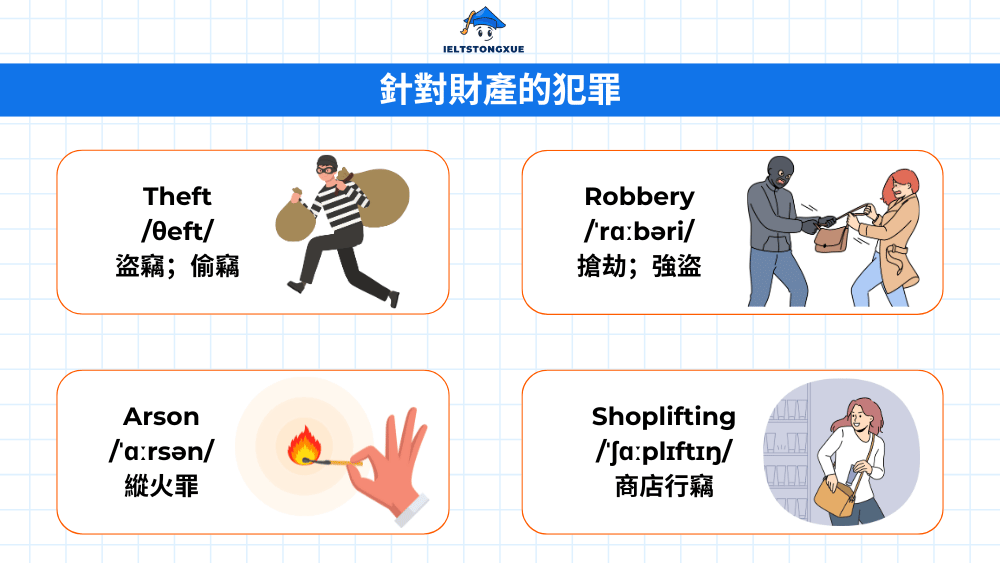
針對財產的犯罪主要侵犯個人或組織的物質財產,包括盜竊、搶劫、縱火等行為。這些犯罪英文動詞在法律文件與新聞報導中頻繁出現,理解它們之間的細微差異對於精確掌握法律語境至關重要。
| 犯罪英文單字 | 意義 | 例句 |
| Theft
/θeft/ |
盜竊;偷竊 | The store owner reported a theft when several items went missing from the inventory.(當庫存中有幾件物品失蹤時,店主報告了盜竊案。) |
| Larceny
/ˈlɑːrsəni/ |
竊盜罪(法律用語) | She was convicted of grand larceny for stealing property valued over $1,000.(她因盜竊價值超過1,000美元的財產而被判重大竊盜罪。) |
| Robbery
/ˈrɑːbəri/ |
搶劫;強盜 | The bank robbery was carried out by armed suspects who threatened employees and customers.(銀行搶劫由武裝嫌疑人實施,他們威脅員工和顧客。) |
| Burglary
/ˈbɜːrɡləri/ |
入室盜竊;破門行竊 | He was charged with burglary after breaking into the house while the owners were away.(他在屋主不在時闖入房屋後被控入室盜竊罪。) |
| Arson
/ˈɑːrsən/ |
縱火罪 | The building was destroyed in an act of arson, and investigators found evidence of accelerants.(建築物在一起縱火行為中被摧毀,調查人員發現了助燃劑的證據。) |
| Vandalism
/ˈvændəlɪzəm/ |
破壞公物;蓄意毀損 | The teenagers were charged with vandalism after spray-painting graffiti on public property.(這些青少年在公共財產上噴漆塗鴉後被控破壞公物罪。) |
| Shoplifting
/ˈʃɑːplɪftɪŋ/ |
商店行竊 | Security cameras captured clear footage of the shoplifting incident at the department store.(監視攝影機清楚拍攝到百貨公司的商店行竊事件。) |
| Embezzlement
/ɪmˈbezlmənt/ |
挪用公款;侵占 | The accountant was arrested for embezzlement after diverting company funds to personal accounts.(會計師在將公司資金轉移到個人帳戶後因侵占罪被捕。) |
3. 金融與白領犯罪
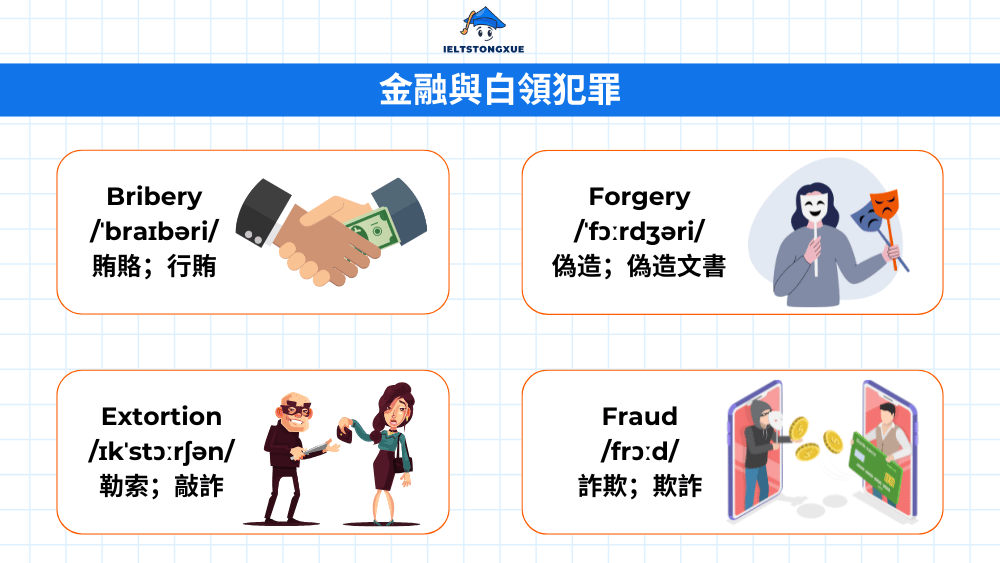
金融與白領犯罪通常涉及非暴力手段,以獲取不當經濟利益為目的。這類犯罪常發生在商業環境中,犯罪者利用職務之便或專業知識進行詐欺、貪污等違法行為,對經濟體系與社會信任造成深遠影響。
| 犯罪英文單字 | 意義 | 例句 |
| Fraud
/frɔːd/ |
詐欺;欺詐 | The company executive was convicted of fraud for deliberately misleading investors about financial performance.(該公司高管因故意誤導投資者有關財務表現而被判詐欺罪。) |
| Bribery
/ˈbraɪbəri/ |
賄賂;行賄 | The official resigned after bribery allegations surfaced involving payments from contractors.(在涉及承包商付款的賄賂指控浮出水面後,該官員辭職。) |
| Forgery
/ˈfɔːrdʒəri/ |
偽造;偽造文書 | He was charged with forgery after creating fake documents to obtain a loan.(他在製造假文件以獲得貸款後被控偽造罪。) |
| Money Laundering
/ˈmʌni ˈlɔːndərɪŋ/ |
洗錢 | The criminal organization was investigated for money laundering through offshore accounts.(該犯罪組織因通過離岸帳戶洗錢而受到調查。) |
| Tax Evasion
/tæks ɪˈveɪʒən/ |
逃稅;避稅 | The celebrity faced charges of tax evasion for failing to report millions in income.(這位名人因未申報數百萬收入而面臨逃稅指控。) |
| Insider Trading
/ɪnˈsaɪdər ˈtreɪdɪŋ/ |
內線交易 | The stockbroker was prosecuted for insider trading after using confidential information for personal gain.(該股票經紀人在利用機密資訊謀取私利後因內線交易被起訴。) |
| Extortion
/ɪkˈstɔːrʃən/ |
勒索;敲詐 | The business owner reported extortion when criminals demanded protection money under threat of violence.(當犯罪分子以暴力威脅索取保護費時,企業主報告了勒索案。) |
4. 網路犯罪與毒品相關罪行
隨著數位科技的迅速發展,網路犯罪已成為當代司法體系面臨的重大挑戰。這類犯罪跨越地理界限,利用網路匿名性進行詐欺、資料竊取與身份盜用。同時,毒品走私與組織犯罪等跨境非法活動持續威脅社會安全,以下詞彙涵蓋這些現代犯罪型態。
| 犯罪英文單字 | 意義 | 例句 |
| Cybercrime
/ˈsaɪbərkraɪm/ |
網路犯罪 | Law enforcement agencies worldwide collaborate to combat cybercrime and protect digital infrastructure.(全球執法機構合作打擊網路犯罪並保護數位基礎設施。) |
| Hacking
/ˈhækɪŋ/ |
駭客入侵;非法侵入系統 | The company’s database was compromised through hacking, exposing customer personal information.(該公司的資料庫因駭客入侵而受損,暴露了客戶個人資訊。) |
| Identity Theft
/aɪˈdentəti θeft/ |
身份盜用 | Victims of identity theft often discover the crime when unauthorized charges appear on their accounts.(身份盜用的受害者通常在帳戶上出現未經授權的費用時才發現犯罪。) |
| Phishing
/ˈfɪʃɪŋ/ |
網路釣魚 | The phishing email appeared legitimate but was designed to steal banking credentials from unsuspecting users.(這封網路釣魚電子郵件看似合法,但目的是從毫無戒心的用戶那裡竊取銀行憑證。) |
| Drug Trafficking
/drʌɡ ˈtræfɪkɪŋ/ |
毒品走私;販毒 | International cooperation is essential for combating drug trafficking across borders.(國際合作對於打擊跨境毒品走私至關重要。) |
| Smuggling
/ˈsmʌɡlɪŋ/ |
走私 | Border patrol agents intercepted a vehicle involved in smuggling contraband goods into the country.(邊境巡邏人員攔截了一輛參與走私違禁品進入該國的車輛。) |
| Organized Crime
/ˈɔːrɡənaɪzd kraɪm/ |
組織犯罪 | Organized crime syndicates operate complex networks that span multiple countries and criminal enterprises.(組織犯罪集團經營複雜的網絡,橫跨多個國家和犯罪事業。) |

II. 英文稱謂與職責:刑事司法體系中的關鍵角色
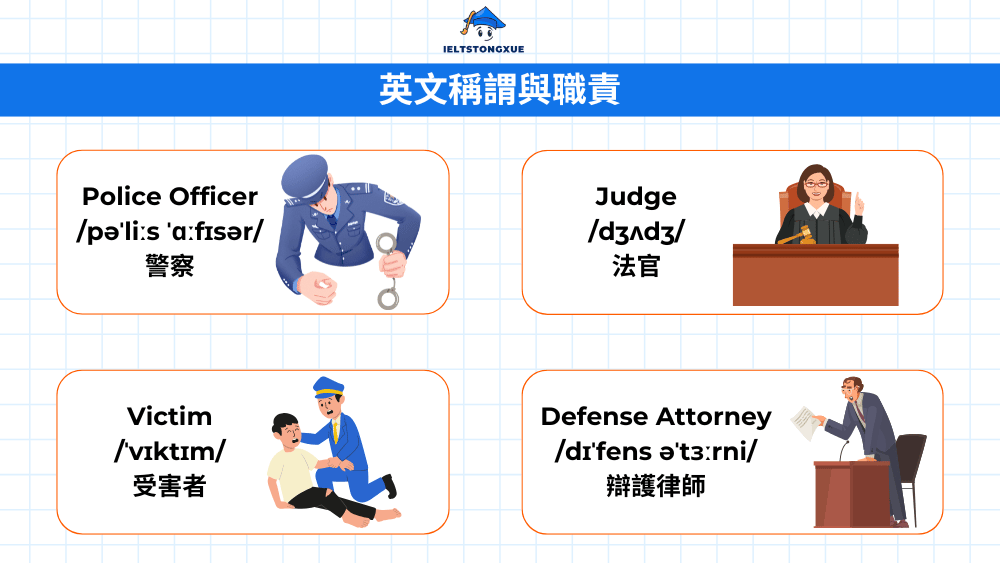
刑事司法體系是一個複雜的機制,由眾多專業人士共同運作以維護法律秩序。理解這些角色的英文稱謂不僅能幫助你精確理解法律程序,更能讓你在閱讀國際新聞或觀看法庭劇時,清楚掌握每個參與者在司法體系中的定位與功能。
| 犯罪英文單字 | 意義 | 例句 |
| Criminal
/ˈkrɪmɪnəl/ |
罪犯;犯罪者 | The criminal was apprehended after a extensive manhunt involving multiple law enforcement agencies.(在涉及多個執法機構的大規模搜捕後,罪犯被逮捕。) |
| Offender
/əˈfendər/ |
違法者;犯罪者 | First-time offenders may receive lighter sentences or alternative punishment options.(初犯者可能會獲得較輕的刑罰或替代性懲罰選項。) |
| Suspect
/ˈsʌspekt/ |
嫌疑人 | The suspect was taken into custody for questioning regarding the robbery that occurred last night.(嫌疑人被拘留以就昨晚發生的搶劫案接受訊問。) |
| Defendant
/dɪˈfendənt/ |
被告 | The defendant pleaded not guilty to all charges during the arraignment hearing.(被告在提審聽證會上對所有指控均不認罪。) |
| Victim
/ˈvɪktɪm/ |
受害者 | The victim provided crucial testimony that helped secure a conviction in the assault case.(受害者提供了關鍵證詞,幫助在攻擊案中獲得定罪。) |
| Witness
/ˈwɪtnəs/ |
證人 | The eyewitness gave a detailed account of the events that transpired during the incident.(目擊證人詳細描述了事件期間發生的情況。) |
| Judge
/dʒʌdʒ/ |
法官 | The judge presides over court proceedings and ensures that trials are conducted fairly according to law.(法官主持法庭程序,確保審判依法公正進行。) |
| Prosecutor
/ˈprɑːsɪkjuːtər/ |
檢察官;公訴人 | The prosecutor presented compelling evidence to prove the defendant’s guilt beyond reasonable doubt.(檢察官提出令人信服的證據,證明被告有罪且無合理懷疑。) |
| Defense Attorney
/dɪˈfens əˈtɜːrni/ |
辯護律師 | The defense attorney argued that the evidence was circumstantial and insufficient for conviction.(辯護律師辯稱證據只是間接的,不足以定罪。) |
| Police Officer
/pəˈliːs ˈɑːfɪsər/ |
警察 | Police officers responded to the emergency call within minutes of receiving the report.(警察在接到報案後幾分鐘內回應了緊急呼叫。) |
| Detective
/dɪˈtektɪv/ |
偵探;刑警 | The detective gathered evidence and interviewed witnesses to piece together what happened at the crime scene.(偵探收集證據並訪問證人,以拼湊出犯罪現場發生的事情。) |
| Juror
/ˈdʒʊrər/ |
陪審員 | Each juror must evaluate the evidence objectively and reach a verdict based solely on facts presented.(每位陪審員必須客觀評估證據,並僅根據呈現的事實做出裁決。) |
| Jury
/ˈdʒʊri/ |
陪審團 | The jury deliberated for three days before reaching a unanimous verdict of guilty.(陪審團經過三天的審議後,達成一致的有罪裁決。) |
| Warden
/ˈwɔːrdən/ |
監獄長 | The warden is responsible for managing prison operations and ensuring the safety of inmates and staff.(監獄長負責管理監獄運作,確保囚犯和工作人員的安全。) |
| Parole Officer
/pəˈroʊl ˈɑːfɪsər/ |
假釋官 | The parole officer monitors released offenders to ensure they comply with the conditions of their parole.(假釋官監督獲釋罪犯,確保他們遵守假釋條件。) |
III. 英文法律程序與概念
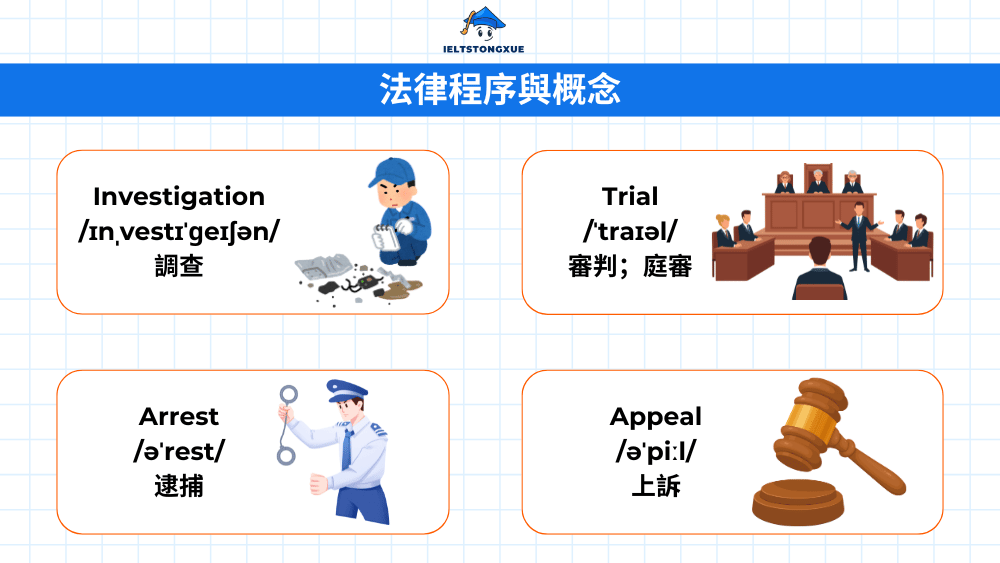
刑事案件從調查到最終判決,遵循著嚴謹的法律程序。掌握這些程序性詞彙與核心法律概念,能幫助你全面理解司法體系的運作邏輯與價值理念。
| 犯罪英文單字 | 意義 | 例句 |
| 調查與逮捕 | ||
| Investigation
/ɪnˌvestɪˈɡeɪʃən/ |
調查 | The investigation revealed new evidence that led to additional arrests in the case.(調查揭示了新證據,導致該案中出現更多逮捕行動。) |
| Arrest
/əˈrest/ |
逮捕 | Officers made the arrest after obtaining sufficient probable cause to believe a crime had been committed.(在獲得充分的相當理由相信犯罪已發生後,警察進行了逮捕。) |
| Warrant
/ˈwɔːrənt/ |
令狀;搜查令 | A search warrant was issued by the judge, authorizing police to search the suspect’s residence.(法官簽發了搜查令,授權警察搜查嫌疑人的住所。) |
| Bail
/beɪl/ |
保釋;保釋金 | The defendant was released on bail pending trial, with conditions including travel restrictions.(被告在審判前獲得保釋,附帶包括旅行限制在內的條件。) |
| Miranda Warning
/mɪˈrændə ˈwɔːrnɪŋ/ |
米蘭達警告(告知權利) | Officers must read the Miranda warning to suspects before custodial interrogation begins.(警察必須在拘留訊問開始前向嫌疑人宣讀米蘭達警告。) |
| 起訴與審訊 | ||
| Charge
/tʃɑːrdʒ/ |
控告;起訴 | The prosecutor filed formal charges against the suspect, including robbery and assault.(檢察官對嫌疑人提出正式控告,包括搶劫和攻擊。) |
| Indictment
/ɪnˈdaɪtmənt/ |
起訴書;正式控告 | The grand jury returned an indictment charging the defendant with multiple felonies.(大陪審團發出起訴書,指控被告犯有多項重罪。) |
| Plea
/pliː/ |
答辯;抗辯 | The defendant entered a plea of not guilty at the arraignment hearing.(被告在提審聽證會上進行了無罪答辯。) |
| Plea Bargain
/pliː ˈbɑːrɡən/ |
認罪協商 | The defense attorney negotiated a plea bargain that reduced the charges in exchange for a guilty plea.(辯護律師協商了認罪協商,以有罪答辯換取減少指控。) |
| Trial
/ˈtraɪəl/ |
審判;庭審 | The trial lasted three weeks, during which both sides presented their evidence and witnesses.(審判持續了三週,期間雙方都提出了證據和證人。) |
| Evidence
/ˈevɪdəns/ |
證據 | The prosecution’s case relied heavily on forensic evidence collected at the crime scene.(檢方的案件嚴重依賴在犯罪現場收集的鑑識證據。) |
| Testimony
/ˈtestɪmoʊni/ |
證詞;證言 | The witness’s testimony contradicted the defendant’s version of events.(證人的證詞與被告對事件的說法相矛盾。) |
| Cross-examination
/ˈkrɔːs ɪɡˌzæmɪˈneɪʃən/ |
交叉詰問 | During cross-examination, the defense attorney challenged the credibility of the prosecution’s witness.(在交叉詰問期間,辯護律師質疑檢方證人的可信度。) |
| Court
/kɔːrt/ |
法院;法庭 | The court convened at 9 AM to hear arguments from both the prosecution and defense.(法庭於上午9點開庭,聽取檢方和辯方的論點。) |
| 判決與上訴 | ||
| Verdict
/ˈvɜːrdɪkt/ |
裁決;判決 | After deliberating for two days, the jury reached a verdict of guilty on all counts.(經過兩天的審議後,陪審團對所有罪名做出有罪裁決。) |
| Conviction
/kənˈvɪkʃən/ |
定罪;有罪判決 | The conviction was based on overwhelming evidence presented during the trial.(該定罪是基於審判期間提出的壓倒性證據。) |
| Acquittal
/əˈkwɪtəl/ |
無罪釋放;宣告無罪 | The defendant celebrated the acquittal after the jury found insufficient evidence to convict.(在陪審團認為證據不足以定罪後,被告慶祝無罪釋放。) |
| Sentence
/ˈsentəns/ |
判刑;宣判 | The judge imposed a sentence of 15 years imprisonment for the convicted offender.(法官對已定罪的罪犯施加15年監禁的刑罰。) |
| Appeal
/əˈpiːl/ |
上訴 | The defense filed an appeal, arguing that legal errors occurred during the original trial.(辯方提出上訴,辯稱原審中發生了法律錯誤。) |
| 法律基礎概念 | ||
| Law
/lɔː/ |
法律 | The law provides a framework for maintaining order and protecting individual rights in society.(法律提供了維護秩序和保護社會中個人權利的框架。) |
| Justice
/ˈdʒʌstɪs/ |
正義;司法 | The pursuit of justice requires fair treatment and equal protection under the law for all citizens.(追求正義需要對所有公民在法律下給予公平對待和平等保護。) |
| Due Process
/duː ˈprɑːses/ |
正當法律程序 | Due process ensures that individuals receive fair treatment through the judicial system.(正當法律程序確保個人通過司法系統獲得公平對待。) |
| Presumption of Innocence
/prɪˈzʌmpʃən əv ˈɪnəsəns/ |
無罪推定 | The presumption of innocence means defendants are considered innocent until proven guilty beyond reasonable doubt.(無罪推定意味著被告在被證明有罪且無合理懷疑之前被視為無辜。) |
| Constitutional Rights
/ˌkɑːnstɪˈtuːʃənəl raɪts/ |
憲法權利 | Constitutional rights protect individuals from government overreach and ensure fundamental freedoms.(憲法權利保護個人免受政府越權,並確保基本自由。) |
| Jurisdiction
/ˌdʒʊrɪsˈdɪkʃən/ |
管轄權;司法權 | The case was dismissed because the court lacked jurisdiction over the matter.(該案被駁回,因為法院對此事缺乏管轄權。) |
IV. 英文懲罰與矯正措施
當法院對犯罪者做出定罪判決後,司法體系便進入懲罰與矯正階段。現代司法理念強調懲罰與復歸的平衡,以下詞彙涵蓋從監禁刑罰到社區矯正的各種措施。
1. 刑罰類型
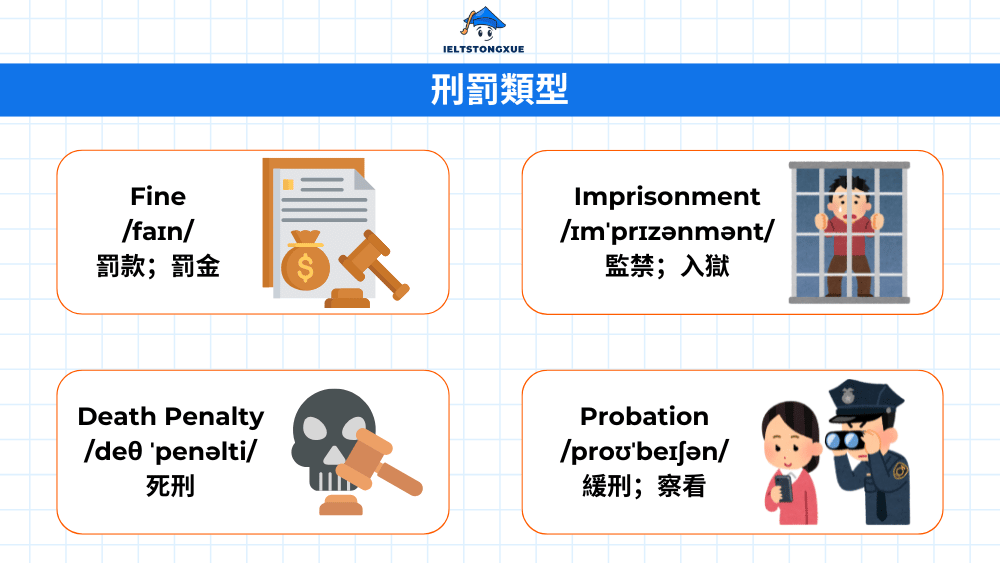
法院根據犯罪的嚴重程度與具體情況,對犯罪者施加不同類型的懲罰。這些刑罰從經濟處罰到剝奪自由,乃至最極端的死刑,每種懲罰都反映了社會對不同犯罪行為的道德評價與法律回應。
| 犯罪英文單字 | 意義 | 例句 |
| Fine
/faɪn/ |
罰款;罰金 | The court imposed a substantial fine as punishment for the financial fraud committed by the corporation.(法院對該公司犯下的金融詐欺施加了大額罰款作為懲罰。) |
| Imprisonment
/ɪmˈprɪzənmənt/ |
監禁;入獄 | He received a sentence of five years imprisonment for his role in the burglary.(他因參與入室盜竊而被判處五年監禁。) |
| Life Imprisonment
/laɪf ɪmˈprɪzənmənt/ |
終身監禁 | The serial offender was given life imprisonment without the possibility of parole.(這名慣犯被判處終身監禁且不得假釋。) |
| Death Penalty
/deθ ˈpenəlti/ |
死刑 | The death penalty remains controversial, with ongoing debates about its morality and effectiveness.(死刑仍然存在爭議,關於其道德性和有效性的辯論持續進行。) |
| Capital Punishment
/ˈkæpɪtəl ˈpʌnɪʃmənt/ |
死刑;極刑 | Capital punishment is reserved for the most heinous crimes in jurisdictions where it remains legal.(在仍然合法的司法管轄區,極刑被保留給最令人髮指的犯罪。) |
2. 監外與社區矯正
並非所有犯罪者都需要被監禁。司法體系提供了多種替代性懲罰措施,允許犯罪者在特定條件與監督下留在社區中,這不僅減輕監獄負擔,更重要的是為犯罪者提供維持家庭關係、工作與社會連結的機會,有助於降低再犯率。
| 犯罪英文單字 | 意義 | 例句 |
| Probation
/proʊˈbeɪʃən/ |
緩刑;察看 | The first-time offender was placed on probation for two years instead of serving jail time.(這名初犯者被判處兩年緩刑,而非服刑。) |
| Parole
/pəˈroʊl/ |
假釋;有條件釋放 | After serving 15 years of his sentence, the inmate was granted parole with strict supervision conditions.(在服刑15年後,這名囚犯獲得假釋,但須接受嚴格監督條件。) |
| Community Service
/kəˈmjuːnəti ˈsɜːrvɪs/ |
社區服務 | The judge ordered 200 hours of community service as part of the sentence for vandalism.(法官下令200小時的社區服務作為破壞公物罪刑罰的一部分。) |
| House Arrest
/haʊs əˈrest/ |
居家監禁;軟禁 | The defendant was placed under house arrest with electronic monitoring while awaiting trial.(被告在等待審判期間被置於居家監禁並接受電子監控。) |
3. 犯罪者的改造與社會復歸
現代司法體系認識到,單純的懲罰無法有效解決犯罪問題。真正的目標是幫助犯罪者認識錯誤、改變行為模式,並最終成功重返社會成為守法公民。矯正教育、心理輔導與職業培訓等措施,都是實現這一目標的重要途徑。
| 犯罪英文單字 | 意義 | 例句 |
| Rehabilitation
/ˌriːəˌbɪlɪˈteɪʃən/ |
更生;改造 | The prison system emphasizes rehabilitation programs that help offenders develop skills for successful reintegration.(監獄體系強調更生計畫,幫助罪犯發展成功重返社會的技能。) |
| Reintegration
/ˌriːɪntɪˈɡreɪʃən/ |
重返社會;再融合 | Successful reintegration requires support systems that address employment, housing, and social connections.(成功的重返社會需要解決就業、住房和社會連結的支持系統。) |
| Recidivism
/rɪˈsɪdɪvɪzəm/ |
累犯;再犯 | Reducing recidivism rates is a primary goal of modern correctional programs.(降低再犯率是現代矯正計畫的主要目標。) |
結語
學會「犯罪英文」,不只是增加單字量,而是打開你理解世界的一把鑰匙。從新聞標題到法庭劇台詞,每一個詞彙都藏著人性、正義與社會秩序的故事。當你能看懂一篇國際案件報導、聽懂外媒的法律討論,你不只是學英文,而是在培養一種國際視野與批判思維。
想讓這份知識更實用?現在就跟著 IELTSTongXue,系統掌握犯罪行為、司法程序與法律概念的英文表達,讓你的語言不只停留在課本上,而能真正應用在理解真實世界!

