



天氣話題在雅思口說考試中看似簡單,卻是許多考生意外失分的隱藏陷阱,往往因準備不足而錯失展現語言實力的黃金機會。IELTSTongXue 專業團隊發現,Weather IELTS Speaking 是考試中出現頻率極高的核心主題。
這個看似日常的話題實際上涵蓋了從個人偏好到全球氣候變遷的廣泛語意層面。在 Part 1 中,考官透過天氣問題評估您的基礎表達能力和日常對話技巧。Part 2 要求您運用豐富詞彙描述具體經歷,展現敘事組織能力。Part 3 則深入探討氣候議題,考驗您的批判思維和抽象分析能力。許多考生誤以為天氣話題容易應付,卻在實際考試中因詞彙貧乏、邏輯混亂而表現不佳。雅思口說 Weather 主題的成功關鍵在於掌握各類天氣現象的精確表達、培養深度思考能力,以及熟練運用高級詞彙結構。
本指南將為您提供完整的三部分問題解析、高分範例答案和實用詞彙表,確保您在這個關鍵話題上脫穎而出。讓我們立即深入探索這個重要主題。
I. 雅思口說 Part 1 Weather
雅思口說 Part 1 的天氣問題通常圍繞個人經驗和偏好展開,考官希望聽到您對天氣現象的個人觀點和生活體驗。這些問題看似簡單,卻是展現您語言基礎和表達流暢度的重要機會。
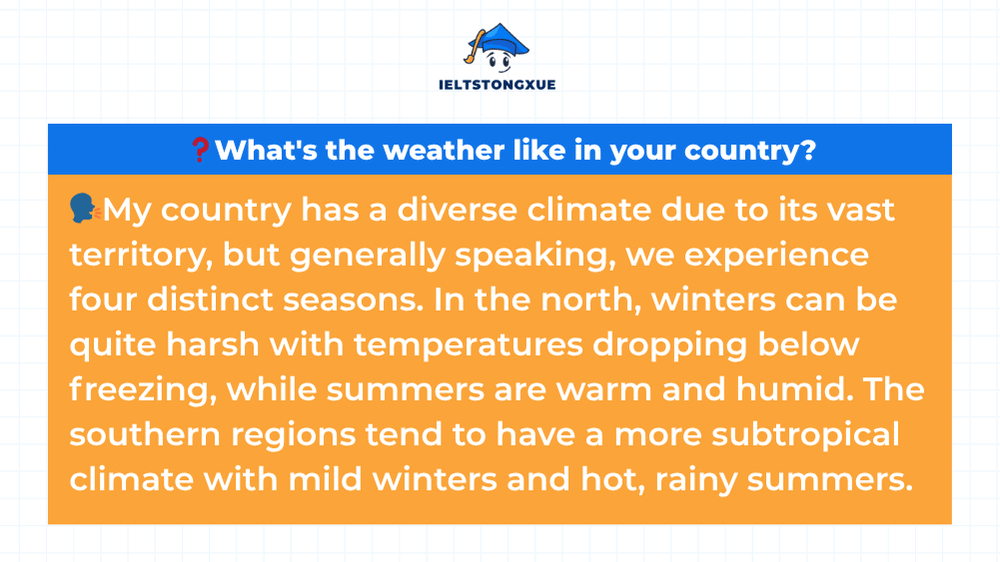
1. What’s the weather like in your country?
My country has a diverse climate due to its vast territory, but generally speaking, we experience four distinct seasons. In the north, winters can be quite harsh with temperatures dropping below freezing, while summers are warm and humid. The southern regions tend to have a more subtropical climate with mild winters and hot, rainy summers. (我的國家因為幅員遼闊而有著多樣化的氣候,但總體來說,我們有四個分明的季節。北方的冬天相當嚴寒,氣溫會降到冰點以下,而夏天則溫暖潮濕。南方地區則偏向亞熱帶氣候,冬天溫和,夏天炎熱多雨。)
2. Do you prefer hot or cold weather?
I personally prefer cooler weather because it feels more comfortable and energising to me. During hot summer days, I often feel sluggish and find it difficult to concentrate on my work or studies. Cold weather, on the other hand, makes me feel more alert and motivated to be productive. (我個人比較喜歡涼爽的天氣,因為這讓我感覺更舒適、更有活力。在炎熱的夏日,我常常感到懶散,很難專注於工作或學習。相反地,寒冷的天氣讓我感覺更警覺,更有動力保持高效率。)
3. What’s your favourite type of weather?
My favourite type of weather is a crisp autumn day with clear blue skies and gentle sunshine. I love how the air feels fresh and clean, and there’s something particularly peaceful about the golden light filtering through the colourful leaves. It’s perfect weather for outdoor activities like hiking or simply taking a leisurely walk. (我最喜歡的天氣是清爽的秋日,有著湛藍的天空和溫和的陽光。我喜歡那種清新乾淨的空氣感,還有金色的陽光透過彩色樹葉灑下來的那種特別寧靜的感覺。這是進行戶外活動如登山或悠閒散步的完美天氣。)
4. Do you often check the weather forecast?
Yes, I check the weather forecast almost daily, especially when I need to plan outdoor activities or decide what to wear. I usually use a weather app on my smartphone that provides hourly updates and seven-day predictions. It’s particularly helpful during the rainy season when sudden downpours can catch you off guard. (是的,我幾乎每天都會查看天氣預報,特別是當我需要規劃戶外活動或決定穿什麼時。我通常使用手機上的天氣應用程式,它提供每小時更新和七天的預測。在雨季時特別有用,因為突如其來的大雨可能會讓你措手不及。)
5. Has the weather in your country changed in recent years?
Yes, I’ve definitely noticed some changes in weather patterns over the past decade. We seem to be experiencing more extreme weather events, such as unusually heavy rainfall during the monsoon season and longer periods of drought. The temperatures also appear to be rising gradually, with some winter days feeling surprisingly warm. (是的,我確實注意到過去十年間天氣模式的一些變化。我們似乎經歷了更多極端天氣事件,比如季風季節異常強降雨和更長時間的乾旱。氣溫似乎也在逐漸上升,有些冬日感覺異常溫暖。)
6. Do you like sunny days? Why or why not?
I do enjoy sunny days, but in moderation. Bright sunshine can significantly boost my mood and energy levels, making me feel more optimistic and motivated. However, I find extremely hot sunny days quite uncomfortable, especially when the temperature exceeds 35 degrees Celsius. I prefer sunny days with pleasant temperatures around 20-25 degrees Celsius. (我確實喜歡晴天,但要適度。明亮的陽光能顯著提升我的心情和精力,讓我感覺更樂觀、更有動力。然而,我覺得極熱的晴天相當不舒服,特別是當氣溫超過攝氏35度時。我比較喜歡氣溫在攝氏20-25度的晴天。)
7. What do you usually do in rainy weather?
During rainy weather, I tend to engage in indoor activities like reading books, watching movies, or practising my hobbies. I find the sound of raindrops quite relaxing, so it’s an ideal time for quiet, contemplative activities. Sometimes I enjoy cooking elaborate meals or organising my living space, activities that I might postpone on sunny days when I prefer to be outdoors. (在雨天,我傾向於從事室內活動,如閱讀、看電影或練習我的興趣愛好。我覺得雨滴聲相當令人放鬆,所以這是進行安靜、沉思活動的理想時間。有時我喜歡烹飪精緻的餐點或整理居住空間,這些是我在晴天時可能會推遲的活動,因為晴天我更喜歡待在戶外。)
8. Does the weather ever affect your mood?
Absolutely, weather has a significant impact on my emotional state. Bright, sunny days generally make me feel more energetic and positive, while prolonged periods of grey, overcast weather can sometimes make me feel a bit melancholic. Rainy days have a mixed effect – light rain can be soothing, but heavy storms might make me feel restless or anxious. (絕對地,天氣對我的情緒狀態有很大影響。明亮的晴天通常讓我感覺更有活力和積極,而長時間的灰暗陰天有時會讓我感到有點憂鬱。雨天的影響比較複雜——小雨能讓人舒緩,但大暴雨可能會讓我感到不安或焦慮。)
II. 雅思口說 Part 2 Weather
雅思口說 Part 2 要求您進行較長的獨白描述,展現您組織語言和深入表達的能力。雅思口說 Weather 主題在此部分通常涉及具體的經歷描述和感受分享。
1. Describe a time when the weather affected your plans
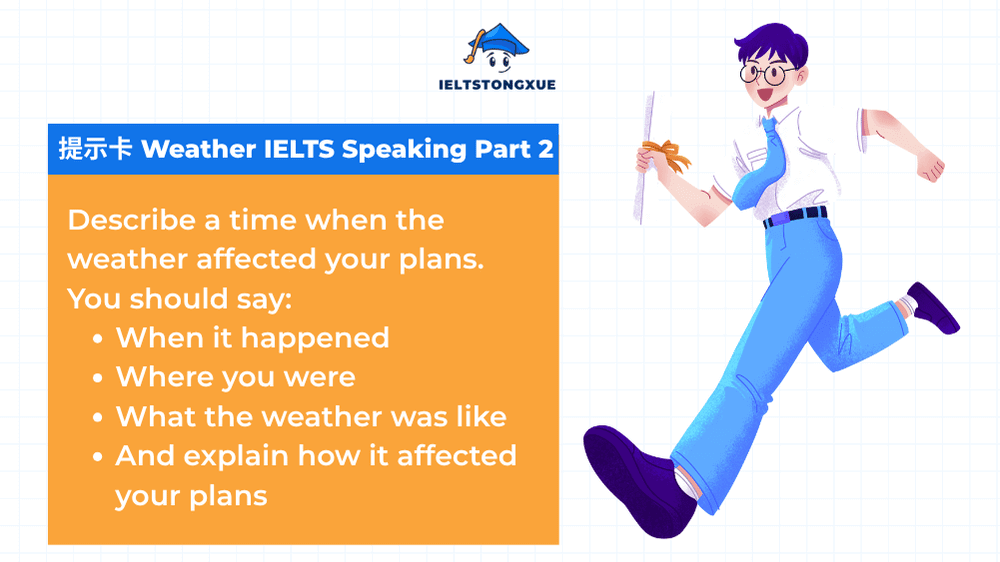
提示卡 Weather IELTS Speaking Part 2: Describe a time when the weather affected your plans. You should say:
- When it happened
- Where you were
- What the weather was like
- And explain how it affected your plans
英文答案: I’d like to talk about a memorable incident that occurred last summer when unexpected severe weather completely disrupted my carefully planned outdoor graduation celebration. This happened in July 2023, just after I completed my university degree, and my family had organised a garden party at my grandparents’ house in the countryside to celebrate this important milestone in my academic journey.
We had been planning this celebration for weeks, with about thirty relatives and friends expected to attend. The weather forecast had predicted partly cloudy skies with temperatures around 28 degrees Celsius, which seemed perfect for an outdoor gathering. However, on the morning of the event, dark storm clouds began gathering rapidly, and by early afternoon, we were experiencing torrential rainfall accompanied by strong winds and frequent lightning strikes.
The impact on our plans was quite dramatic. We had to quickly relocate everything indoors, including the barbecue equipment, decorations, and seating arrangements that we had spent hours setting up in the garden. The indoor space was significantly smaller, making it challenging to accommodate all our guests comfortably. Some elderly relatives who had difficulty with mobility couldn’t navigate the crowded indoor space easily, and the festive outdoor atmosphere we had envisioned was completely lost.
Despite these setbacks, the unexpected change actually brought our family closer together as everyone pitched in to help with the last-minute rearrangements. We ended up having a more intimate celebration, and the sound of rain against the windows created a surprisingly cozy ambiance that many guests commented on fondly.
中文翻譯: 我想談談去年夏天發生的一個難忘事件,當時意外的惡劣天氣完全打亂了我精心計劃的戶外畢業慶祝會。這發生在2023年7月,就在我完成大學學位後,我的家人在鄉下祖父母家組織了一場花園派對來慶祝我學術旅程中的這個重要里程碑。
我們計劃這個慶祝會好幾週了,大約有三十位親友要參加。天氣預報預測是部分多雲的天空,氣溫約攝氏28度,這對戶外聚會來說似乎很完美。然而,活動當天早上,烏雲開始迅速聚集,到下午早些時候,我們遭遇了伴隨強風和頻繁閃電的暴雨。
對我們計劃的影響相當大。我們必須迅速將所有東西搬到室內,包括燒烤設備、裝飾和座位安排,這些我們花了幾小時在花園裡佈置的東西。室內空間明顯較小,很難舒適地容納所有客人。一些行動不便的年長親戚無法輕易在擁擠的室內空間活動,我們所設想的節慶戶外氛圍完全消失了。
儘管有這些挫折,意外的變化實際上讓我們家人更加親近,因為每個人都幫忙處理最後一刻的重新安排。我們最終舉辦了一個更親密的慶祝會,雨點敲打窗戶的聲音創造了一種令人驚喜的溫馨氛圍,許多客人都對此留下了美好的回憶。
2. Describe your favourite type of weather
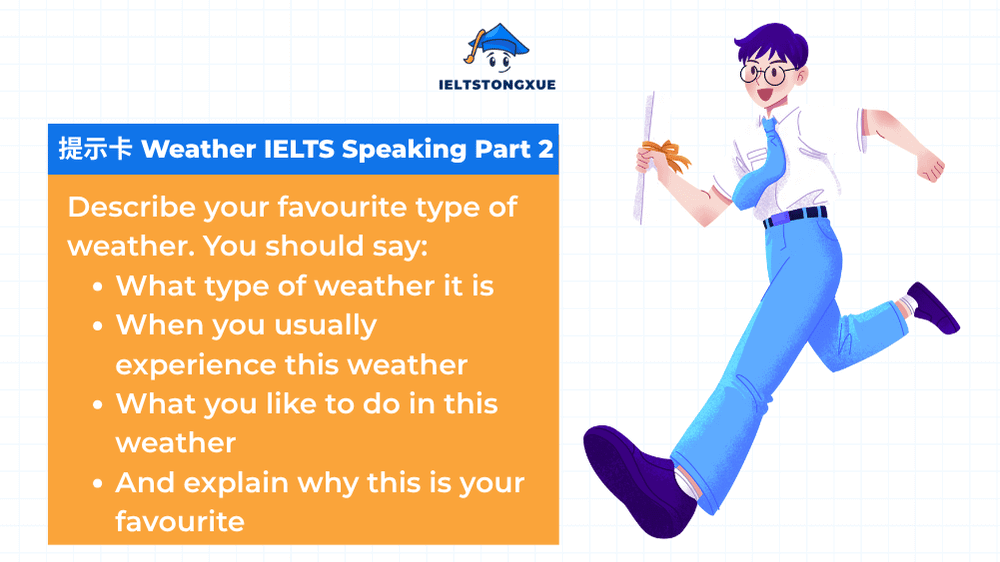
提示卡 Weather IELTS Speaking Part 2: Describe your favourite type of weather. You should say:
- What type of weather it is
- When you usually experience this weather
- What you like to do in this weather
- And explain why this is your favourite
英文答案: My favourite type of weather is what I would describe as a perfect spring morning – characterised by mild temperatures around 18-22 degrees Celsius, gentle sunshine filtering through light, fluffy clouds, and a soft breeze that carries the fresh scent of blooming flowers and new leaves.
I typically experience this delightful weather during the months of April and May in my region, when winter’s harsh grip finally loosens and nature begins its spectacular renewal. These mornings often start with a light dew covering the grass, creating tiny sparkles in the early sunlight, and the air feels crisp and clean, almost purified after the long winter months.
During this type of weather, I love to take long walks in nearby parks or along tree-lined streets, observing how everything comes alive after the dormant winter period. It’s the perfect temperature for outdoor exercise like cycling or jogging, as you don’t feel overheated or uncomfortably cold. I also enjoy sitting outside with a cup of coffee and a good book, feeling completely at peace with the world around me.
What makes this weather truly special to me is the sense of renewal and possibility it brings. There’s something incredibly uplifting about feeling warm sunshine on your skin after months of cold weather, combined with the promise of longer, warmer days ahead. The moderate temperature means I can wear comfortable clothes without needing heavy layers, and the natural beauty of springtime creates an almost magical atmosphere that never fails to boost my spirits and sense of well-being.
中文翻譯: 我最喜歡的天氣類型是我會形容為完美春晨的天氣——特點是攝氏18-22度的溫和氣溫、透過輕薄蓬鬆雲層灑下的溫和陽光,以及帶著綻放花朵和新葉清香的柔和微風。
我通常在我們地區的四月和五月體驗這種令人愉悅的天氣,那時冬季的嚴酷控制終於鬆懈,大自然開始其壯觀的復甦。這些早晨通常以覆蓋草地的輕露開始,在早晨陽光中創造出微小的閃光,空氣感覺清脆乾淨,幾乎在漫長的冬季月份後得到了淨化。
在這種天氣裡,我喜歡在附近的公園或樹木成蔭的街道上長時間散步,觀察一切如何在沉睡的冬季後甦醒。這是戶外運動如騎自行車或慢跑的完美溫度,因為你不會感到過熱或不舒服的寒冷。我也喜歡帶著一杯咖啡和一本好書坐在戶外,感覺與周圍的世界完全平靜和諧。
讓這種天氣對我真正特別的是它帶來的更新和可能性的感覺。在寒冷天氣的數月後感受到溫暖陽光照在皮膚上,結合著對更長、更溫暖日子的期望,有著令人難以置信的振奮感。適中的溫度意味著我可以穿舒適的衣服而不需要厚重的層次,春天的自然美景創造了一種幾乎神奇的氛圍,總是能提升我的精神和幸福感。
3. Describe a memorable experience you had in extreme weather
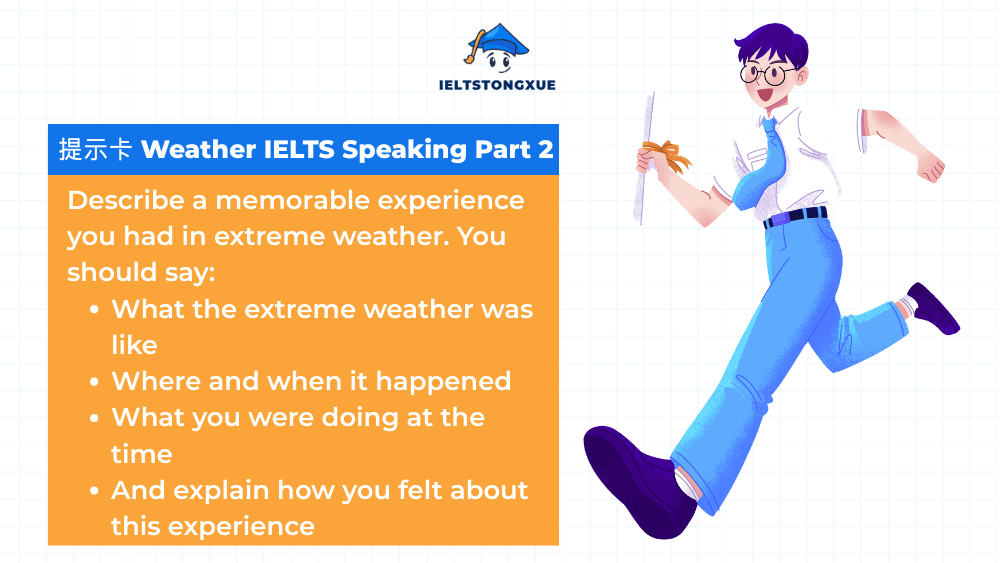
提示卡 Weather IELTS Speaking Part 2: Describe a memorable experience you had in extreme weather. You should say:
- What the extreme weather was like
- Where and when it happened
- What you were doing at the time
- And explain how you felt about this experience
英文答案: I’d like to share a particularly memorable experience I had during an intense blizzard that struck our city three winters ago in February 2021. This was truly extreme weather – we received over 60 centimeters of snow within just 18 hours, accompanied by fierce winds reaching speeds of up to 80 kilometers per hour and temperatures plummeting to minus 25 degrees Celsius.
I was working late at my office downtown when the storm intensified dramatically around 6 PM. What had started as light snowfall in the morning quickly escalated into a full-scale blizzard that made visibility virtually zero. Public transportation was completely suspended, and driving conditions became extremely hazardous with abandoned vehicles scattered across the roads.
Since returning home was impossible, I ended up spending the entire night at the office with about fifteen colleagues who were similarly stranded. We made the best of this unexpected situation by sharing food from the office refrigerator, playing card games, and keeping each other company while listening to the howling wind outside. The building’s heating system worked overtime, but we could still feel the bitter cold seeping through the windows.
Looking back, this experience was both frightening and oddly bonding. The sheer power and intensity of nature was humbling – seeing familiar streets completely transformed into an unrecognizable white landscape was both beautiful and unsettling. While I felt anxious about the safety of my family members and the duration of the storm, I was also struck by how people came together during this crisis, sharing resources and supporting each other without hesitation. It reminded me of how extreme weather can strip away our daily routines and reveal both our vulnerability and our capacity for community cooperation.
中文翻譯: 我想分享一個特別難忘的經歷,那是三年前2021年二月我們城市遭受的一場強烈暴雪。這真的是極端天氣——我們在短短18小時內降雪超過60厘米,伴隨著時速高達80公里的猛烈風速,氣溫驟降至攝氏零下25度。
當天下午6點風暴急劇加強時,我正在市中心的辦公室工作到很晚。早上開始的小雪花迅速升級為全面暴雪,能見度幾乎為零。公共交通完全停擺,道路上散佈著被遺棄的車輛,駕駛條件變得極其危險。
由於無法回家,我最終在辦公室度過了整個夜晚,與大約十五位同樣被困的同事在一起。我們充分利用這個意外情況,分享辦公室冰箱裡的食物,玩紙牌遊戲,在聽著外面呼嘯的風聲時互相陪伴。大樓的暖氣系統超負荷運轉,但我們仍能感受到刺骨寒冷透過窗戶滲透進來。
回想起來,這次經歷既令人恐懼又奇妙地增進了彼此感情。大自然的純粹力量和強度令人謙卑——看到熟悉的街道完全變成無法辨認的白色景觀既美麗又令人不安。雖然我對家人的安全和風暴的持續時間感到焦慮,但我也被人們在這場危機中如何團結一致所打動,毫不猶豫地分享資源和相互支持。這提醒我極端天氣如何能剝離我們的日常例行公事,揭示我們的脆弱性和社區合作的能力。
III. 雅思口說 Part 3 Weather
雅思口說 Part 3 的問題更具抽象性和分析性,要求您展現批判性思維和深度分析能力。Weather IELTS Speaking 在此部分通常涉及氣候變遷、社會影響等較為複雜的話題。
1. Do you think climate change is affecting the weather around the world?
Yes, I believe climate change is having a profound and increasingly visible impact on global weather patterns. We’re witnessing more frequent and intense extreme weather events, such as devastating hurricanes, prolonged droughts, and unprecedented heatwaves that break temperature records year after year. Scientific data consistently shows that average global temperatures have risen significantly over the past century, and this warming trend is directly linked to increased greenhouse gas emissions from human activities. The consequences are particularly evident in the Arctic regions, where ice caps are melting at an alarming rate, and in tropical areas experiencing more severe monsoon seasons.
是的,我相信氣候變遷對全球天氣模式產生了深遠且日益明顯的影響。我們見證了更頻繁和強烈的極端天氣事件,如毀滅性颶風、長期乾旱,以及年復一年打破溫度紀錄的前所未有熱浪。科學數據一致顯示,過去一個世紀全球平均氣溫顯著上升,這種暖化趨勢與人類活動增加的溫室氣體排放直接相關。後果在北極地區特別明顯,那裡的冰帽以驚人的速度融化,在熱帶地區則經歷更嚴重的季風季節。
2. How does the weather influence people’s daily lives in different countries?
Weather exerts a remarkable influence on daily routines and cultural practices across different nations, often shaping entire ways of life. In tropical countries like Thailand or Indonesia, people typically adjust their schedules to avoid the midday heat, conducting business activities during cooler morning and evening hours. Architecture in these regions features high ceilings, open spaces, and materials designed for natural ventilation. Conversely, in Northern European countries like Norway or Finland, short daylight hours during winter months significantly impact mental health and social activities, leading to cultural adaptations such as hygge practices and seasonal affective disorder treatments. Agricultural societies are particularly dependent on weather patterns, with monsoon seasons dictating planting and harvesting schedules across South Asia, while countries like Australia must constantly adapt to bushfire seasons and drought conditions that influence water usage policies and urban planning decisions.
天氣對不同國家的日常例行公事和文化實踐產生了顯著影響,往往塑造了整個生活方式。在泰國或印尼等熱帶國家,人們通常調整時間表以避開正午的酷熱,在較涼爽的早晨和傍晚時段進行商業活動。這些地區的建築特色是高天花板、開放空間,以及為自然通風設計的材料。相反地,在挪威或芬蘭等北歐國家,冬季月份的短暫日照時間顯著影響心理健康和社交活動,導致文化適應如hygge實踐和季節性情感障礙治療。農業社會特別依賴天氣模式,季風季節決定了南亞的種植和收穫時間表,而澳洲等國家必須不斷適應叢林火災季節和乾旱條件,這些影響用水政策和城市規劃決策。
3. Why do some people enjoy talking about the weather?
Weather serves as a universal conversational bridge that transcends cultural, social, and economic boundaries, making it an ideal topic for social interaction. People gravitate towards weather discussions because it’s a shared experience that everyone can relate to, regardless of their background or expertise. It functions as a safe, neutral topic that allows individuals to initiate conversations without delving into potentially controversial subjects like politics or personal finances. Additionally, weather affects everyone’s immediate plans and emotions, creating genuine common ground for empathy and connection. From a psychological perspective, discussing weather can also serve as a subtle way to express concerns about larger issues like climate change or to share personal experiences and preferences in a non-threatening manner. In many cultures, weather talk also demonstrates social courtesy and consideration for others’ comfort and well-being.
天氣作為一個跨越文化、社會和經濟界限的通用對話橋樑,使其成為社交互動的理想話題。人們傾向於天氣討論,因為這是每個人都能產生共鳴的共同經歷,無論他們的背景或專業知識如何。它作為一個安全、中性的話題,讓個人能夠開始對話而不深入涉及政治或個人財務等可能有爭議的主題。此外,天氣影響每個人的即時計劃和情緒,為同理心和連結創造了真正的共同基礎。從心理學角度來看,討論天氣也可以作為一種微妙的方式來表達對氣候變遷等更大問題的擔憂,或以非威脅性的方式分享個人經歷和偏好。在許多文化中,談論天氣也展現了社交禮貌和對他人舒適和福祉的考慮。
4. Do you think people’s activities are affected more by the weather now than in the past?
I believe the relationship between weather and human activities has fundamentally shifted in complex ways. While modern technology and infrastructure have certainly reduced our direct dependence on weather conditions for basic survival and many daily activities, our awareness of weather impacts has paradoxically increased. In the past, agricultural societies were completely at the mercy of weather patterns for their livelihoods, but they had developed sophisticated traditional knowledge systems for predicting and adapting to seasonal changes. Today, while we have climate-controlled environments and advanced warning systems, we’ve become more sensitive to weather disruptions in our highly interconnected world. A single severe storm can now affect global supply chains, international flights, and digital communications, creating ripple effects that our ancestors never experienced. Additionally, climate change has introduced new uncertainties and extreme weather events that challenge even our most advanced technological solutions, making weather planning more crucial for everything from energy consumption to urban design.
我相信天氣與人類活動之間的關係已經以複雜的方式發生了根本性轉變。雖然現代技術和基礎設施確實減少了我們對天氣條件在基本生存和許多日常活動上的直接依賴,但我們對天氣影響的認識卻矛盾地增加了。在過去,農業社會的生計完全受天氣模式支配,但他們已發展出精密的傳統知識系統來預測和適應季節變化。今天,雖然我們有氣候控制環境和先進預警系統,但在我們高度相互連結的世界中,我們對天氣干擾變得更加敏感。現在一場嚴重的風暴可以影響全球供應鏈、國際航班和數位通訊,創造我們祖先從未經歷過的連鎖效應。此外,氣候變遷引入了新的不確定性和極端天氣事件,挑戰了我們最先進的技術解決方案,使天氣規劃對從能源消耗到城市設計的一切都變得更加關鍵。
IV. Weather IELTS Speaking 詞彙
掌握豐富的天氣相關詞彙是在雅思口說 Weather 主題中取得高分的關鍵要素。以下表格提供了考試中常用的核心詞彙,包括準確發音、詞性分類和實用例句。
| 詞彙 | 詞類 | 例句 |
| precipitation
/prɪˌsɪpɪˈteɪʃən/ |
名詞 | The weather forecast predicts heavy precipitation this weekend. (天氣預報預測這個週末會有大量降水。) |
| humidity
/hjuːˈmɪdəti/ |
名詞 | The high humidity in summer makes the temperature feel much hotter than it actually is. (夏天的高濕度使溫度感覺比實際溫度熱得多。) |
| overcast
/ˈəʊvəkɑːst/ |
形容詞 | The overcast sky suggests that rain might be approaching. (陰沉的天空暗示雨可能要來了。) |
| scorching
/ˈskɔːtʃɪŋ/ |
形容詞 | The scorching heat made it impossible to walk outside during midday. (酷熱使得正午時分無法在戶外行走。) |
| drizzle
/ˈdrɪzəl/ |
名詞/動詞 | The light drizzle continued throughout the morning, creating a misty atmosphere. (小雨整個上午持續下著,營造出朦朧的氛圍。) |
| torrential
/təˈrenʃəl/ |
形容詞 | The torrential rain caused severe flooding in several districts. (暴雨在幾個區域造成了嚴重的洪水。) |
| mild
/maɪld/ |
形容詞 | The mild winter temperatures this year are quite unusual for our region. (今年溫和的冬季氣溫對我們地區來說相當不尋常。) |
| muggy
/ˈmʌɡi/ |
形容詞 | The muggy weather made everyone feel uncomfortable and lethargic. (悶熱的天氣讓每個人都感到不舒服和昏沉。) |
| crisp
/krɪsp/ |
形容詞 | I love the crisp autumn air that makes morning walks so refreshing. (我喜歡清新的秋天空氣,讓晨間散步如此令人神清氣爽。) |
| atmospheric pressure
/ˌætməsˈferɪk ˈpreʃər/ |
名詞片語 | Changes in atmospheric pressure often indicate approaching weather fronts. (大氣壓力的變化通常表示天氣鋒面的接近。) |
| visibility
/ˌvɪzəˈbɪləti/ |
名詞 | Dense fog reduced visibility to less than 50 meters on the highway. (濃霧使高速公路上的能見度降至不到50公尺。) |
| blustery
/ˈblʌstəri/ |
形容詞 | The blustery winds made it challenging to keep umbrellas upright. (狂風大作,很難保持雨傘直立。) |
總結
通過深入學習和練習這些 Weather IELTS Speaking 內容,您將能夠在雅思口說考試中自信地處理天氣相關話題,展現出色的語言能力和思維深度。記住,雅思口說天氣主題雖然看似基礎,卻是展示您英語交流能力的絕佳機會。持續練習這些問題和答案範例,並運用豐富的詞彙表達,必將助您在考試中脫穎而出。

